№ 110 | ‘Havens, Hubs & Hangouts’, “Infrastructure for Thinking”, Fractal Gridding + the Hadara Method (for Goal Setting), Bootstrapping Computing, Catalyst Game, Four Corners Reflection, A Visual Archive of the Jan 6 Capitol Attack, and the Size of Life

Did you miss me? 🤪
Stephen P. Anderson here, back again with your regular roundup of ‘playful things to think with… and think about’ (wow, that came out sounding like a cheesy DJ announcer!)
One of the great things about taking time off between issues is the bounty of amazing finds I’ve accumulated.
One of the terrible things about taking time off between issues is the bounty of amazing finds I’ve accumulated.
😳
So. Much. To. Share.
Anyway, I’m back with a giant treasure chest of curious finds (great for weeks when the discoveries aren't so plentiful?). I also have several “themed” editions planned for 2026. But to kick off the year, here’s a good sampling of ‘things to think with and think about’. 🚀
Havens, Hubs, & Hangouts: Shaping and sustaining social infrastructure
Ever had a conversation about the function of libraries, parks, recreation centers, coffee shops, and other physical spaces in a community? If so (or if not), here’s a fresh way to think about the “social infrastructure” within a community: Havens, Hubs & Hangouts.
- Havens — spaces to gather around shared identity
- Hubs — spaces to connect across different backgrounds
- Hangouts — spaces to just be
Social infrastructure here is defined as “the network of physical and social structures that build relationships and foster thriving communities.”
Gehl’s findings reveal that social infrastructure is essential for the health and well-being of societies. When done right, it does more than building relationships alone, it advances economic opportunities, climate resilience, and social and racial justice within communities.
This framework is deceptively simple—there’s a lot more to explore in the 86 page research report.
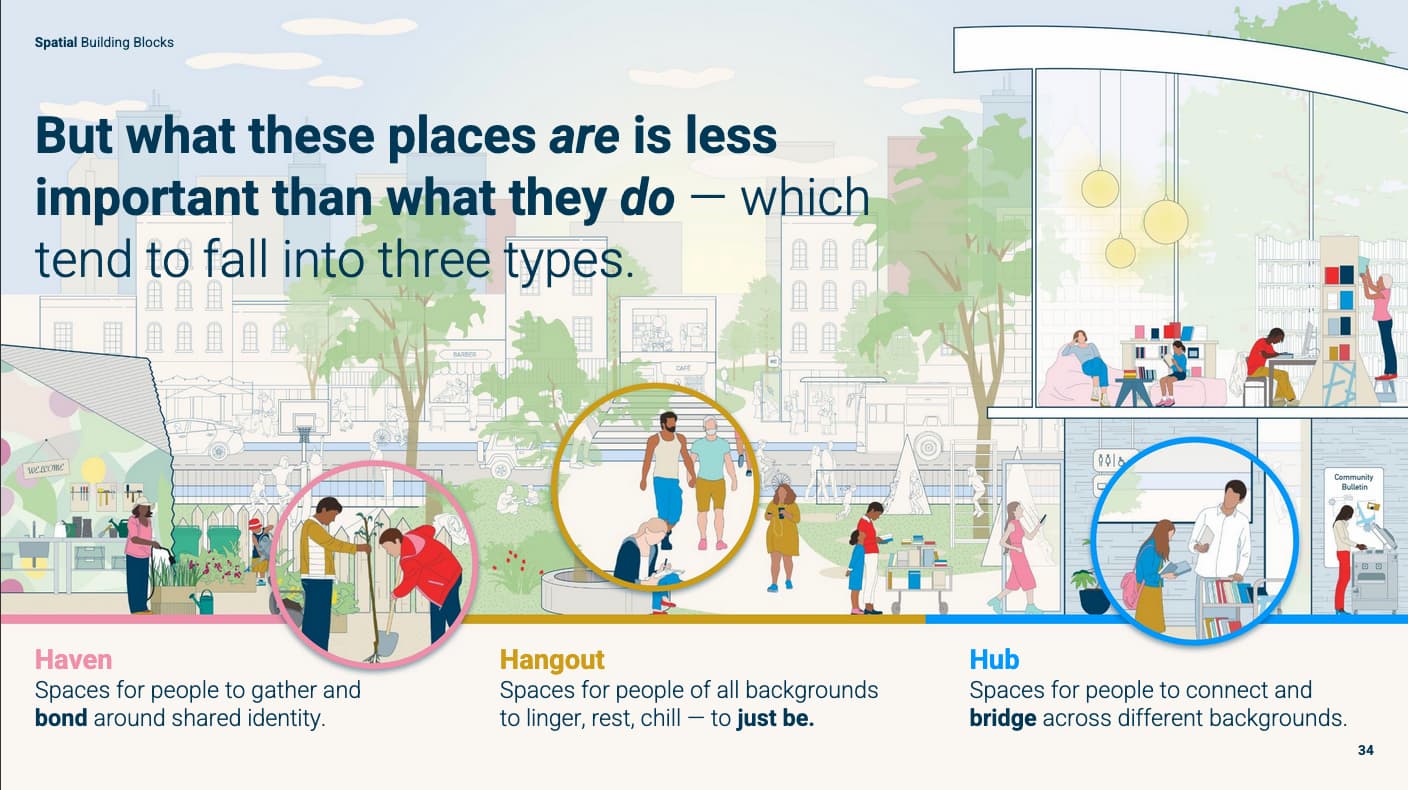
I found this by way of New_Public (a nonprofit R&D lab that’s re-imagining social media); they asked a great exploratory question: What would a network of Havens, Hubs, and Hangouts look like online? 🤔
Speaking of infrastructures…
“Infrastructure for Thinking”
While Joan Westenberg’s post “The Case for Blogging in the Ruins” is mostly about the critical importance and nuance of blogging,this passage—drawing comparisons to Diderot’s creation of the Encyclopédie—jumped out at me… for different reasons:
Diderot's project was fundamentally about building infrastructure for thinking. He wanted to create a shared repository of human knowledge that anyone could access, organized in a way that invited exploration and cross-referencing. He believed that structuring information properly could change how people thought.
While mostly about our technical infrastructures—not handing that over to corporate entities that optimize for attention—I couldn’t help but think about the stuff I curate here, and how some of these things are a kind of infrastructure for thinking. Especially things like board games, canvases, or other kinds of frameworks that shape our thinking in a particular way. This interpretation of the word infrastructure makes this sentence, elsewhere in the post, all the more intriguing for me:
He kept going because the infrastructure mattered, because how we structure the presentation of ideas affects the ideas themselves.
Speaking of the presentation of ideas…
Fractal Gridding and the Harada Method (for goal setting)
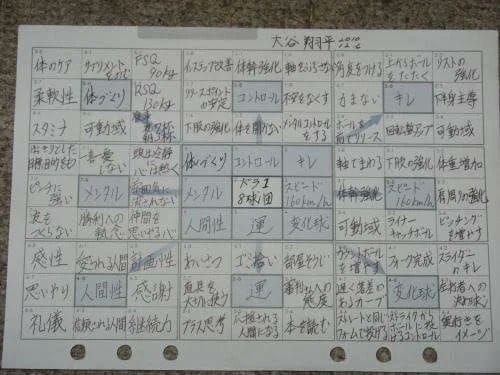
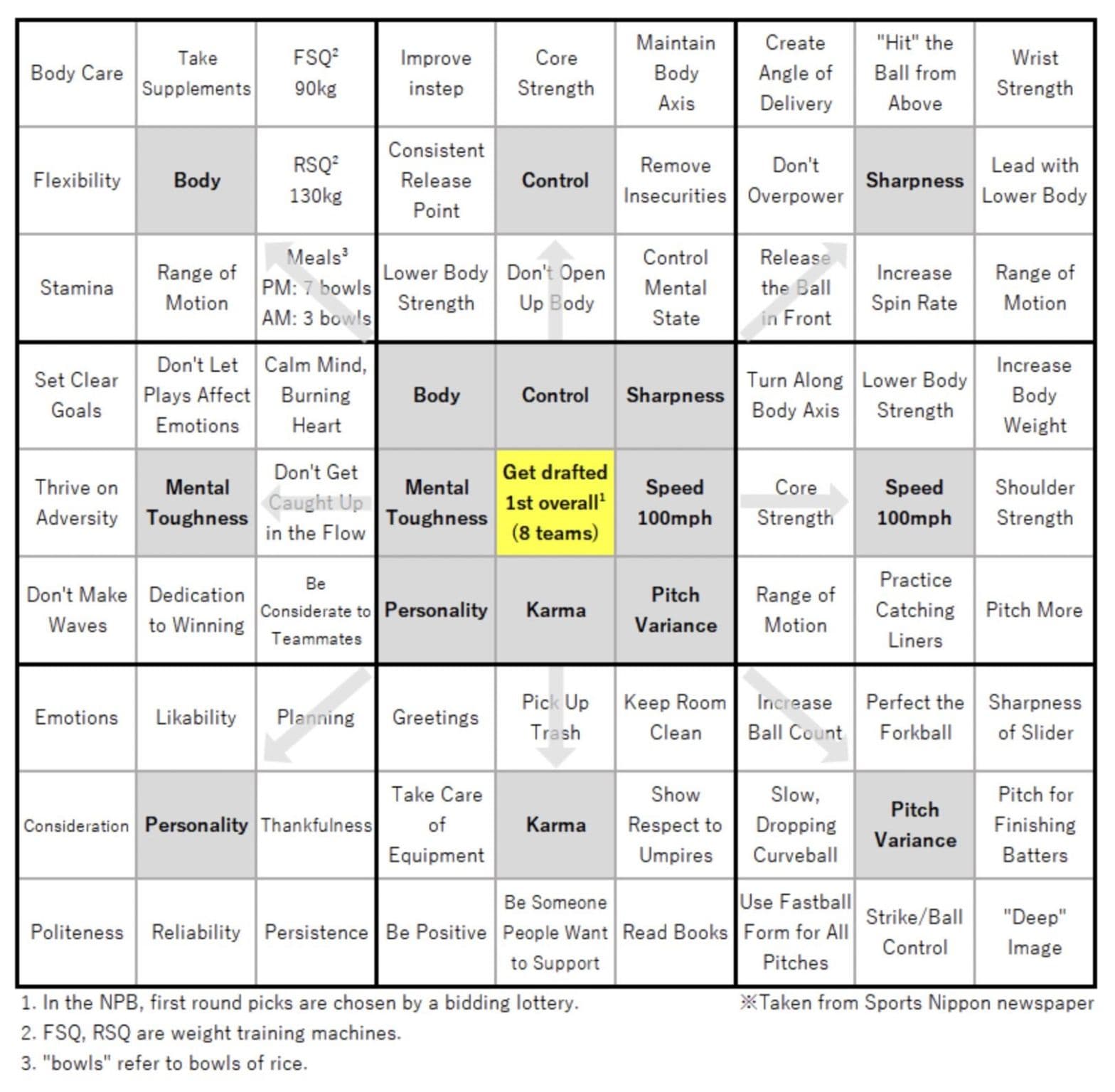
Fractal gridding [LI] is a ‘new to me’ term. And I might have passed over this (after all, what’s noteworthy about a 3x3 grid of boxes?), except… I had also recently saved this post on the Harada Method of goal setting [LI] which I knew I’d be sharing here. In both cases, this is little more than a two level deep bubble map. Put your main idea in the center box, sub topics in the center of the orbiting 8 boxes, and repeating within each of these.
The Harada Method (for goal setting) [LI] is a bit more structured, with a goal (in the center) → 8 subgoals → 8 specific actions, skills, or habits for each subgoal. That said, the rectangular repicturing as a set of nine boxes is much more compact (and, I’ll be the first to defend repicturing as a form of thinking).
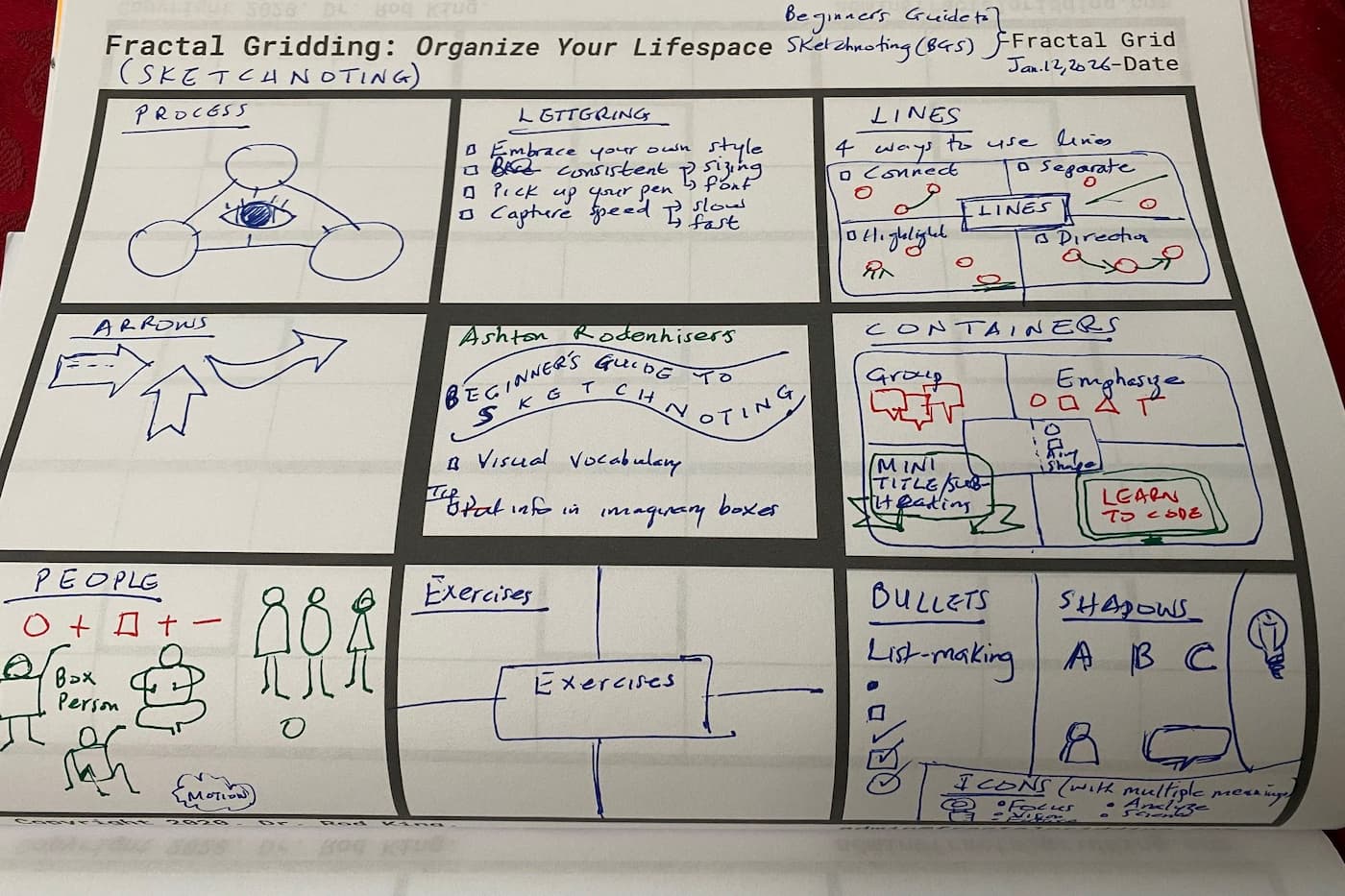
Oh, and you can also purchase a Fractal Gridding Notepad on Amazon (which also features a nice intro video from the creator of this notepad).
Bootstrapping Computing
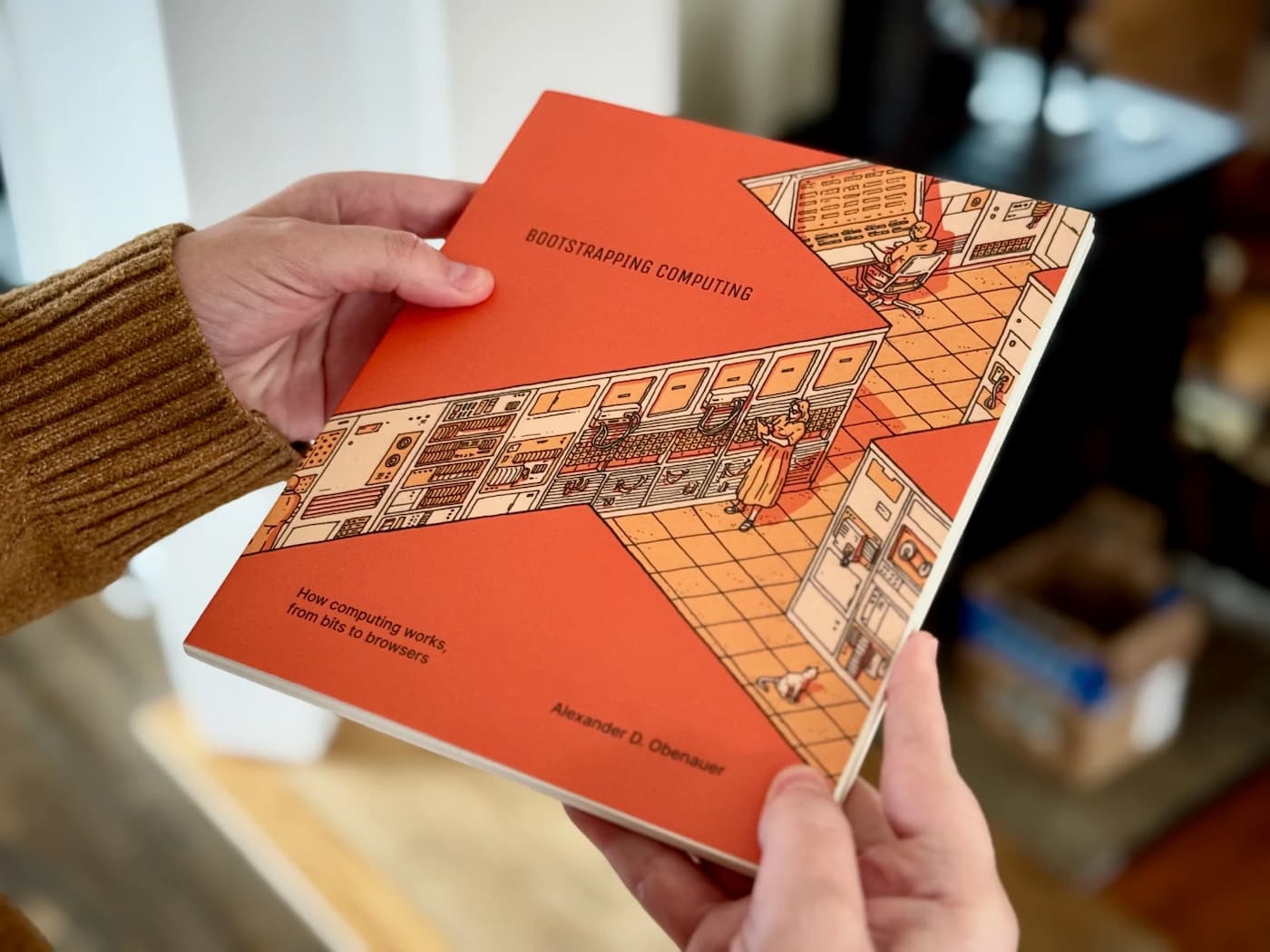
Here’s a book I picked up over the holiday break. I’m including it here for two reasons:
1/
Bootstrapping Computing is an exploration of computing from the ground up—“from bits to browsers.” And at only 90 pages and loaded with plenty of illustrations, it feels worthy of inclusion as a ‘thing to think with’ (I don’t often recommend books as things to think with).
Bootstrapping Computing is a short, technical book for curious, non-technical people, exploring how we built modern computing out of simpler parts.
2/
I’m including this for another, perhaps personal, reason: The publishing ethos behind this book. Spend a minute reading about Buddy Bindery & Press. There’s something idyllic about what they’re doing—making books and zines by hand.
(h/t Raghav Agrawal)
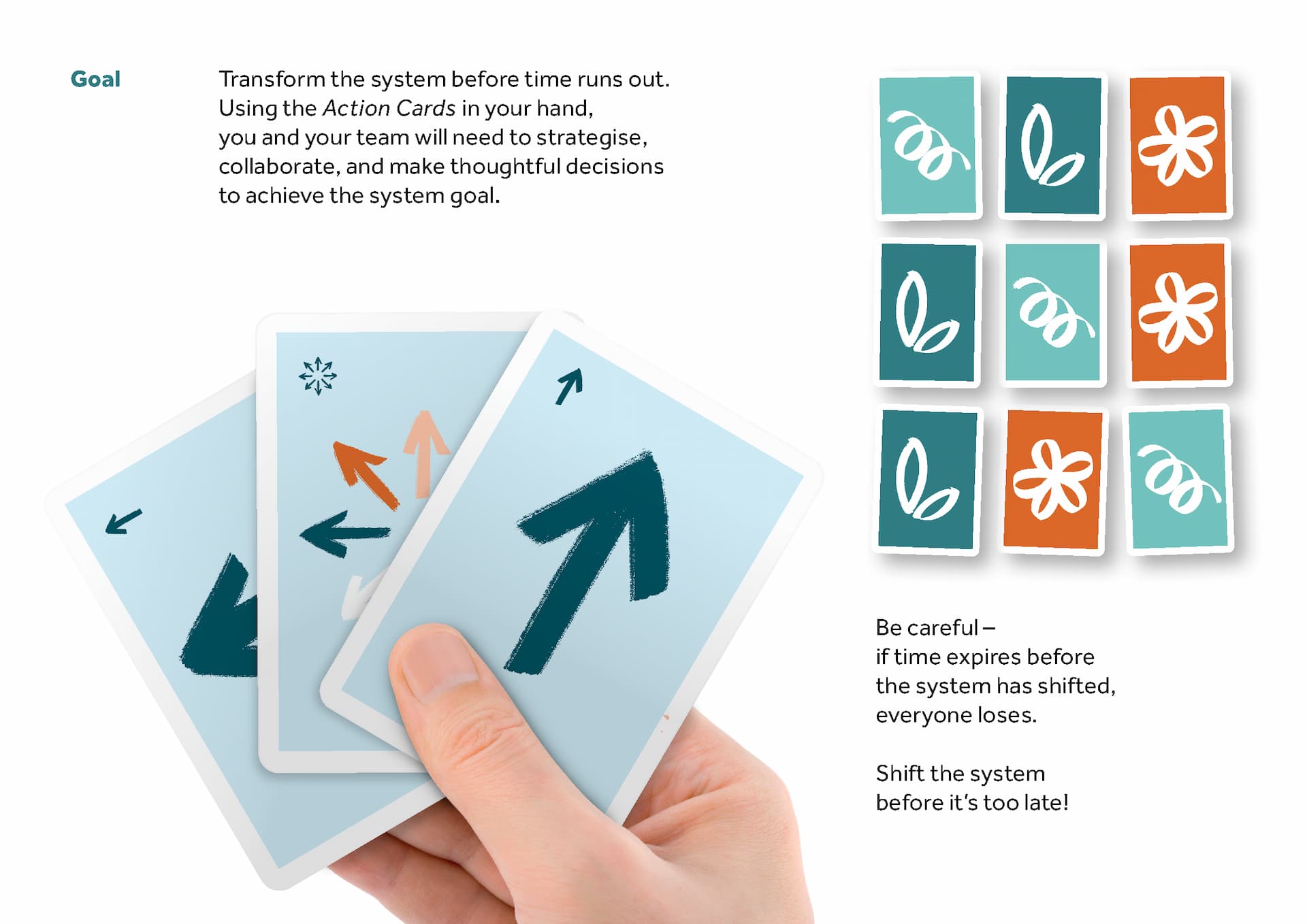
Catalyst: The Systems Thinking Strategy Game
Catalyst: The Systems Thinking Strategy Game is designed to help you experience a systems challenge. As a complex complicated collaborative game, players must work together to transform the ‘system’ (an arrangement of 9 cards) from one state into another before time runs out. In this respect, it looks like a cooperative puzzle designed to teach a mindset (as opposed to a tool that can be applied directly to a specific systems challenge).
(h/t Dan Brown)
Four Corners Reflection Activity
I love a good reflection activity to close out a workshop. I have one I’ve been using (picked up via Luma Institute) where folks draw their takeaways (along with a single clarifying statement). I might have to add Four Corners Reflection Activity [LI] to the mix. I’m fairly critical of reflection questions, and the 4 identified here are quite good:
It takes 10 minutes at the end of any training session to transform insights into durable learning.
How it works:
Everyone pauses to write down their responses.
✅ I liked... (emotional connection)
✅ I learned... (knowledge consolidation)
✅ I wonder... (curiosity for deeper exploration)
✅ I will... (concrete next steps)
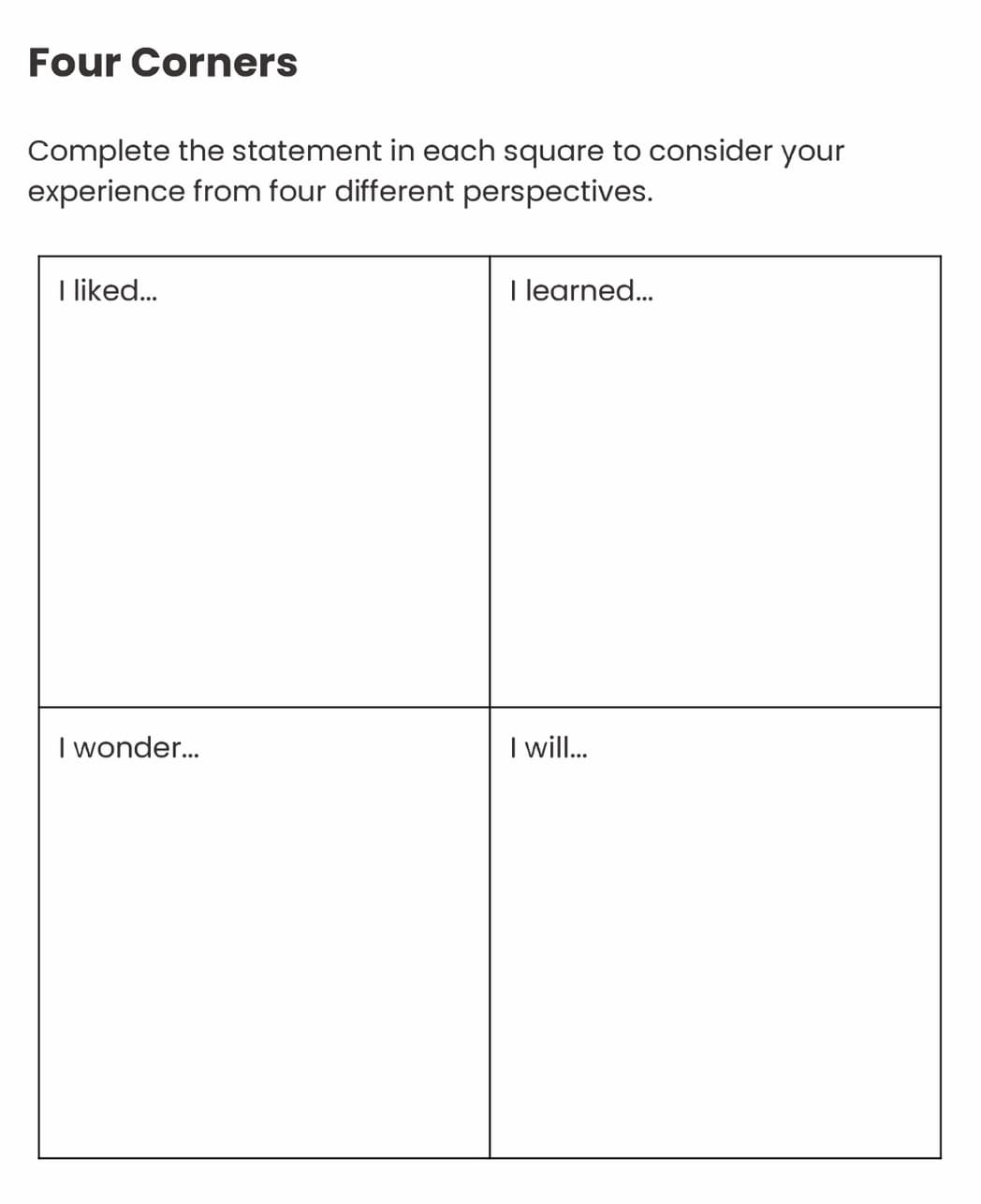
‘Four Corners’ is one of more than 45 reflection activities from Katrina Kennedy's book Learning That Lasts. See also her “I'm Curious About…” madlib.
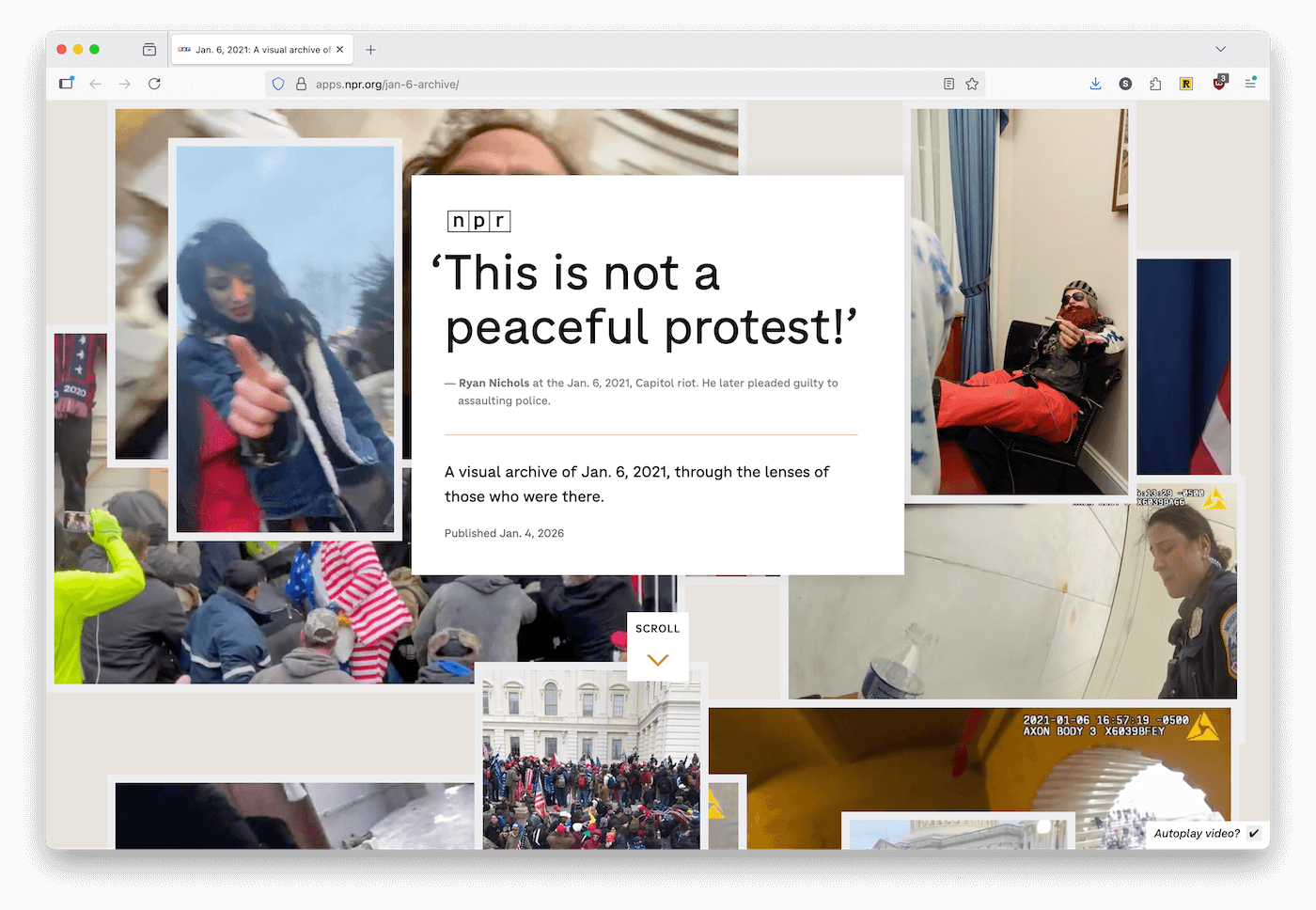
Jan. 6, 2021: A visual archive of the Capitol attack
Lest we forget, or allow others to rewrite history… Check out NPR’s visual archive of Jan. 6, 2021, through the lenses of those who were there.
.
.
Ok… To balance out the sobering reality of that last find, here’s another example of the “interactive explainer” that offers a bit more… wonder!
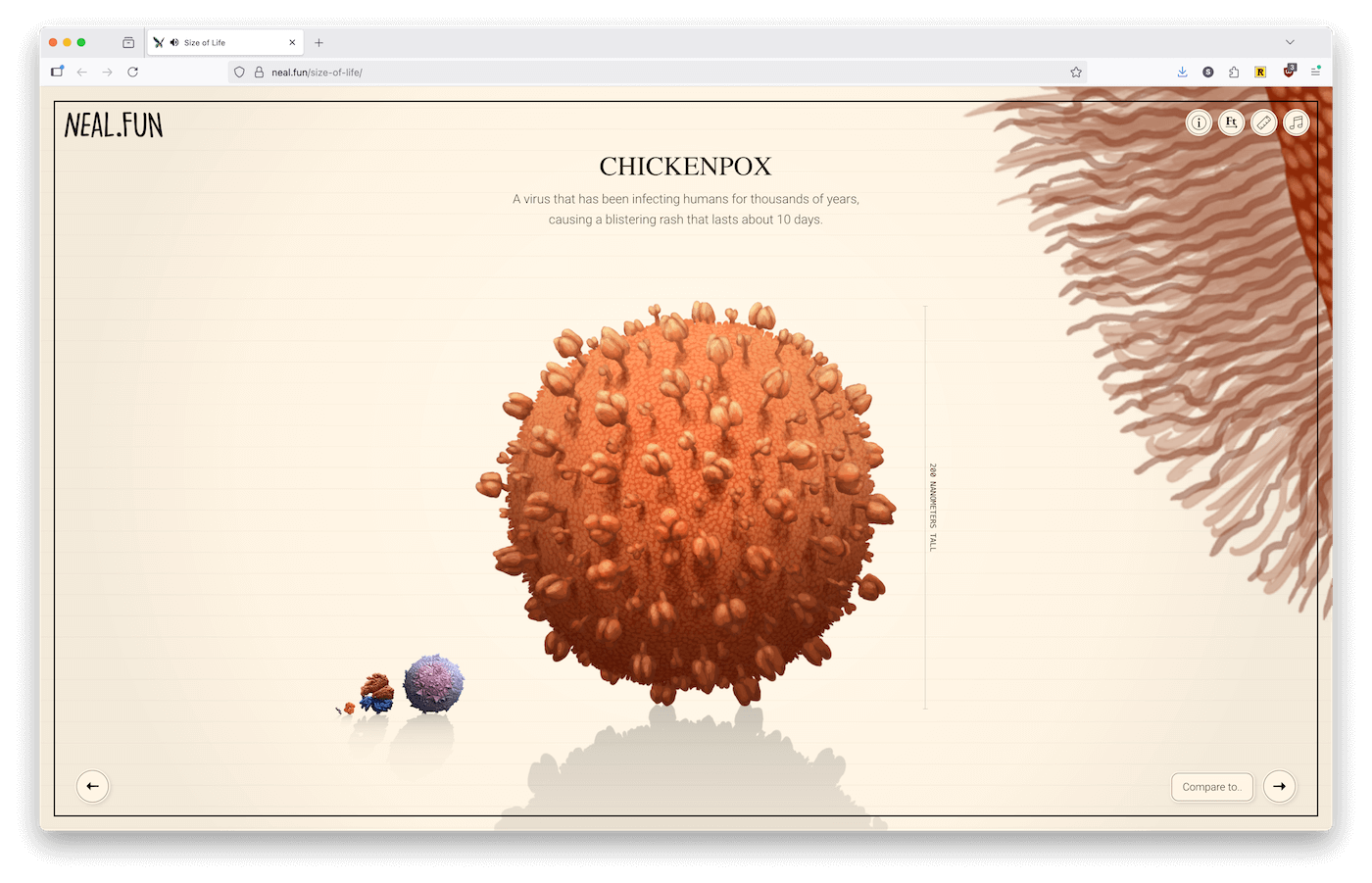
Size of Life
Fairly self explanatory. The Size of Life, from DNA to… the Pando clone!
Random Finds:
Oh my, were there ever some interesting random finds over the last many weeks!
- So… ‘necrobotics’ is a field of robotics that repurposes dead organisms as bio-hybrid components. 🤨 And apparently, robots fashioned from dead lobster exoskeletons have awesome strength, light weight, and flexibility.
- The Open Printer is “an open-source, repairable inkjet printer designed for makers, artists, and anyone tired of throwaway hardware.” Also, this is the first time I’ve seen a wall mounted printer!
- Cinemapper shows filming locations for movies on a map (check out the filming locations for Andor, for example).
- Here’s a Spin the Wheel tool that lets you, well… create a spinning wheel of names, decisions, or tasks.
- You can put out fire with sound waves?! It sounds like sci-fi, but… “Sonic Fire Tech Technology” is a real thing.