№ 112 | Teaching One Pagers, Sliderule Simulator, Board Game Icons, “Making, Hacking and Jamming”, FLARE, Relooted, Choosing a UX Research Method, and Deep Musings on our Human Relationship with AI

Welcome to another edition of the Thinking Things newsletter, your regular dose of playful things to think with, and think about.
1/ ♥️ ♠️ ♦️ ♣️
I’m exploring a special edition of thinking things focused on… 🥁 playing cards. Specifically, any activity that uses a standard deck of playing cards to support reflection, understanding, connection, etc. I have almost enough examples for a special issue on this topic, but would love to have more—and more diverse—examples. If you have examples for me to look at, let me know! Shoot me an email: stephen [at] poetpainter [dot] com
2/ 🍿
Good Luck, Have Fun, Don’t Die is a brilliant—and bonkers—bit of movie satire. And lots of fun along the way. Highly recommended.
Teaching One Pagers
Goldmine! I’m a bit in love with all these teaching one pagers from Jamie Lee Clark. Each page summarizes and illustrates a learning theory, or aspect of a learning theory. Cognitive Load Theory. Checking for Understanding. Scaffolding. Retrieval Practice. Think, Pair, Share… 🤩
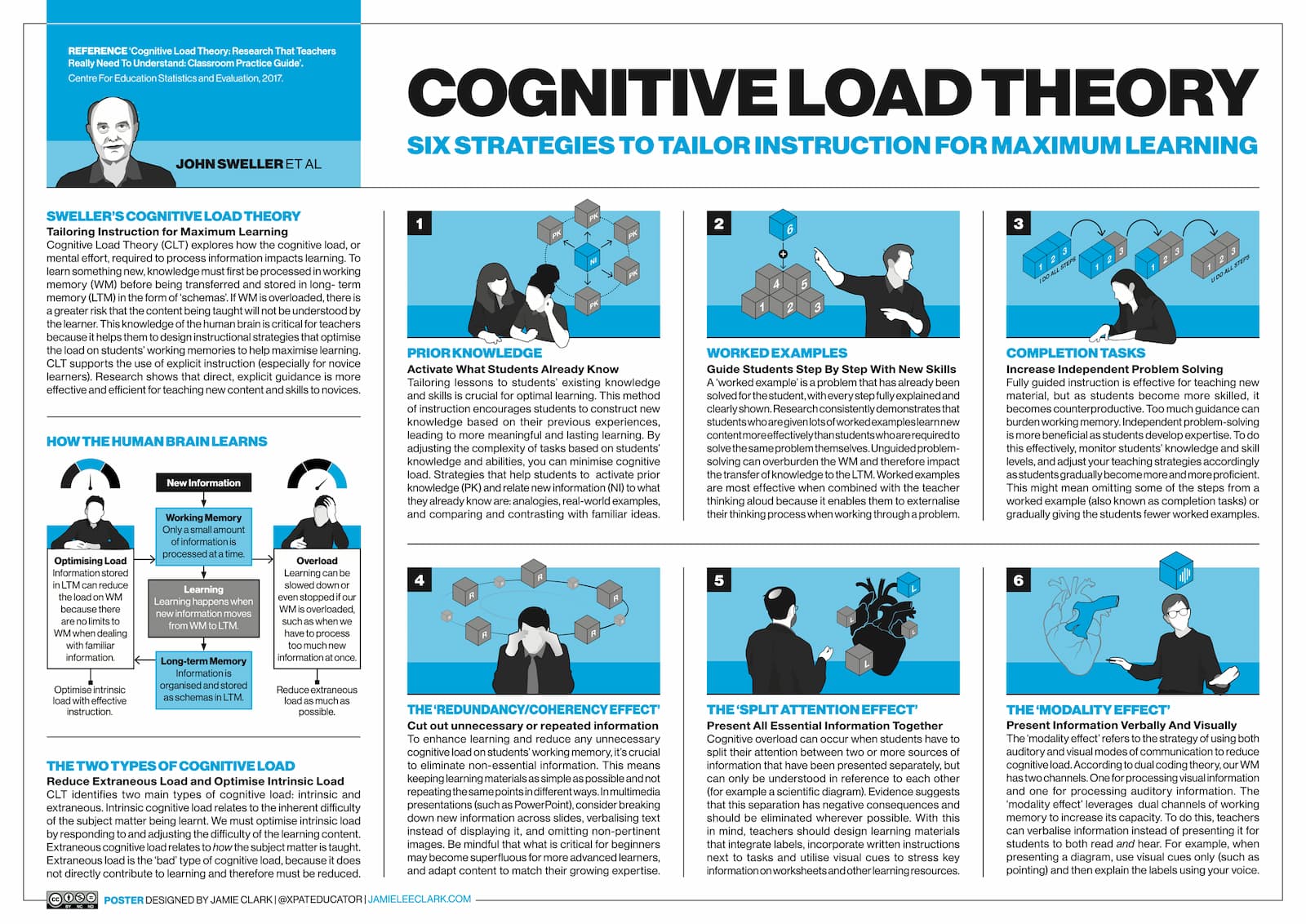
Sidenote: I found this on LinkedIn, where Oliver Caviglioli has been making good, critical comments about the redundancy effect [LI], especially as it relates to visual re-representations of written information.
Sliderule Simulator
Before calculators, slide rules were an elegant bit of technology. I’ve long stared in dumbfounded fascination at the technology that is (was) the slide rule. But now, thanks to this Sliderule Simulator, I have an understanding of how these things work(ed). While there are a number of virtual recreations of slide rules (see Derek’s Virtual Slide Rule Gallery), what this simulation adds is a layer of lessons (where the steps are modeled for you), challenges, and feedback loops, among other digitally enhanced details. Hence, this simulation works as a playful thing to think with.
I did run into a few issues: The first two lessons are blank—skip them; the digital interface can be a bit finicky… Playing with a virtual recreation also helps to appreciate the tactile qualities of this tool (nudging with fingers vs a trackpad). And, this makes me deeply appreciate modern calculators!

Now, a left field idea… How might the pattern of the slide rule be generalized for a game? (As with the decoder disks used by the EXIT series of escape room games… 🤔)
Speaking of simulations, enjoy this short post on how simulations helped one teacher engage her students and combat a fear of making mistakes.
Board Game Icons
I’ve shared in the past how board games can be a masterclass in information design (I’ve even given a few talks on this!). Take an information dense game (Dune: Imperium, Star Realms, Great Western Trail, 7 Wonders, The White Castle…), and the iconography—while admittedly overwhelming at first—quickly snaps into place. Moreover, while details of the iconography vary across games, after you’ve played several of these, you do start to see patterns and best practices.
I say all this as a lead in to this post on “Board Game Icons”. Here, Ross Esmond shares the observations he’s been making on this topic:

I share this for at least two reasons:
- Whether we’re talking about the legend used in a data visualization, or the icons used in a game, it’s essentially the same language; understanding how and when to use visual encodings to clarify and communicate information.
- For anyone interested in designing a serious game, this is a great reference.
Speaking of game design…
“Making, Hacking and Jamming”
I really like the framing used in this research paper: Curious Games: Game Making, Hacking and Jamming as Critical Practice.
The research here shifts the focus from playing games as an educational tool to making games as an educational activity.
We must attend to how we figure games and play in research, moving beyond the use of games as educational tools that address perceived deficits in their players, or as tools through which to extract data from participants. Here we propose game making, hacking and jamming as critical practices for researchers who would cultivate… ‘a form of self-reflective inquiry’.
As fascinating as the paper is, it’s the simple “Making, Hacking and Jamming” taxonomy that has stuck with me. I’ve made games from scratch—it’s difficult and takes time, but is oh so rewarding. Hacking or modifying an existing game is a great—quick—way to teach game design or experience how even a slight change can ripple throughout the system (something I’ve done in keynotes and workshops). And then jamming, is jamming… improvisation.
Something about this simple framing, to make, modify or improvise (my rephrasing) as paths into learning has stuck with me. It’s certainly true of games. Maybe true of workshop activities (also learning focused). Where else…? 🤔
3 words. That’s it. That’s all.
FLARE
How do you actually draw tricky concepts like disruption, engagement, or diversity — without falling back on the same tired icons from image libraries?
Here’s a framework from Axelle Vanquaillie and Ben Crothers useful for exploring a diverse range of ways to draw abstract concepts.
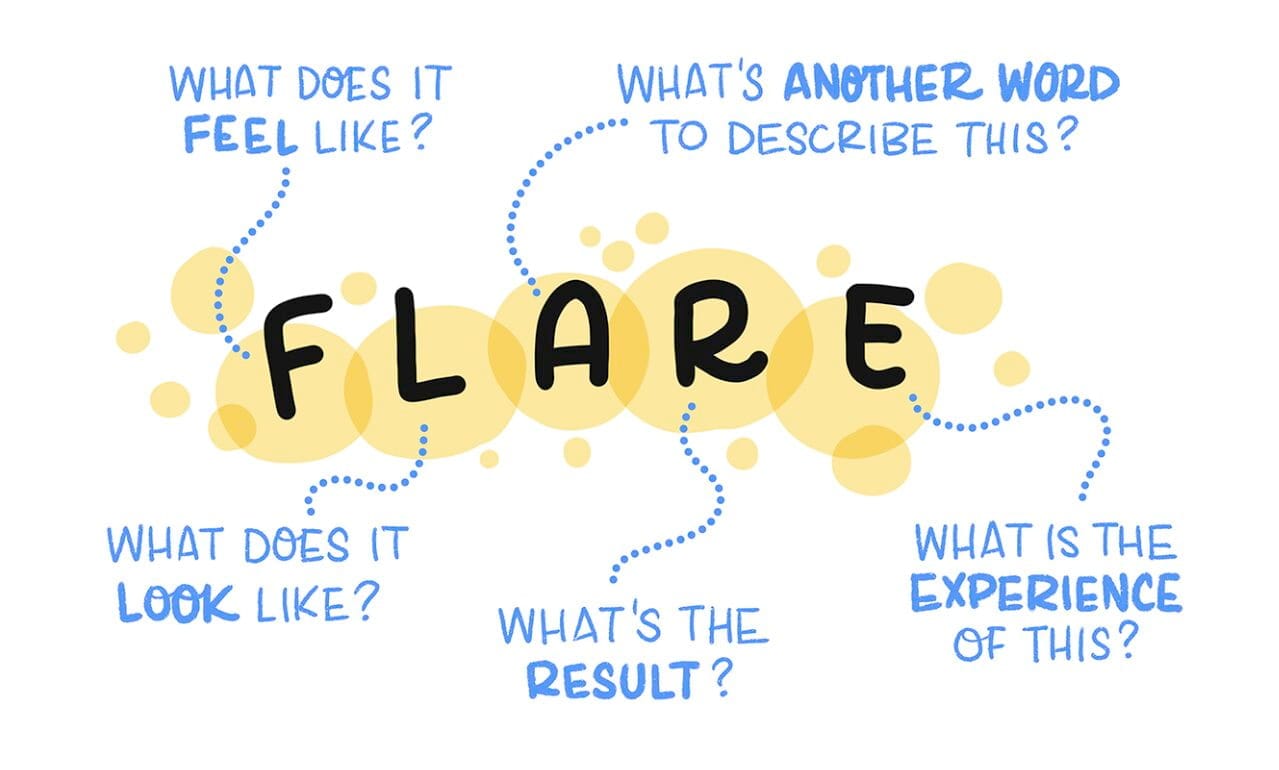
🤔 Start with a concept/topic you want to draw, and then ask yourself:F: Feel - What does this topic feel like? What emotions does it trigger?L: Look - What does it look like in the real world? Objects, scenes, situations?A: Another - What’s another way to name it? A word, metaphor, synonym, or reframe?R: Result - What’s the outcome or impact of it? What changes because this exists?E: Experience - Are there steps or actions that could be visualised that represent this?
Relooted
There are certain games that feel bigger, have an impact beyond their own release, and can spark a cultural shift – Relooted is one of those games.
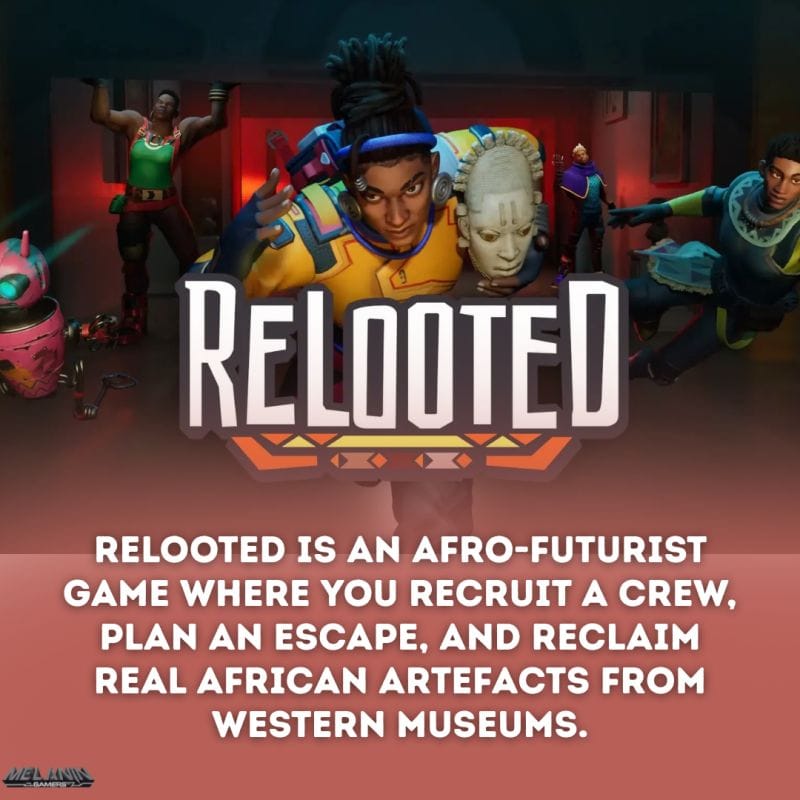
Here’s a subversive (in the best way!) video game… Relooted is “an Afro-futurist game where you recruit a crew, plan an escape, and reclaim real African artefacts from Western museums.” I say subversive in reference to at least three things: the central conceit of this game (stealing back what was stolen), the African studio behind this game, and in the way that the creators are “reclaiming [their] history” for the 70+ (real) artifacts presented in this game. More commentary here: Relooted: The Rise of African Gaming.
Choosing a UX Research Method
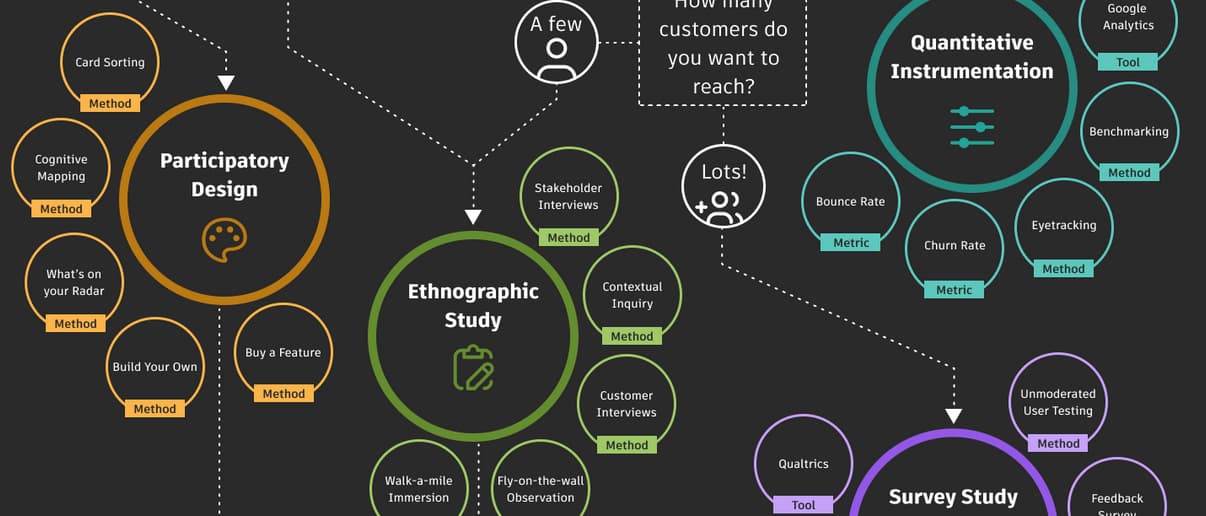
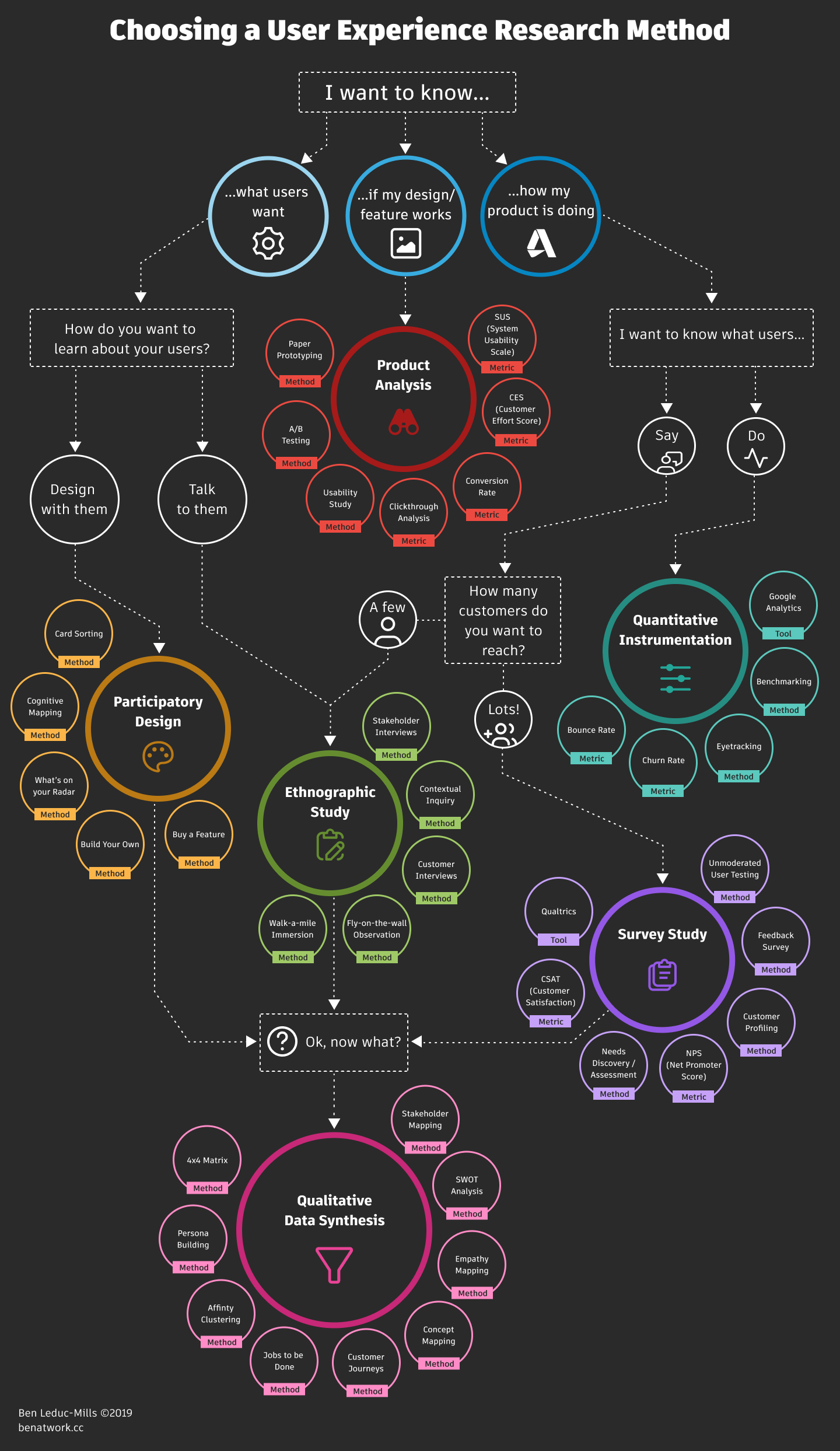
Another one to add to my growing list of useful flowcharts… This one for “Choosing a UX Research Method”.
Cognitive Surrender, Judgement, and AI
Two provocative things I’ve read on our human relationship with AI tools.
[WARNING: This somehow turned into a mini blog post! File both these finds—and my commentary—under things to think about!]
First, Thinking—Fast, Slow, and Artificial: How AI is Reshaping Human Reasoning and the Rise of Cognitive Surrender builds on the System 1 and System 2 modes of thinking popularized by Daniel Kahneman to propose a Tri-System Theory.
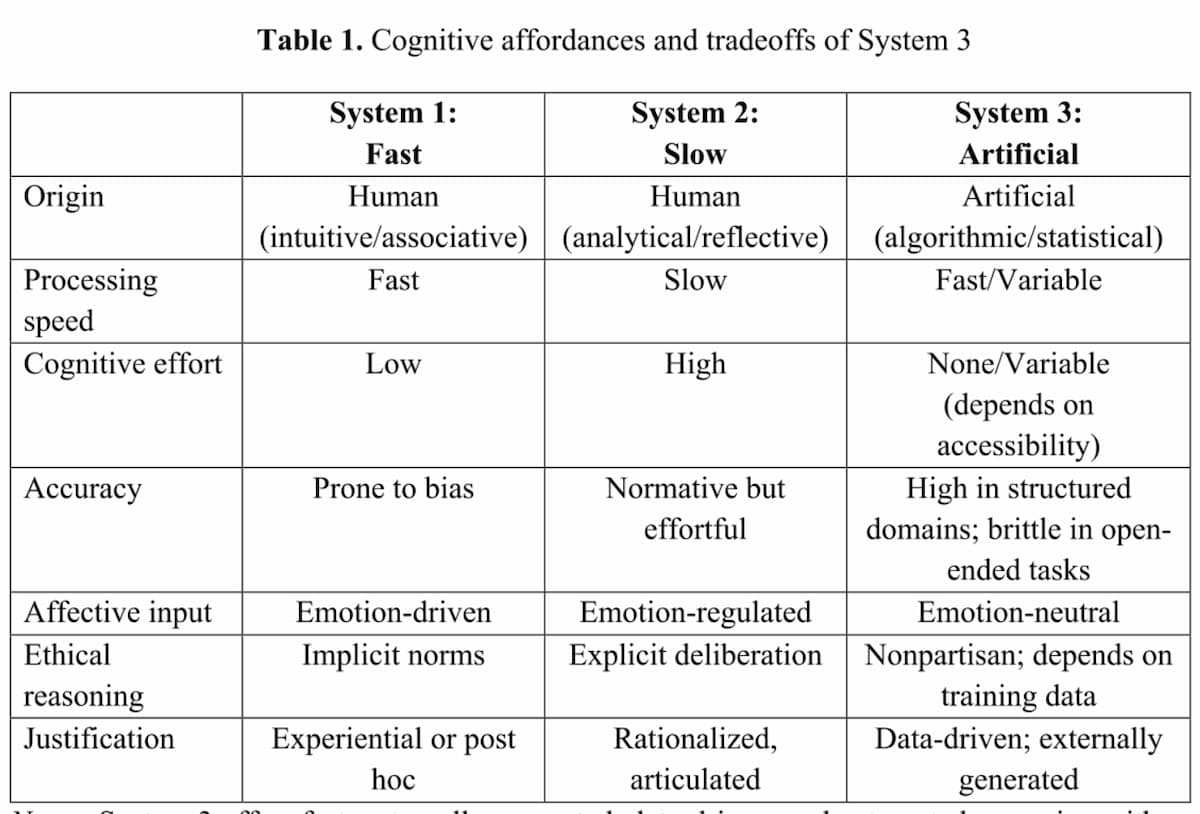
Framing the increasing use of AI as a “System 3” mode of thinking allows us to critically assess whether AI is being used to supplement System 2 (“cognitive offloading”), or… as the research finds, bypass System 1/2 (“cognitive surrender”) to create a reliance.
A consequence of System 3 is the introduction of cognitive surrender, characterized by uncritical reliance on externally generated artificial reasoning, bypassing System 2. Crucially, we distinguish cognitive surrender, marked by passive trust and uncritical evaluation of external information, from cognitive offloading, which involves strategic delegation of cognition during deliberation.
I found this provocative for several reasons:
- The reframing of AI as a third system is interesting:
- Why wouldn’t we also consider con men, authorities, coaches, or any external social agent as a 3rd system?
- What about tools like calculators, mobile phones, or walking sticks—when are these extensions of the self and when do these become a new complementary system?
- The “cognitive offloading” label seems off, more like outsourcing than augmentation; this line of thinking led to an interesting bit of reflection:
- While ‘cognitive offloading’ and ‘cognitive surrender’ are presented as two different things, it’s more likely that one is a slippery slope into the other.
- Accordingly, it’s more accurate then to think about these labels along a continuum, with cognitive surrender on one extreme end, and gradations of increasing reliance along the way.
- I suspect that under different circumstances and in different contexts, an appropriate degree of reliance upon technology would vary (e.g. consider how much agency airline pilots hand over to technology, for safety reasons)
In the LinkedIn post that shared this paper, they made an interesting remark:
So the paradox is that AI tempts us to no longer wrestle with uncertainty. Yet wrestling with uncertainty is literally humanity's job now.
This forms a natural segue to the next find, a rich essay on “On Unpredictability and the Work of Being Human”.
So many provocations in this one, but it starts with a bang about what makes humans distinct: unpredictability.
The core insight about unpredictability wasn’t just about humans being flexible or adaptive in some vague sense. It was more specific. Humans operate in parts of reality where the relevant information hasn’t arrived yet. Where the world is still becoming, where patterns are still forming, where what matters hasn’t been determined.
Halfway through the post, we get an exploration of the plausible consequences of AI, as it’s currently being wielded within our capitalist system. The author draws a sharp distinction between the frontier story for those in power building these tools and the transition story required of the rest of us.
The transition is what happens when the frontier collides with the rest of society. This is the world of job displacement, income shocks, institutional strain, cultural upheaval. The transition is where inequality widens before it narrows, where some people lose footing for years or generations.
But, there’s hope:
The transition doesn’t just reveal what humans are good at—it requires it. Judgment under incomplete information. Moving between competing frameworks. Reading emerging constraints. Supporting others’ development when outcomes are uncertain. Disagreeing productively and spotting anomalies. Acting when the relevant information hasn’t arrived because the situation is still forming.
When faced with increasing complexity, it’s our ability to make judgements—in uncertainty—that creates value.
Ecosystems require navigation. Judgment about which tool to use when. Understanding how different models might give you different answers and what that divergence means. If we’re heading toward systems of specialized AI software rather than one general intelligence, then human judgment doesn’t become obsolete—it becomes the essential integration layer.
While I fear the “transition” that’s being described could become a reality, I like the thoughtful exploration of ‘what humans are for’, and the argument for supporting a shared life, where things like curiosity, care, knowledge, and values can only exist when we collide with each other. Maybe a collapse is what’s needed to recenter on the things that really matter?
Whoa. That got heavy all of a sudden. Sorry. 😬
Anyway… go see Good Luck, Have Fun, Don’t Die for an over-the-top (and much more entertaining) warning about these same human and AI issues. 😉
[⚠️ Warning: Explicit language ⚠️]
Random Fun Stuff:
- Tired of prioritization frameworks? Olina Glindevi might have the solution for you... 🧂
- Why yes, yes this is a themeable component library inspired by the Warcraft III interface. ⚔️
- SuperSonic is a robust well-engineered, comprehensively tested web synthesizer. 🎹
- I only learned about “SBoMs” last year; anyway, here’s a Sandwich Bill of Materials. 🥪
- Whoa, it’s a robot made of liquid! 🤖/💧
- China's new 3d printing method fabricates objects in just 0.6 seconds. ⏱️