№ 16 | Beautiful Trouble Cards, Conversation Styles, Damaging Communication Patterns, Defensible Moats, and E-ink Playing Cards!

№ 16 | Beautiful Trouble Cards, Conversation Styles, Damaging Communication Patterns, Defensible Moats, and E-ink Playing Cards!

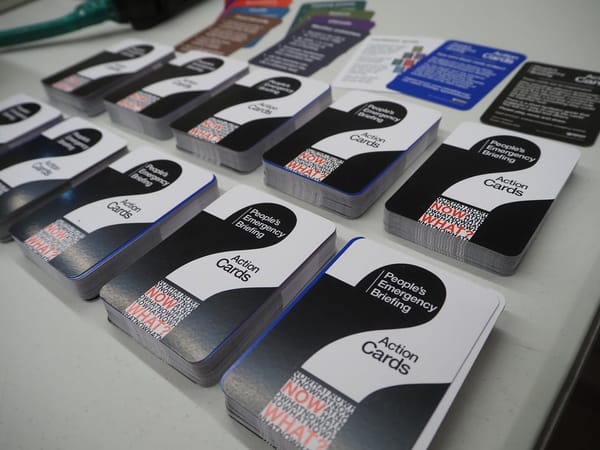
A social activism card deck?

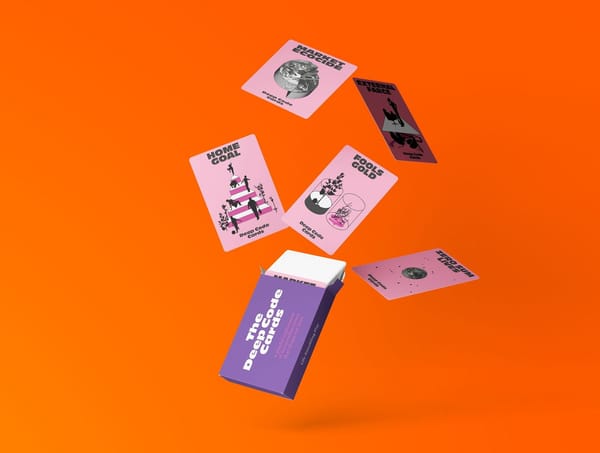
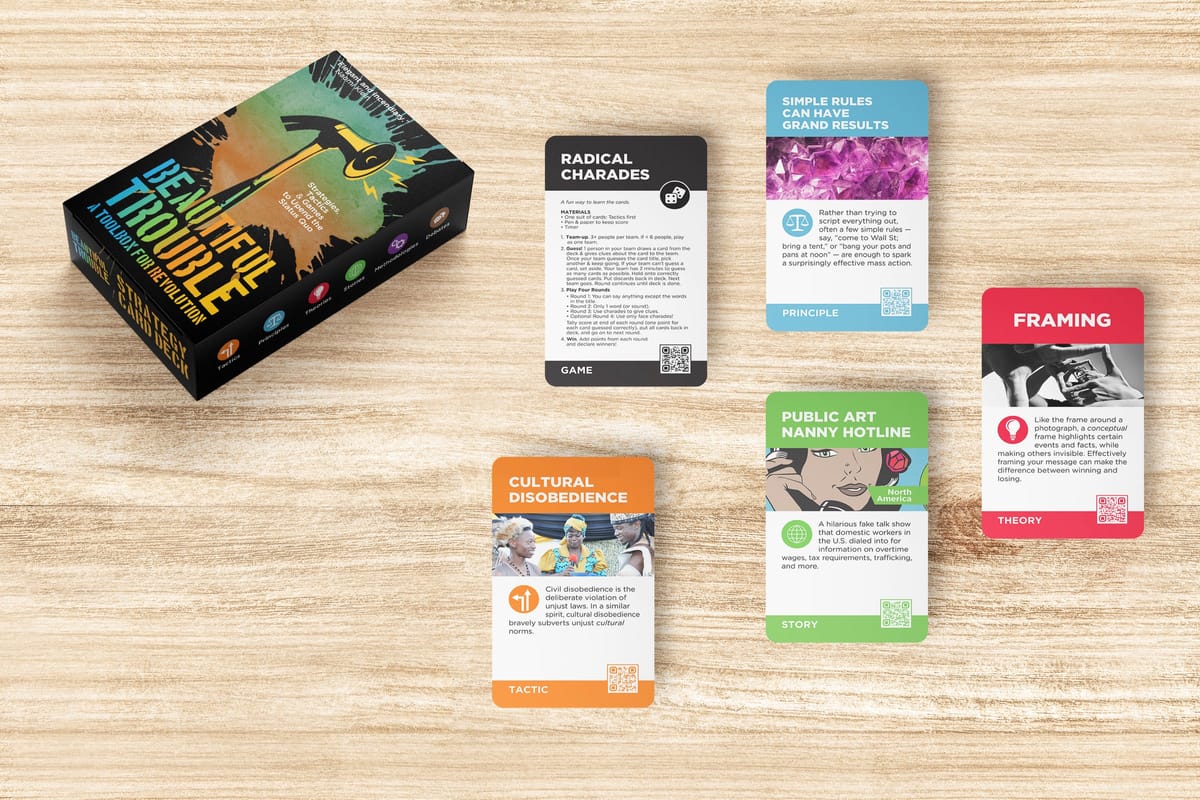
A social activism card deck and game? (6 games, actually!) The Beautiful Trouble card deck is pitched as a collection of “key strategies and tactics that have inspired centuries of people-powered victories… now in a deck of 100+ cards that you can play!” I'm sold!
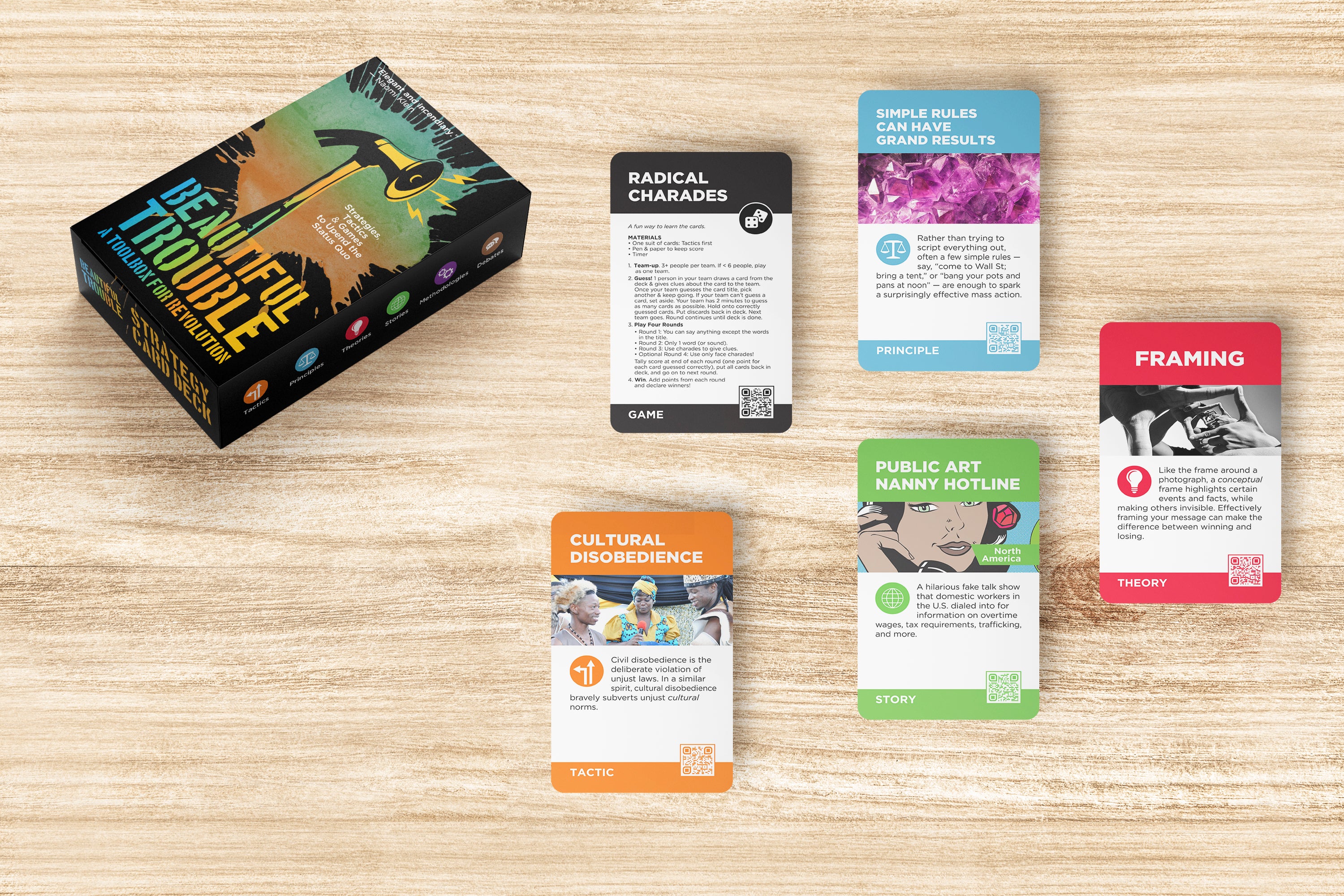
Beautiful Trouble: A Strategy Card Deck

“Interviewer or Volunteer?”

Does your conversation style veer toward that of an “Interviewer” or a “Volunteer?” Here's an interesting framework for thinking about conversation styles and roles we (hopefully) switch between.  Though after reading through this, there’s an implicit third role I’d add, that of the Researcher—one who leans into and digs deeper into what is said or suggested. Actually, I’d also add a fourth role: Catalyst. One who builds upon and transforms what is shared, leading to more a comfortable back and forth dialogue. 🤪

Speaking of conversations…

10 potentially damaging communication patterns...

I love John Cutlers visual thinking. This graphic representation of 10 potentially damaging communication patterns doesn’t disappoint.

[SRC]

Defensible moats

Defensible moats as part of a company strategy/business model are one of those ideas that both make sense, and have also been seriously disrupted by advances in technology.  For these reasons, I like this article on “The New Moats. Why Systems of Intelligence™ are the Next Defensible Business Model,” as it does a good job recounting the history and evolution of this idea, before leading you into what is, or might be, the new defensible moat for modern businesses.

E-ink playing cards

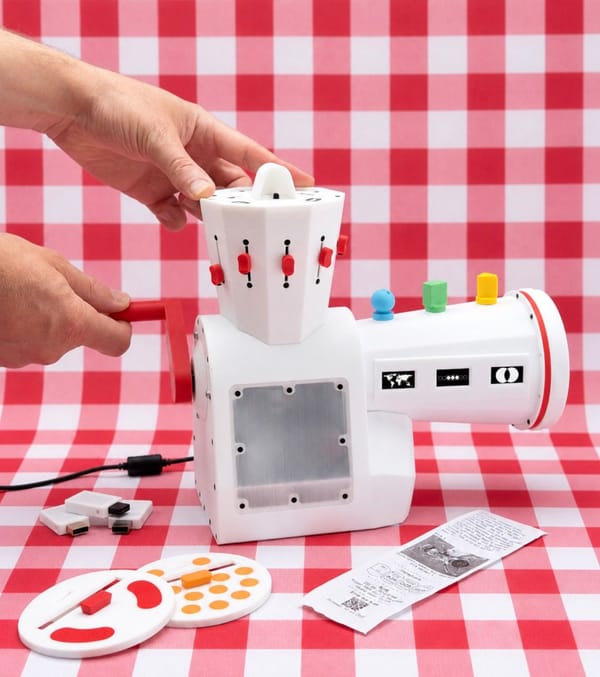
Yes, you read that right. Introducing Wyldcard—“Physical playing cards which can change!” So. Many. Possibilities. 😲+🤩
Read more

№ 114 | Platform Thinking Journey Cards, The Dictionary of Radical Alternatives, Learning Theory Map, “Let Them Have Your Way” Zine,  a Framework Mashup!, “There is No System 2”, Go for Goals, and Gutenberg Revisited

№ 114 | Platform Thinking Journey Cards, The Dictionary of Radical Alternatives, Learning Theory Map, “Let Them Have Your Way” Zine, a Framework Mashup!, “There is No System 2”, Go for Goals, and Gutenberg Revisited

Welcome to another curious roundup of ‘playful things to think with’ and think about! Platform Thinking Journey Cards Here’s a shout out to my friend Werner Puchert, who just dropped another one of his extensive card deck video reviews. This time, he’s looking at the Platform Thinking Journey

By Stephen P. Anderson
№ 112 | Teaching One Pagers, Sliderule Simulator, Board Game Icons, “Making, Hacking and Jamming”, FLARE, Relooted, Choosing a UX Research Method, and Deep Musings on our Human Relationship with AI

№ 112 | Teaching One Pagers, Sliderule Simulator, Board Game Icons, “Making, Hacking and Jamming”, FLARE, Relooted, Choosing a UX Research Method, and Deep Musings on our Human Relationship with AI

Welcome to another edition of the Thinking Things newsletter, your regular dose of playful things to think with, and think about. 🫵A couple of things: 1/ ♥️ ♠️ ♦️ ♣️ I’m exploring a special edition of thinking things focused on… 🥁 playing cards. Specifically, any activity that uses a standard deck of playing cards

By Stephen P. Anderson
№ 111 | Art in Board Games, Don't be a Pug in a Bag , Building a Thinking Infrastructure, the Augmentation Canvas, Women’s Clothing Sizes, “Hat, Haircut, or Tattoo”, Phantom Obligations, and Joy Cards (Volume 2)

№ 111 | Art in Board Games, Don't be a Pug in a Bag , Building a Thinking Infrastructure, the Augmentation Canvas, Women’s Clothing Sizes, “Hat, Haircut, or Tattoo”, Phantom Obligations, and Joy Cards (Volume 2)

Welcome to another edition of the Thinking Things newsletter, your regular roundup of ‘playful things to think with’ and think about. Art in Board Games I’m very interested in the information design of board games. This is not that. What begins as commentary on updated art for the game

By Stephen P. Anderson