№ 9 | “5 Myths About Strategy,” “Schwerpunkt,” Mixed-Use Cities, Choice in Narrative Games, and Meaningful Choices

Share
№ 9 | “5 Myths About Strategy,” “Schwerpunkt,” Mixed-Use Cities, Choice in Narrative Games, and Meaningful Choices

“5 myths about strategy”

I love the structure of this HBR article “5 Myths About Strategy”— short and to the point! State the myth. Explain “Why it’s plausible” then unpack “Why it’s wrong.” It's almost as if this is begging to be turned into a 'check your understanding' game… 🤔

As long as we're on the topic of 'strategy'…

“Schwerpunkt?”

Yes! “Schwerpunkt: The Killer Strategic Concept You’ve Never Heard Of (But Really Need To Know!)” I'm increasingly skeptical of lessons derived from cherry picking success stories, but… I enjoyed this look at how Steve Jobs found Apple's “Schwerpunkt,” or focal point. I'm glad they mention that finding this ‘center of gravity’ is “a dynamic, not a static, concept… It was Jobs’ ability to constantly innovate Apple’s approach, by constantly observing, reorienting and shifting the competitive context.” The challenge I've found is to drive investment in this new direction, when your present strategy is still making money for the business.

Mix-used cities and aliveness

The visual in this tweet caught my attention, and led to a rich and interesting read all about the benefits of mixed-used areas in cities and why some cities feel more alive than others.

While this is explicitly about the benefits of mixed-use areas [hard stop], I'd love to see a more objective analysis of the pros and cons of mixed-use vs single-use zoning, and what kinds of city functions (airports, for example) that should (or seem like they should?) be placed outside of other zones. And I couldn't help but think about the board game Suburbia. 😂

Choice in narrative games

How do you make choices interesting when players revisit the same location/scenarios?  I found this game design diary to be an enlightening, and highly accessible read, as the author / game designer Shadi Taha brilliantly unpacks the various challenges he's faced designing meaningful choices into his narrative game. Bonus points for a classic Super Mario reference.  Check it out! “Deep Dive: Curating meaningful multiplayer narrative choices in Doomsday Paradise.”
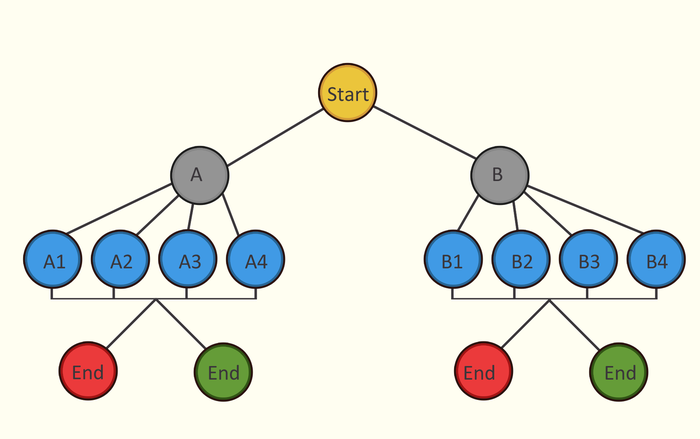
A critical thinking game?

It seems like these “18 pitfalls to be aware of in AI journalism” could  be turned into a critical thinking game… What do you think?

Read more

№ 124 | Deep Deck, Charismatic Language, “Are Student Attention Spans Really Shrinking?”, AI Divergence Engine, 10 Things to Watch Out for When Working with AI, “Society Begins at Home”, and Collective Madness Bingo Sheet

№ 124 | Deep Deck, Charismatic Language, “Are Student Attention Spans Really Shrinking?”, AI Divergence Engine, 10 Things to Watch Out for When Working with AI, “Society Begins at Home”, and Collective Madness Bingo Sheet

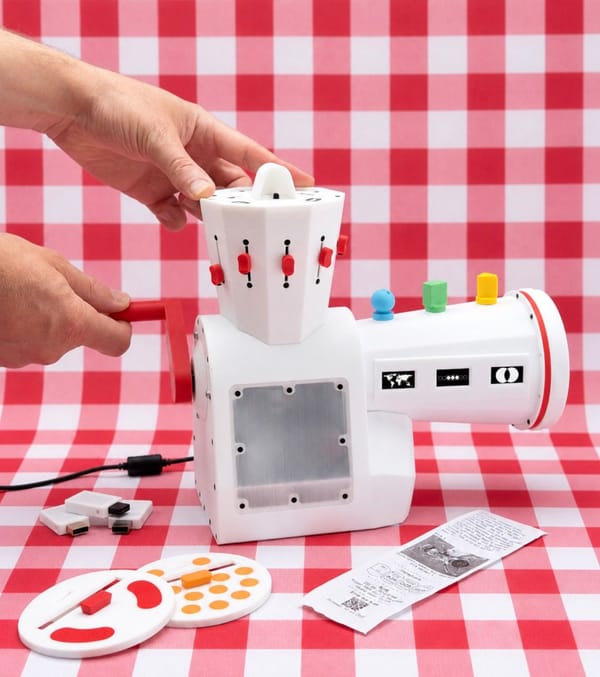
Deep Deck Let’s kick things off with a good ol’ analog card deck! Deep Deck is a deck of conversation starters that promises to “push strangers closer and pull friends deeper.” Deeper connections and all that. Long-time readers will know how bored I am by most of the

By Stephen P. Anderson
№ 123 | Deep Code Cards, Cultural Differences and Storytelling, “So You Want to Be an American?” (the Game), Work-Life Balance, the Smiley Model, Playful Visualizations—Using Trees!, and Deep Reading

№ 123 | Deep Code Cards, Cultural Differences and Storytelling, “So You Want to Be an American?” (the Game), Work-Life Balance, the Smiley Model, Playful Visualizations—Using Trees!, and Deep Reading

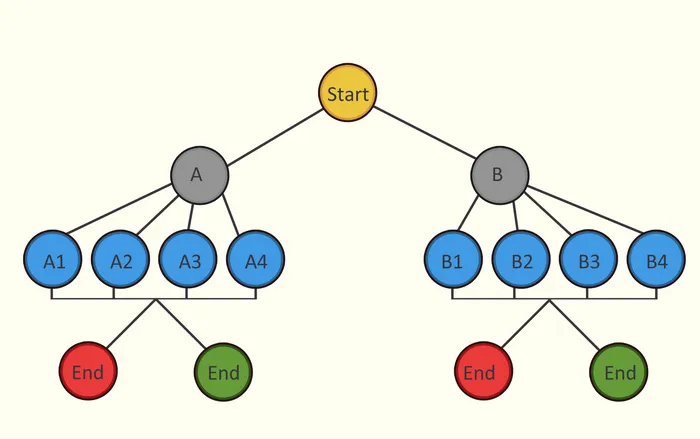
Howdy! Welcome to another roundup of ‘playful things to think with’ and things to think about. Let’s kick it off with… Deep Code Cards Ooh… Another project from Dark Matter Labs. The Deep Code Cards offer a “playful exploration of the invisible forces that shape our lives.” Nice. Maybe

By Stephen P. Anderson
№ 122 | A “Horseshoe” Diagram, Slow AI, the Data Communication Triangle, The Invisibles, A Simple Clustering Algorithm for Lists, Ordinary Abundance, and “Certainty, Variety, and Delight”

№ 122 | A “Horseshoe” Diagram, Slow AI, the Data Communication Triangle, The Invisibles, A Simple Clustering Algorithm for Lists, Ordinary Abundance, and “Certainty, Variety, and Delight”

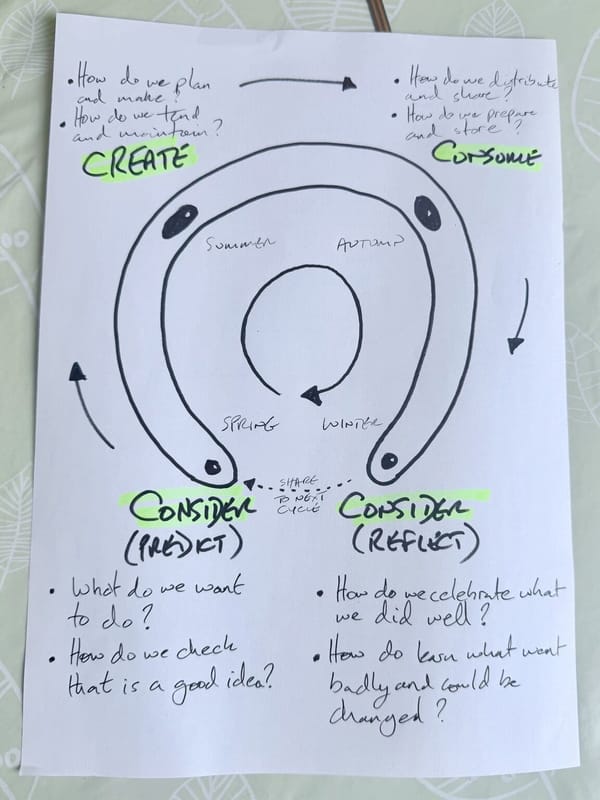
A ‘horseshoe’ diagram Ooh… A horseshoe diagram?! That’s a new-to-me pattern; I’m adding this to my collection of visual primitives. Pretty much a cycle, with emphasis on the starting and ending points (before the cycle begins again). That’s all. Oh, and as for the content

By Stephen P. Anderson
№ 121 | EVOLUTION: A Card System to Break Automatic Patterns, Visualizing a Billion, Systems Thinking Lessons from Monsters, Inc., The Committee Game, A 3x3 for Assessing Stakeholders, and 6 Ways Leaders Harness Stress

№ 121 | EVOLUTION: A Card System to Break Automatic Patterns, Visualizing a Billion, Systems Thinking Lessons from Monsters, Inc., The Committee Game, A 3x3 for Assessing Stakeholders, and 6 Ways Leaders Harness Stress

Welcome to another edition of Thinking Things, your (mostly) regular roundup of ‘playful things to think with’ and things to think about! EVOLUTION: A Card System to Break Automatic Patterns You might know I’m just a wee bit (ahem) analytical. I like to take “squishy” concepts—conflict resolution, collaboration,

By Stephen P. Anderson