№ 23 | Beyond Developed / Developing, System 3 Thinking, Against Finding Your Niche, 5 Competencies for Crisis Leadership, and Different Levels of No

Topics are a wee bit more heady this week… Fewer pictures! 🤪
Beyond developed / developing
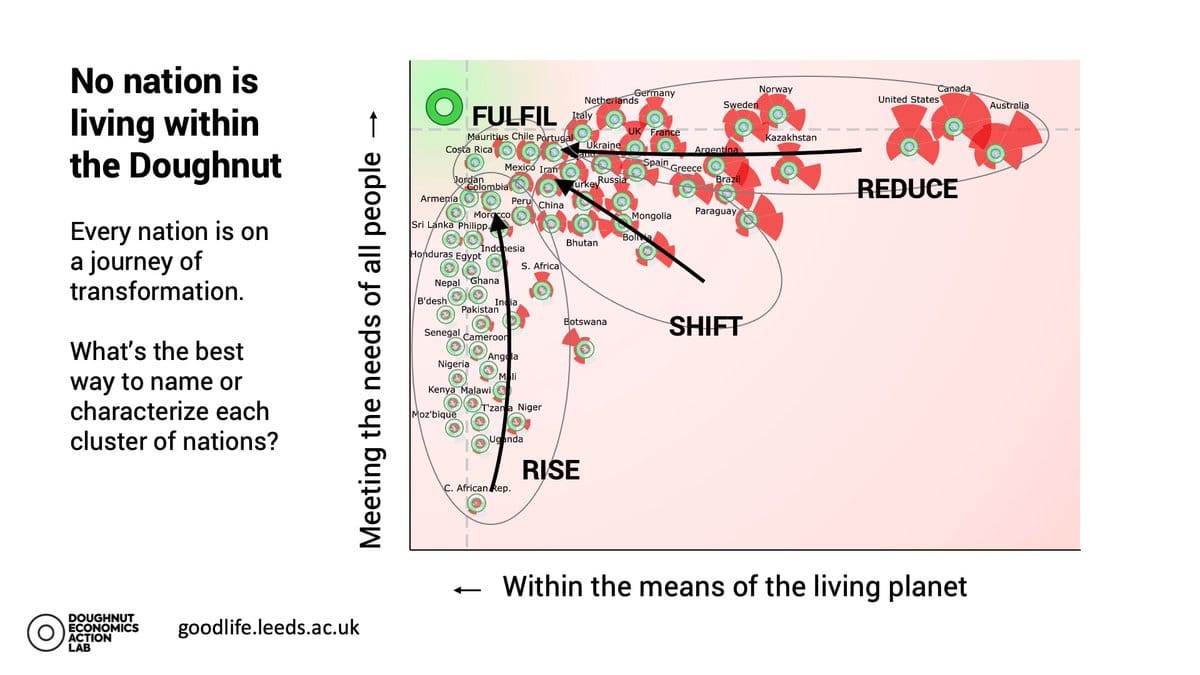
Here’s an interesting request: Kate Raworth (author of Donut Economics—is seeking input on 4 labels. “To get beyond erroneous ‘developed / developing’ countries, we’re proposing new country clusters, in terms of their journey towards living in the Doughnut. For starters: Rise-Shift-Fulfil-Reduce. What else do you suggest?”

‘System 3’ thinking?!
It started with a post about “Tools for Activating System 3,” which references two tools for thought I've used: The Business Model Canvas and the Empathy Map. This one article led to another, and I've now read most of Michael Anton Dila's posts on System 3 thinking. I think I'm starting to get a handle on what's he's after—something to do with ”immersive, collaborative teamwork.” That, and he makes mention of games and complexity. I'm hooked. From Dila's Initial Hypothesis, here's most closest thing I've found to a direct explanation:
1. There is a kind of thinking we do mainly through immersive interactions with others that is not well described by Kahneman’s concepts of System 1 and 2. I call this social, emergent mode of thinking System 3.
2. System 3 is both a strategy for dealing with complexity and is itself irreducibly complex.
3. System 3 is a product of design, it emerges through purposeful, immersive and open-ended interactions which have or acquire intent, but do not aim exclusively at an outcome known or knowable in advance.
So… System 3 thinking is essentially thinking above the level of the individual, and factors in the situational context that gives rise to certain patterns of thought? Akin to group cognition, perhaps? I'm excited to see the more practical application of this thinking, that is alluded to in a few of the articles.
Some other choice quotes:
We play thinking games in order to explore not only the expanse (and limits) of the worlds we find ourselves in, but also to imagine new and better ones.
and
System 3 is not merely a system for interconnected thinking, but also, I believe, a technology for worldbuilding…
📖 Oh, and one these posts introduced me to a new word: Terroir. Typically used to in a wine context, it “refers to natural aspects such as a region’s climate, topography and soil, and how this affects the taste of the wine.” I love the use of it here to refer to the context that gives rise to creative thinking and collaborative engagement around complex topics.
Against finding your niche
I’ve heard forever that you must ‘find your niche’, ‘clearly position yourself’, ‘become known for one thing’, and so on. Which, while this does make sense, has always felt to me a bit… limiting? If I’m a growing, dynamic human being, I’m likely to change, right? Anyway, I found these posts (1) interesting in that they challenge these familiar axioms, and (2) affirming for what I’m trying to do here— “✨playful✨ things to think with” is both niche and nebulous, right? Maybe we’ll just figure out together what it is that connects us, whether or not we can articulate it! Anyway… Enjoy these two articles for challenging convention wisdom:
5 competencies for crisis leadership
This was a longer—but thought provoking—read on Crisis Leadership (PDF) from the Annual Review of Organizational Psychology and Organizational Behavior. Apparently, crisis leadership is a “relatively underdeveloped, underresearched field.” (H/T Helen Bevan for this one!).
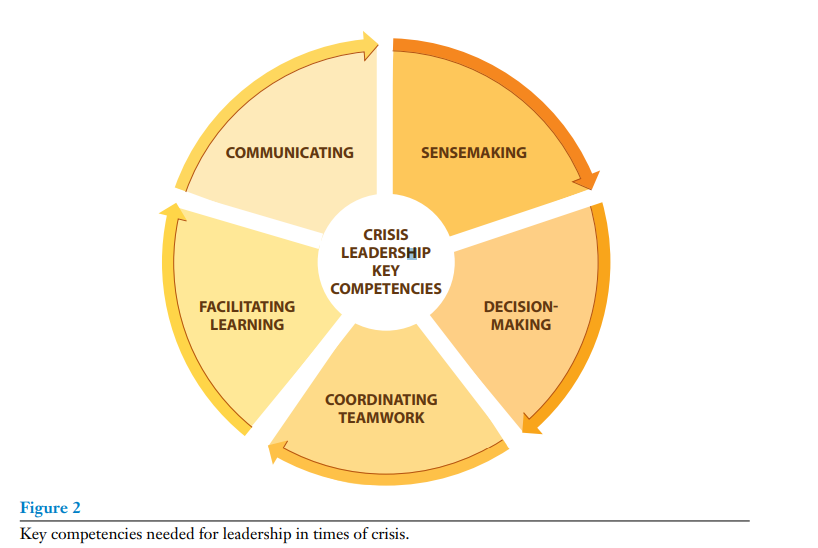
New ideas (for me) included the distinction between crisis-as-event and crisis-as-process, Cognitive Resource Theory (CRT), Charismatic Leadership Theory, Complexity Leadership Theory, and so on.
On that last topic, I loved this comment :
According to complexity theory, leadership does not start with the leader in a top-down fashion. Instead, it emerges from the complex interplay of people— leaders, followers, and other stakeholders—and the rich contexts in which said interplay occurs.
(So… “rich contexts” as in System 3 thinking? Or terroir?)
Oh, and I also highlighted this bit:
While centralized leadership is effective in dealing with failures in less complex systems, more complex systems, such as aircraft control systems and space exploration, require more decentralized leadership to deal with crises within the system.
Different levels of no
I like this kind of thinking—‘What kind of No are we talking about?’ 😉 Reminds of a similar post I have somewhere on 5 kinds of delegation. [SOURCE]