№ 119 | Scenarios From the Fable 5 Ban, Type Simulation, Player Agency, Echo Chamber Simulation, A1 Collision Density, Brains on Games, Conversational Leadership Essentials, the HIVE Deck, and a Vincent van Gogh Makeover

Welcome to another edition of Thinking Things, your regular roundup of ‘playful things to think with’ and things to think about!
Let’s jump into it…
Scenarios from the Fable 5 ban
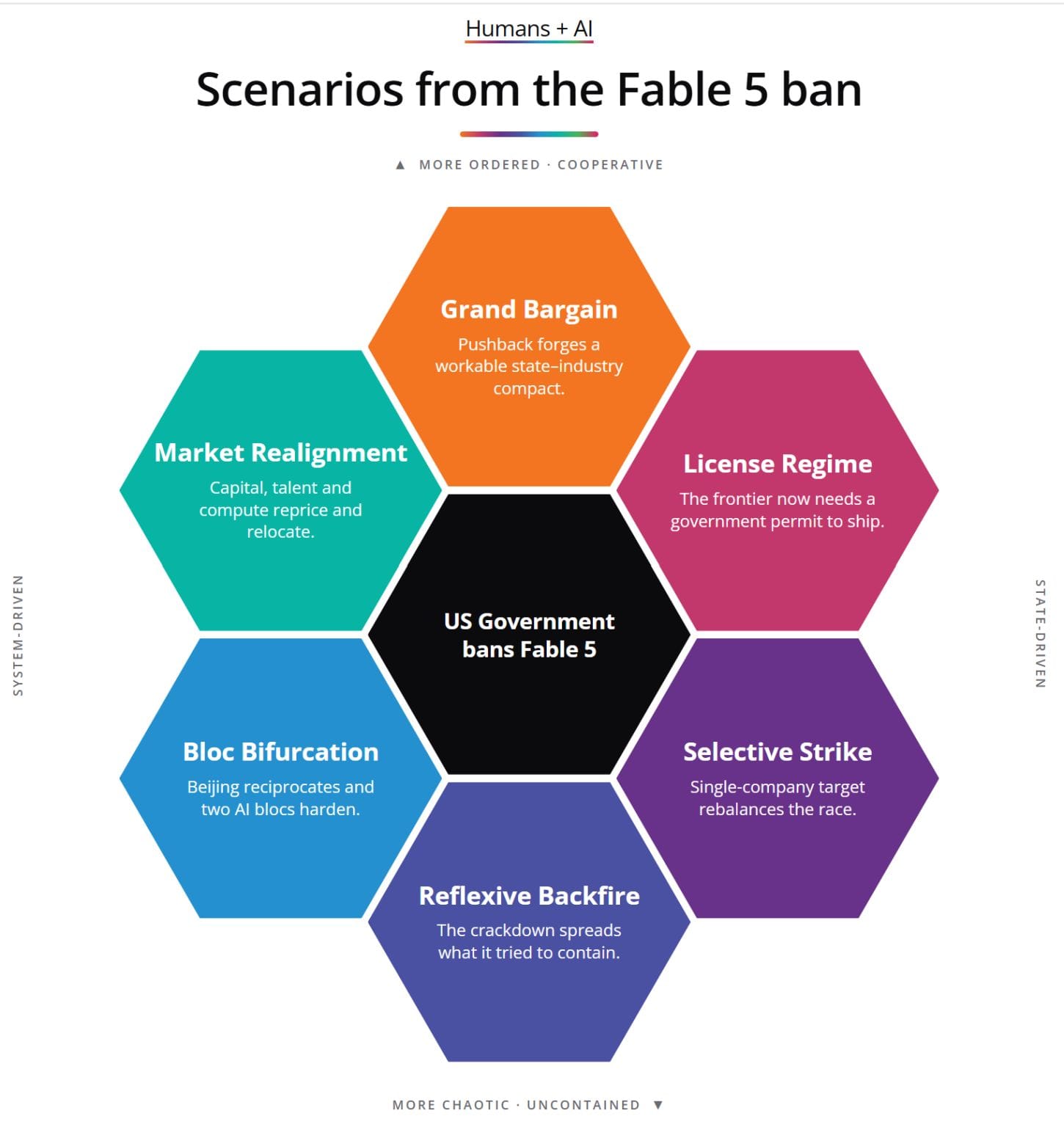
You might have heard that the US government banned Anthropic’s latest LLM model? This isn’t about that, exactly. This is a futurist’s take on 6 possible scenarios from the Fable 5 ban.
These scenarios grabbed my attention for 3 reasons (none of which are the content).
- Futurist and foresight thinking. I’m a sucker for this kind of thinking.
- Hexagons. I started imagining a scenario planning tool with a triggering event placed in the middle, surrounded by 6 suits of archetypal responses, from which you select one… (kind of like the Zenith Purpose Anatomy deck that I mentioned in my special edition focused on hexagon card decks!).
- The matrix onto which this is aligned. Ordered/Chaotic and System-Driven/State-Driven. It’s not just 6 randomly placed hexagons—they align to a 2x2.
Type simulation
Last issue, I shared the web typography learning game, which focuses on the interplay of three variables: Line-height, font size, and line-width. Two weeks later and I stumble across this interactive typography tutorial (X/twitter), which visualizes the sweet spot (the green band) that balances line height (aka “leading”) and line-width.
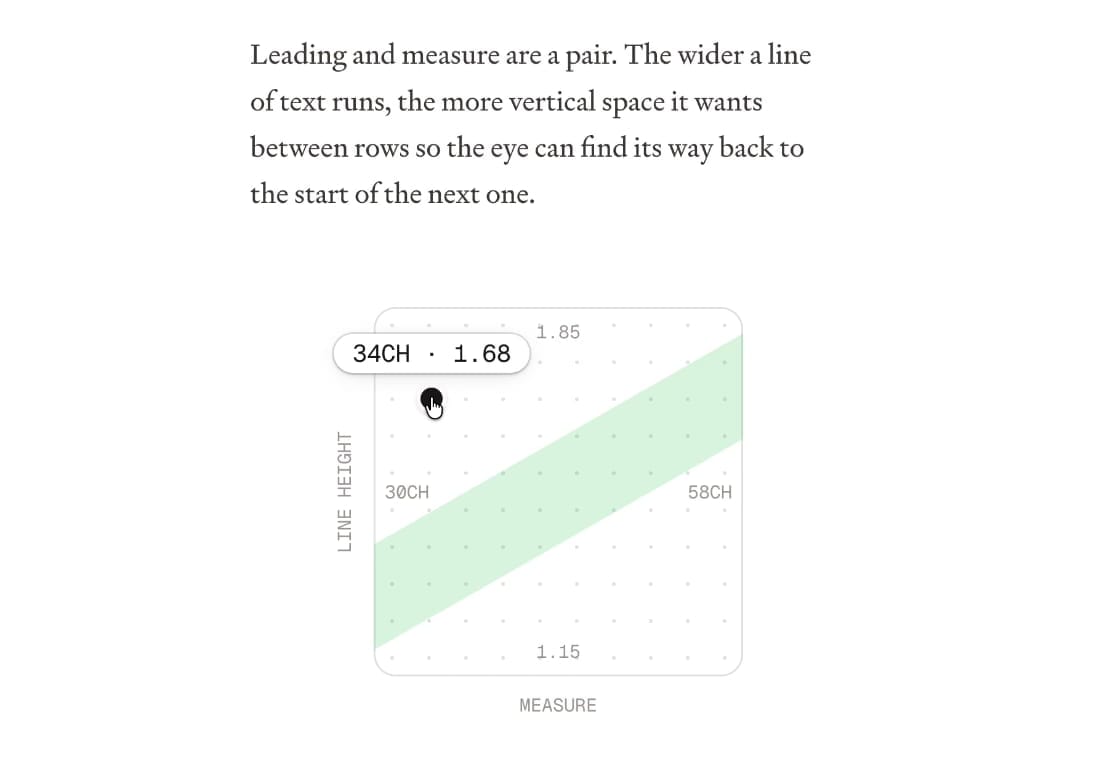
Where the game was a test of prior knowledge, and offered a tight feedback loop on your performance, this feedback loop is immediate and instructional, helping you to develop a feel for what is good typesetting, and why.
Two models for player agency
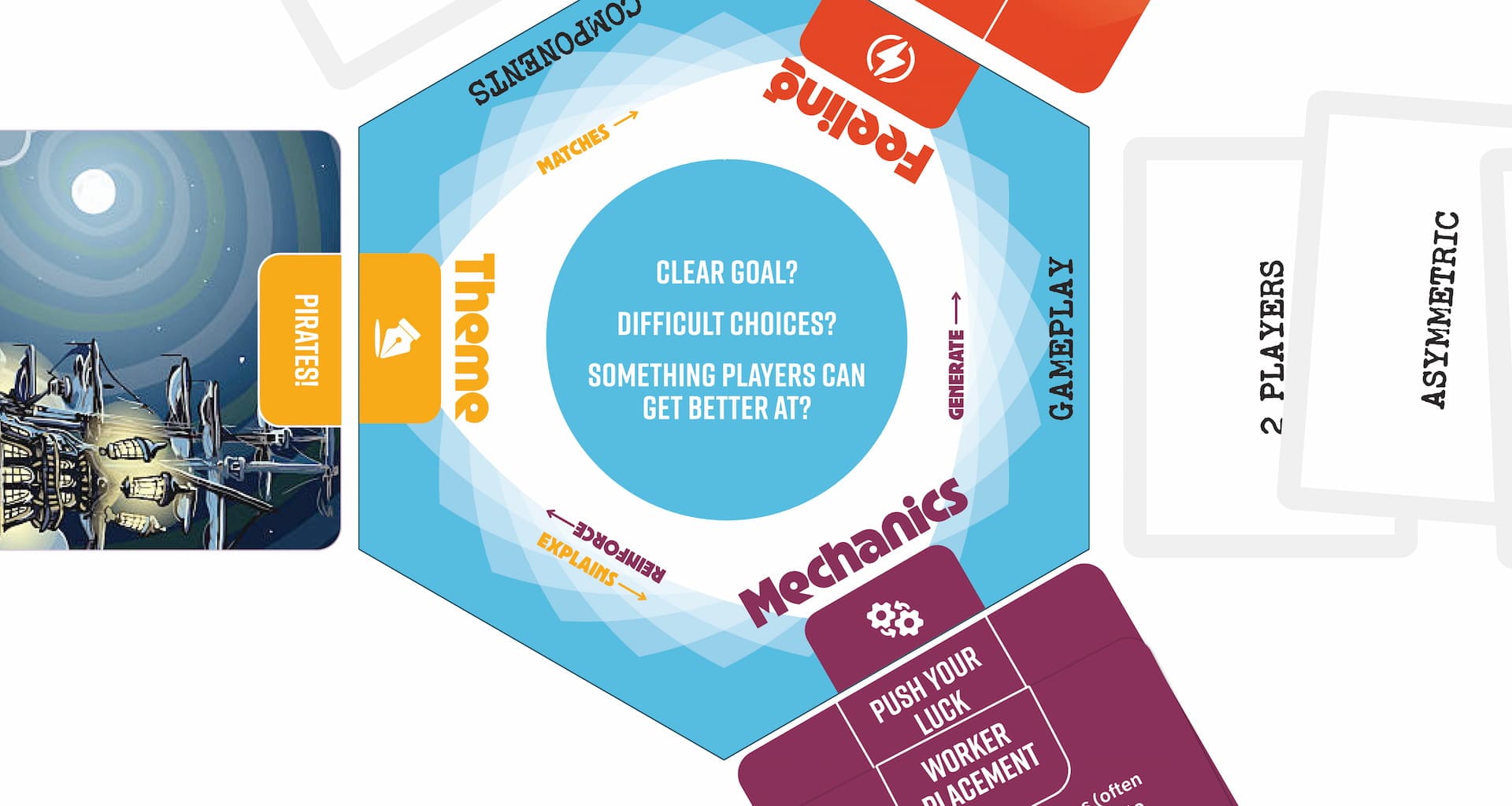
Context for this next find… Over the years, I’ve arrived at three questions I ask when designing a game:
- Is there a clear goal?
- Are there difficult choices? (Often a difficult choice between short-term and long-term goals—thank you Extra Credits for this one!)
- Can players get better at the game?
Behind any explorations of theme, game mechanics, or feeling, I believe being able to positively answer these three questions is a requirement for a good game.
With that as context…
This next find is the kind of structured thinking I love to discover—and share! By way of this post on ‘Carta SRD and player agency’, are not one but two (3 if you read part one of the article!) frameworks for thinking about player agency.
The first is the CCI model of agency, from The Power of Choice: Player Agency in Tabletop Role-playing Games (Amauger, 2023), which identifies three key elements:
1 Choice: The player is presented with multiple options.
2 Control: The player has the ability to act upon the options.
3 Influence: The player’s decision changes the world of the game.
The second model is one proposed by Chris McDowall in The ICI Doctrine: Information, Choice, Impact.
I, along with the author, like that the ICI Doctrine has the additional focus on the need for information when making a choice. Ever the synthesizer, these two models seem ripe for combining: The CCII model? Or C²I² model? or… I got it… the CICI model! (Bad reference to an American pizza chain!)
Echo chamber simulation
Via the /explorables subreddit, I discovered this Echo Chamber simulation. It’s the kind of thing I often allude to when talking about the collaborative sensemaking tools we need to make sense of our most pressing issues… with one exception. Go play with the simulation. You’ll see—no, you’ll experience—how echo chambers form and how bots make things worse. A lot worse. (I recommend making heavy use of the presets, in addition to playing with the variables.) All in all, it’s a powerful way to model outcomes based on any number of variables. It’s also a great way to model patterns at scale, especially for data scientists who love this kind of modeling.
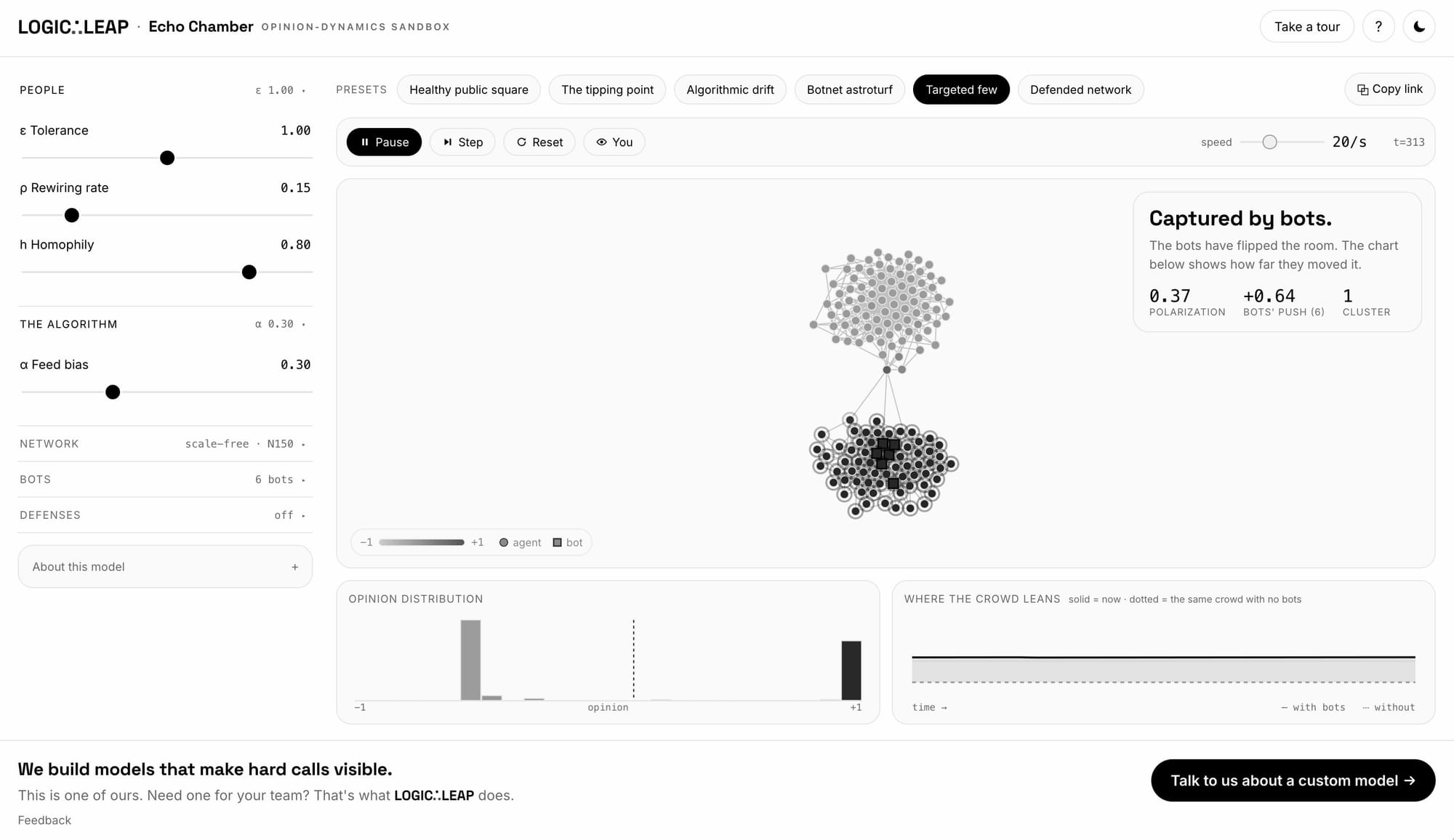
So what is it missing, for me? I can’t help but compare this to the explorable explanations that Nicky Case is famous for, or even things like the Space Elevator or Size of Life over at Neal.fun. I think the missing piece here—that these other examples have—is something to make this more accessible, and fun. A story, scenario, character, recognizable objects…an element of playfulness that makes the modeling more personally relevant. And in doing so, the plaything goes beyond a modeling tool for a niche audience to something that everyone could play with and use to become intimately acquainted with the topic (how echo chamber form and how bots are used to manipulate attention). In this way, perhaps more people would become aware of and outraged by these social media practices.
That commentary aside, I appreciate the creators’ work at modeling a complex topic.
Speaking of visualizations…
A1 Collision Density
It’s rare that I find a data visualization that surprises me… This visualization for reported collisions along the A1 (London to Edinburgh) was a refreshing find. Kudos for both representing information in a novel way, and in a way that is specific to the content being represented.
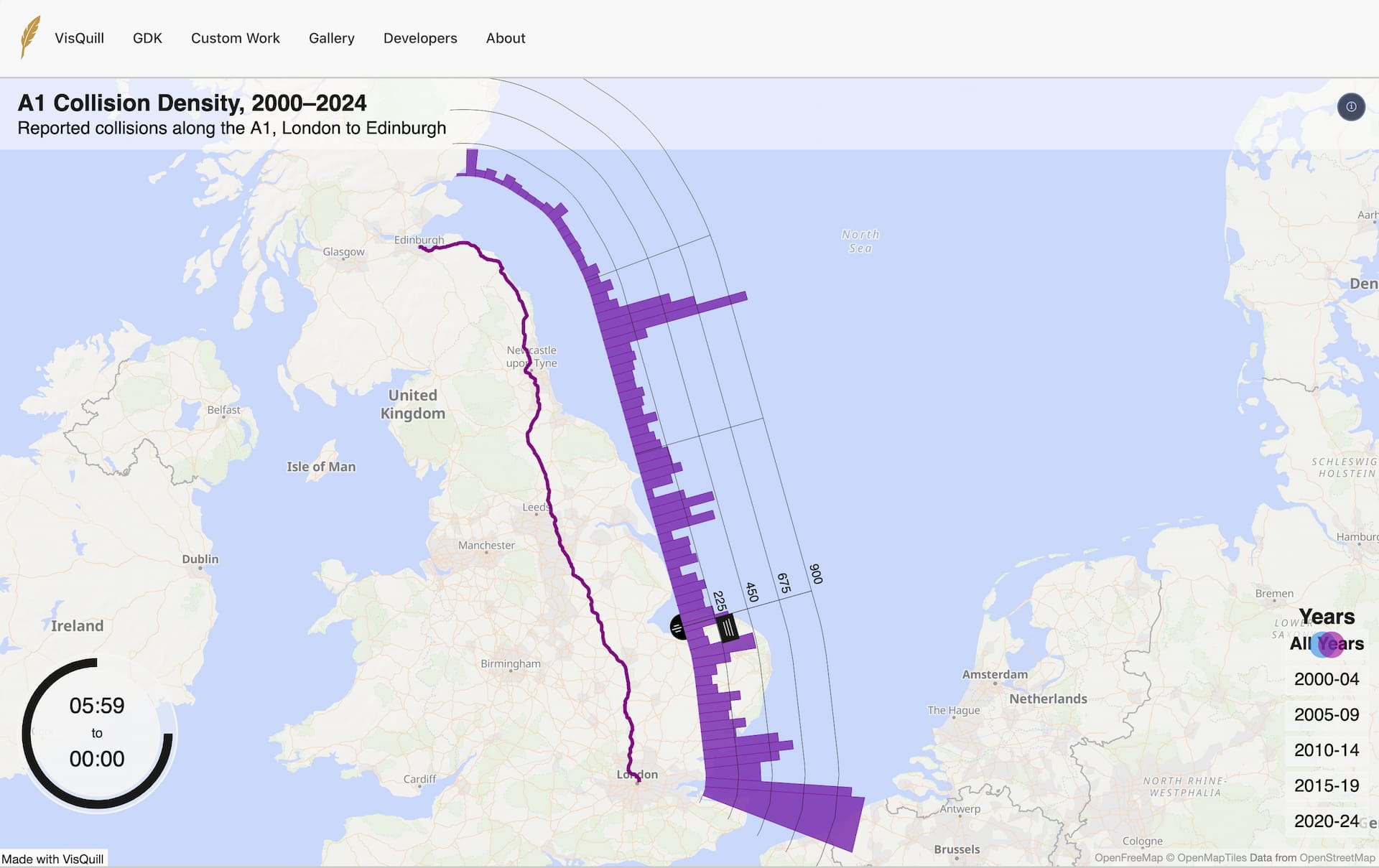
The chart shows more than 24,000 reported collisions as a histogram running parallel to the route itself, so each bar maps directly to a stretch of road. The visualization supports panning and zooming, making it possible to explore large-scale patterns as well as zoom into specific junctions and towns. Filtering by time of day and year reveals the temporal dimension, e.g., rush hour peaks and overnight lows. The steady decline in collisions over the past two decades is visible along the entire route.
From a visualization point of view the most challenging part was finding a concept that lets the user directly associate the bars with the route. The result is a simple parallel curve that follows the actual road.
H/T Dave Gray for this one.
Brains on Games
If you regularly play (new) board games, then you’re familiar with the “How to play [insert game name]” search query, followed by watching a 15 or 30 minute instructional video. Or two. Anyway, here’s my random / serendipitous discovery: I had friends over last weekend. We were watching this “how to play…” tutorial, and… at about 7 minutes in… the presenter starts talking about ‘executive functioning skills’, ‘quantitative reasoning’, and ‘working memory’.
Wait, what?
Turns out Brains on Games is a YouTube channel (and web site) that explores “the strategic, educational, and skill-building aspects of board games.” So, if you want a video site/channel with an educational take on various modern board games—here you go!
Conversational Leadership Essentials
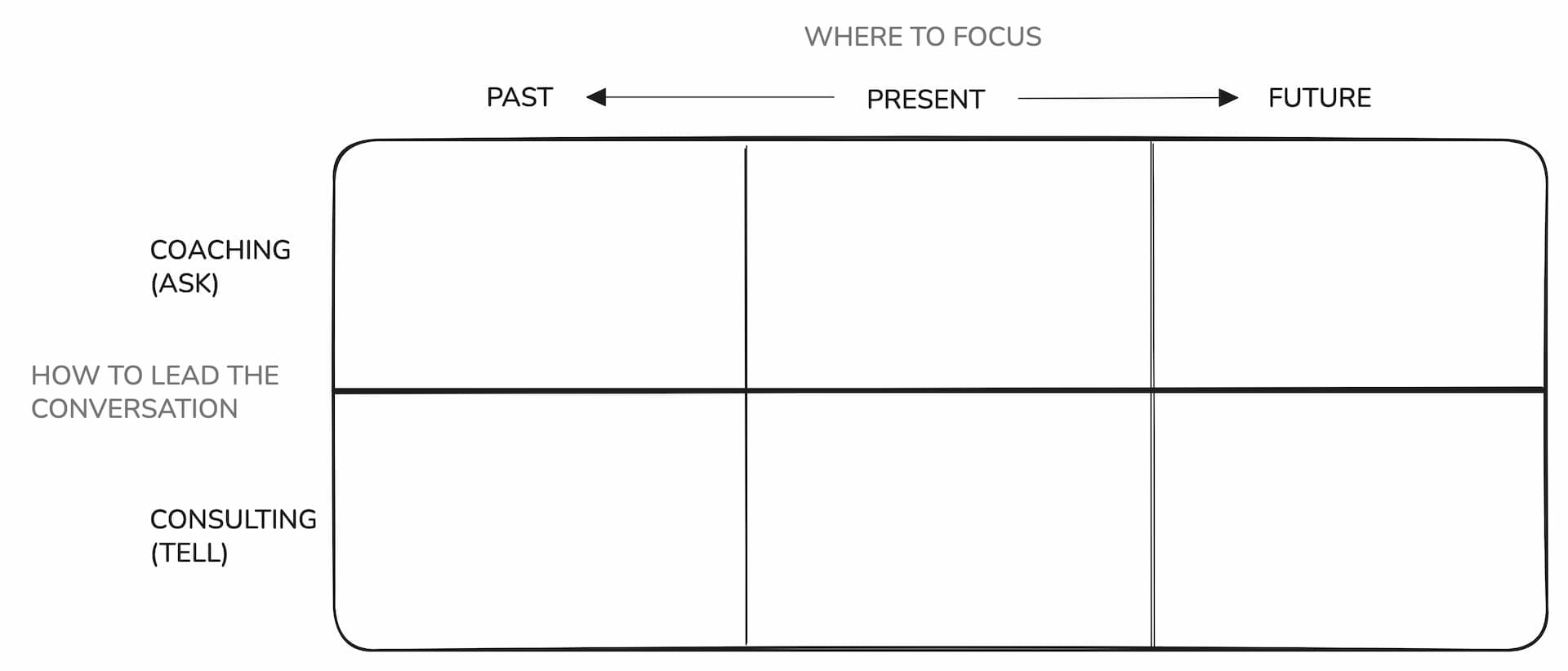
I love the simplicity of this conversational leadership model from Daniel Stillman. From the left to right, it asks if you’re going to focus on the past, the present, or the future (a framing I use a lot in my daily work and to diffuse conflict). This is complemented by two roles we can play: The coaching role (ask the questions that let them figure it out) or the consulting role (tell them what to do). It’s simple, and elegant, stitching together some different frameworks to create something new.
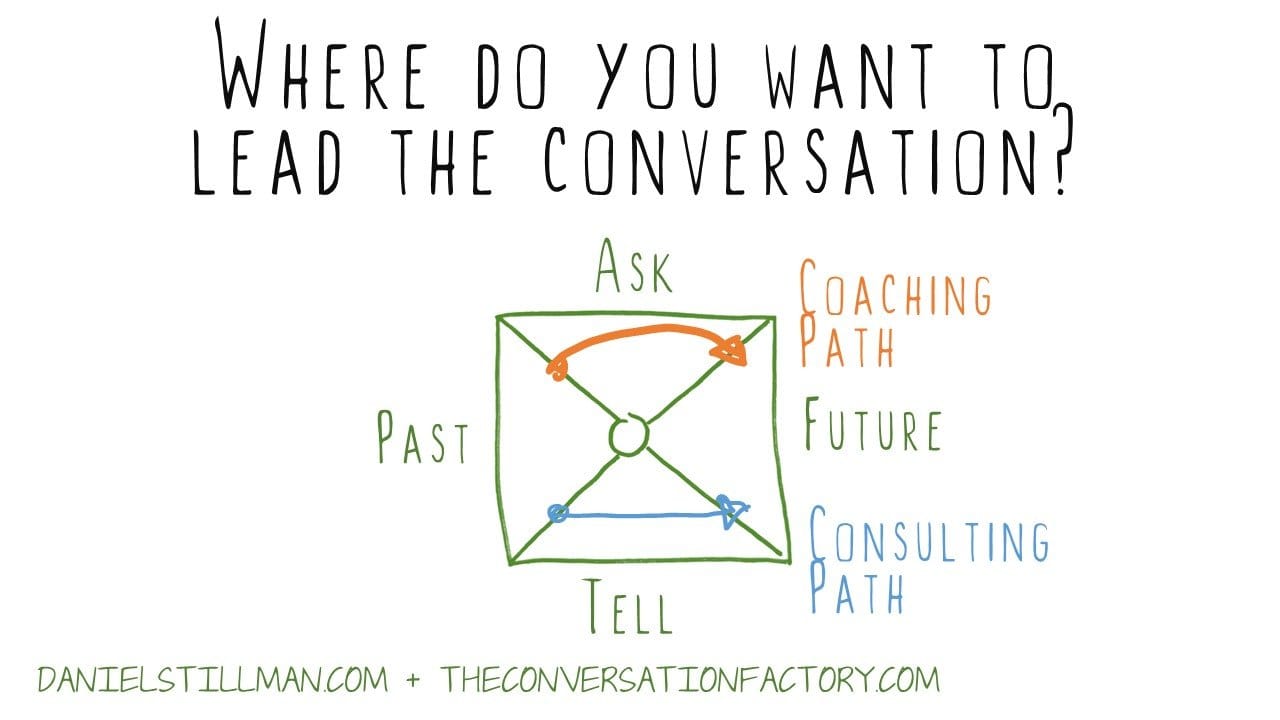
There’s more in his post (including the SSOON model), but… it’s this simple framework that caught my attention.
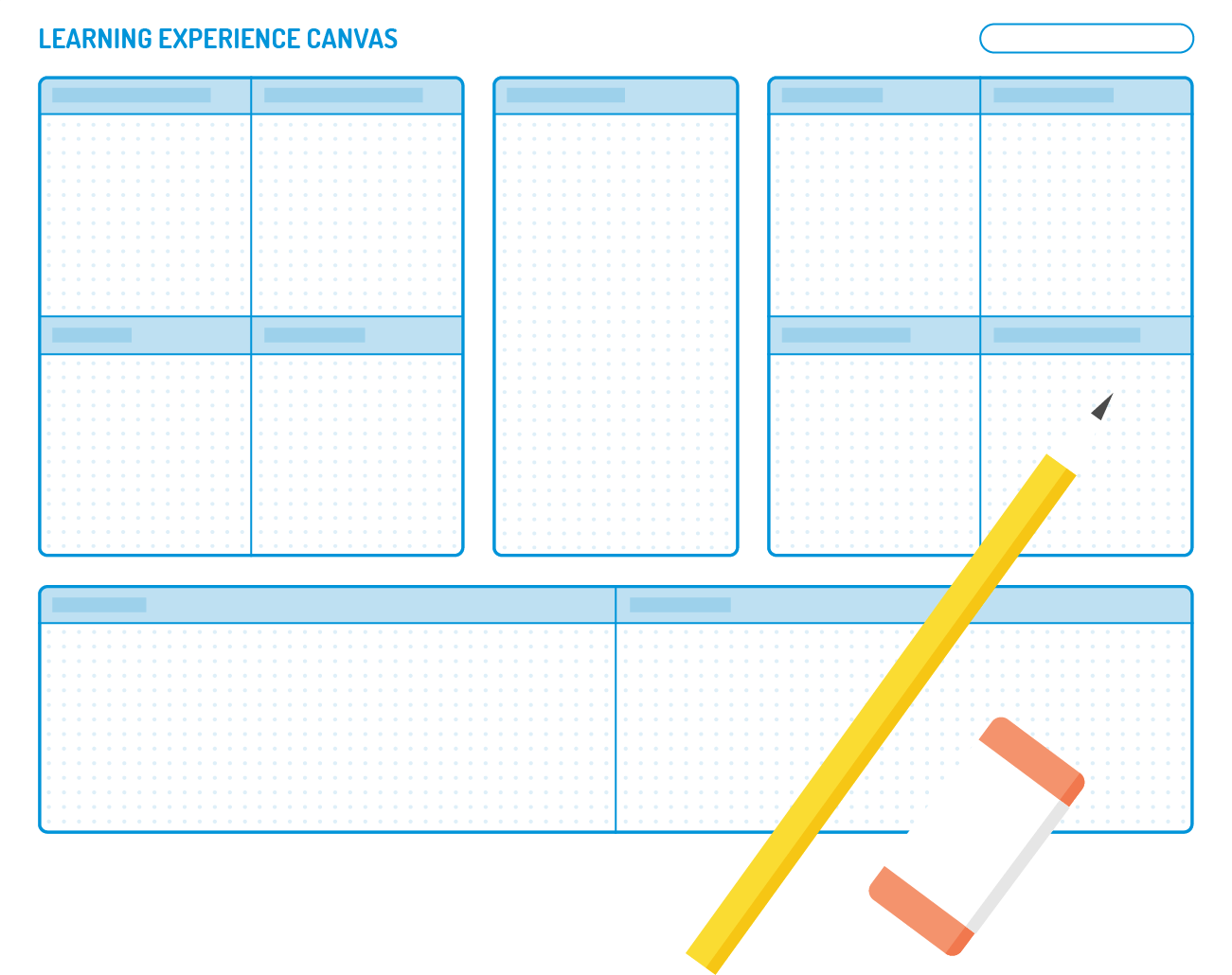
Oh, and I couldn’t resist messing around with the visual representation. If the intent were to clarify/classify different questions based on their focus and how to lead the conversation, this might be a useful organizational framework:
The HIVE Deck
If only I was traveling to—or near—DC next month!
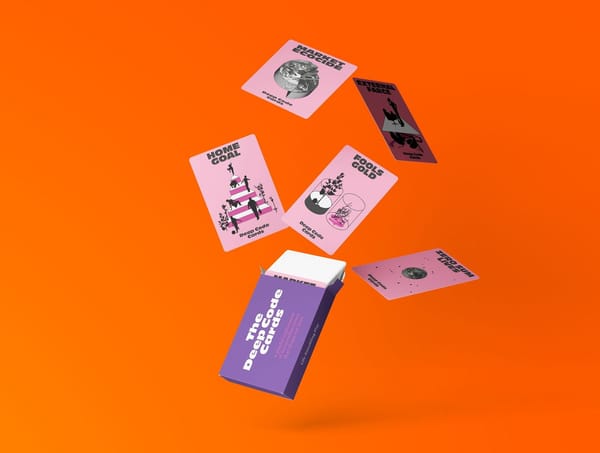
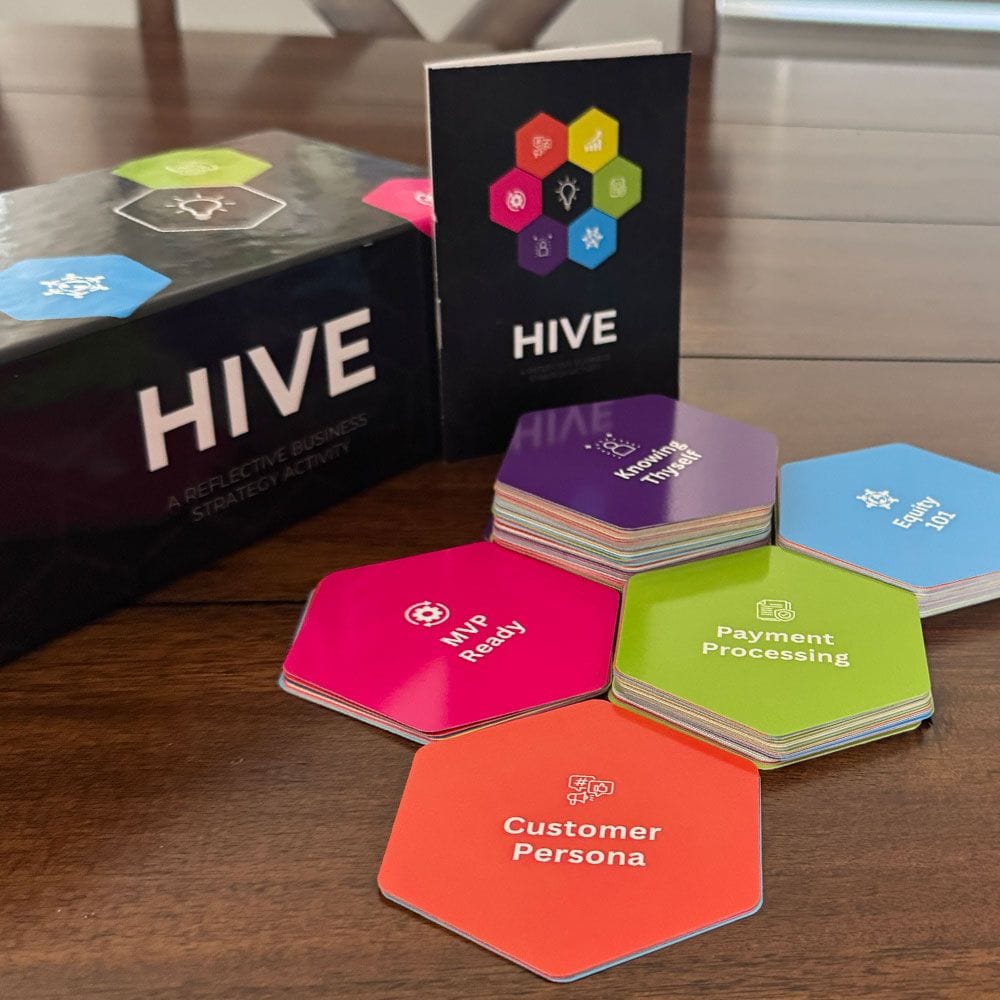
My friends over at BarometerXP are offering a 3-hour workshop on July 20th using the Hive Deck, a card-based reflection tool that “visualizes next steps in growing your (or your client's) business.” And, the cost of the workshop includes the physical HIVE Deck and access to the virtual program.
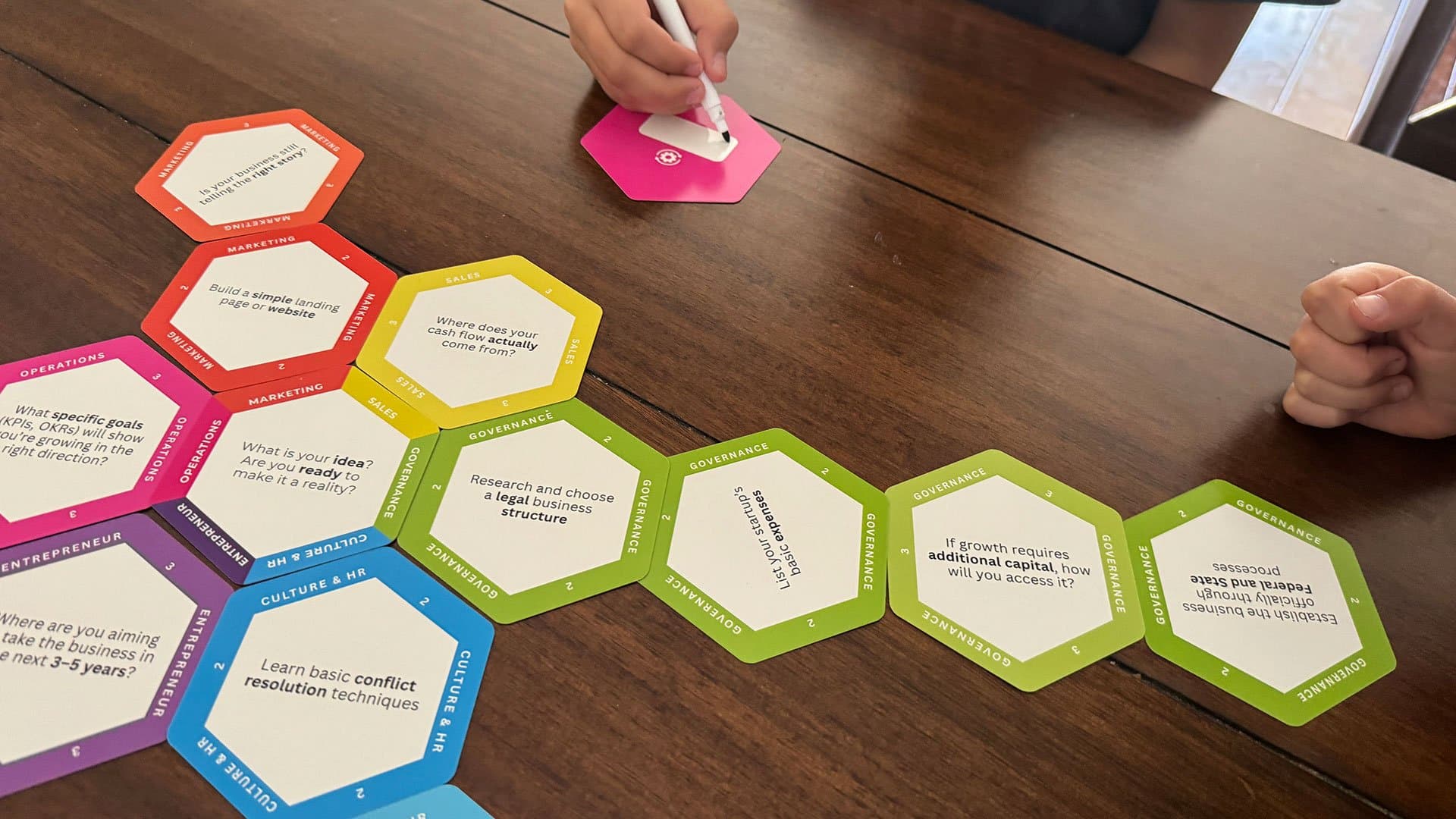
Making connections: In form, this deck reminds me of the What’s Worth Doing? card deck from Experience Institute. And… hexagons. But, here the focus is on the entrepreneurial and business startup concerns.
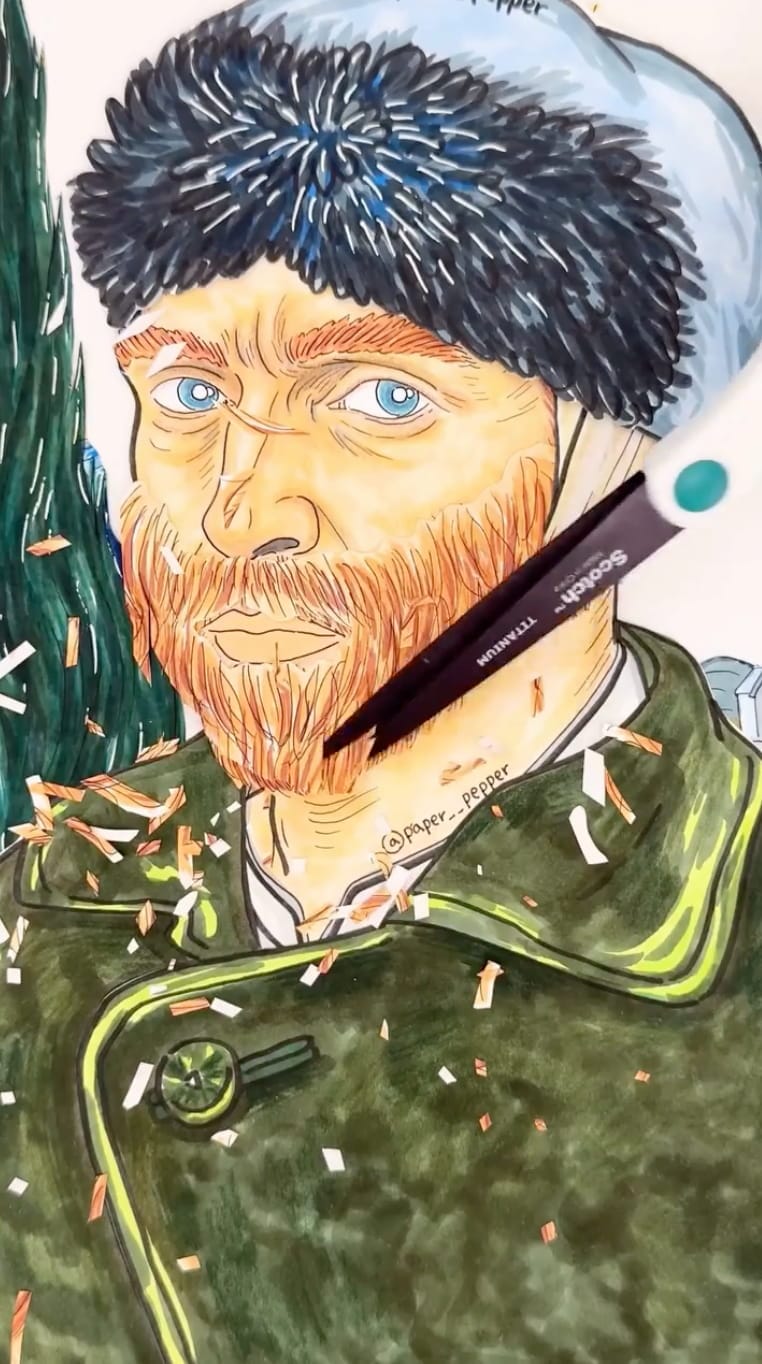
A Vincent van Gogh makeover
I was going to share this… Vincent van Gogh makeover (?) as a random, fun thing. But, that’s not fitting. This art piece is unusual, not fun. And, in just 2 minutes, a powerful thing to think—and feel—with. Just… go watch it. 🥲