№ 121 | EVOLUTION: A Card System to Break Automatic Patterns, Visualizing a Billion, Systems Thinking Lessons from Monsters, Inc., The Committee Game, A 3x3 for Assessing Stakeholders, and 6 Ways Leaders Harness Stress

Welcome to another edition of Thinking Things, your (mostly) regular roundup of ‘playful things to think with’ and things to think about!
EVOLUTION: A Card System to Break Automatic Patterns
You might know I’m just a wee bit (ahem) analytical. I like to take “squishy” concepts—conflict resolution, collaboration, narrative structures, post-capitalism—and find the identifiable parts and pieces, patterns and relationships. I think this is why, years ago, I was drawn to things like career coaching methods or approaches to therapy like Cognitive Behavioral Therapy (CBT). I wanted to “make sense” of these otherwise nebulous topics. And with something like CBT, there’s an almost mathematical kind of elegance. Recognizing the difference between facts and beliefs (hint, most of the time it’s a belief). Naming how that belief makes us feel, and affects our behaviors. Assessing whether that belief (or behavior!) is healthy or not. And in the process, learning to recognize that we’re in control of our beliefs, feelings, and behaviors. (That’s my off-the-cuff explanation, with apologies to licensed therapists and counselors everywhere!)
Why am I mentioning all this? Once you bring structure to a fuzzy concept, it’s only a few more steps to turn that entire process into a game of sorts, with the board as framework, and cards as specific details or examples.
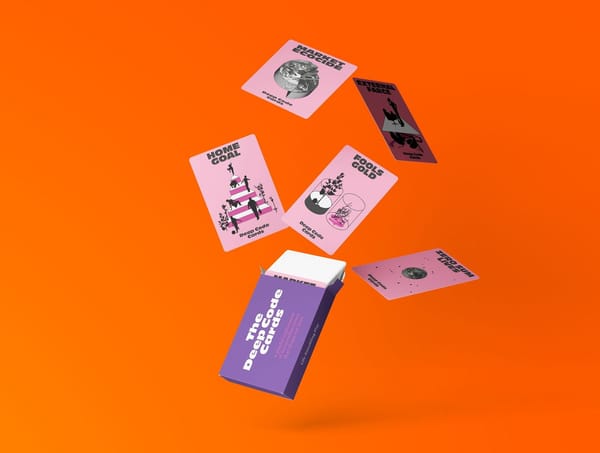
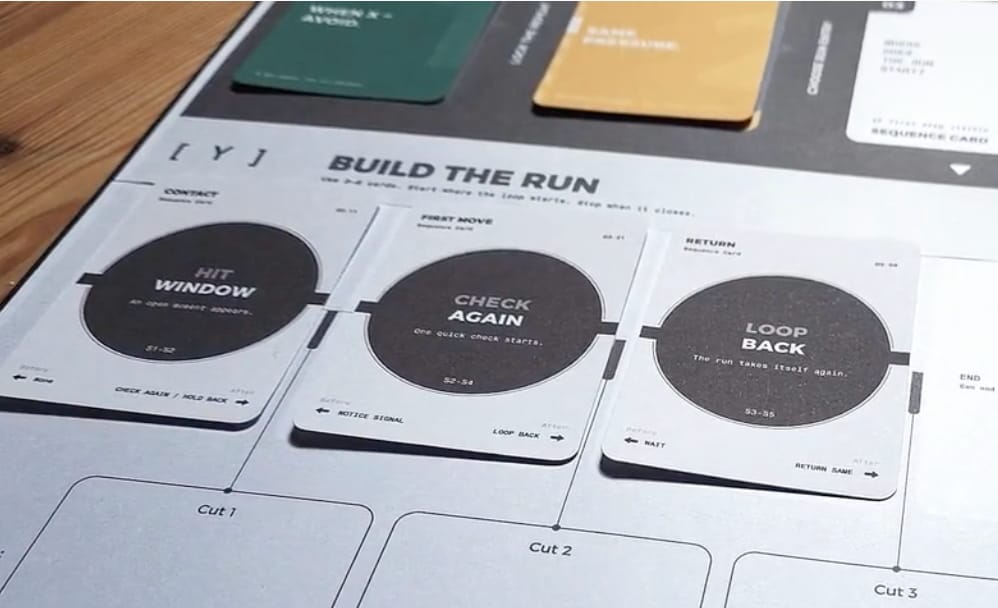
This is precisely what EVOLUTION: A Card System to Break Automatic Patterns has done to help break unhealthy personal behaviors, such as scrolling, overthinking, arguments, avoidance, people pleasing, and so on.
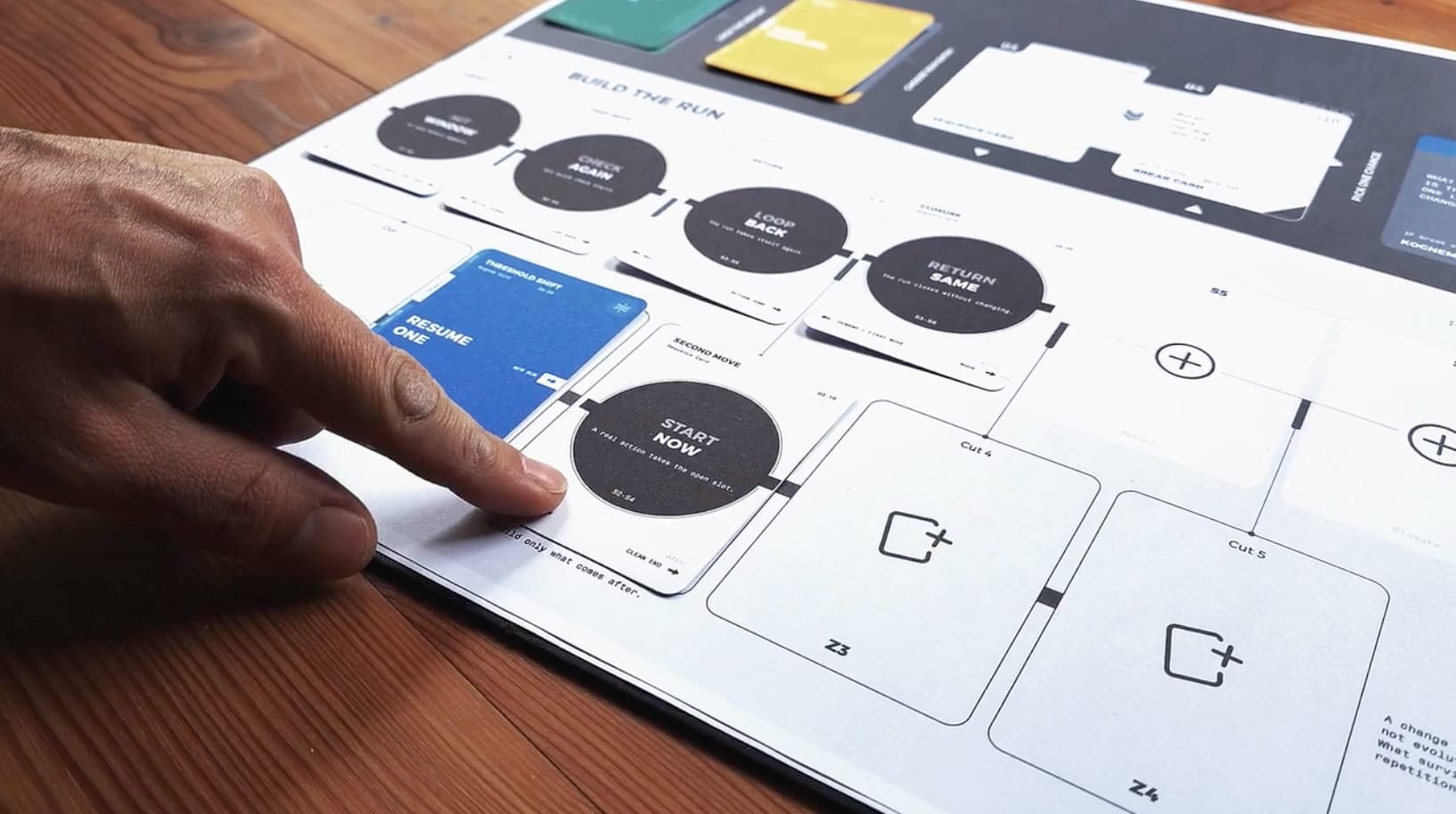
A structured game board (which isn’t all that different from a framework or canvas), helps you to reflect on the loop you want to change. The essential idea is that when we ‘put it on the table,’ ‘it’ being whatever habit you’d like to break, then we can think more critically about: what it is we’re doing, why, and what to try differently. Spot the loop. Build the run. Change one move. Test what survives.
I love the central thesis of this: “Make things visible so they can be changed.”
All of this is based on the creator’s KOGNETIK system, which “was developed to understand how recurring situations stabilize, why the same outcomes return and where change becomes structurally possible.”
I do have reservations about how effective this approach might be, and the content page has whiffs of AI content, but… this is a fabulous example of something that’s been in my head for years now, bridging counseling frameworks with board game elements.
Speaking of visualizations…
Visualizing a billion
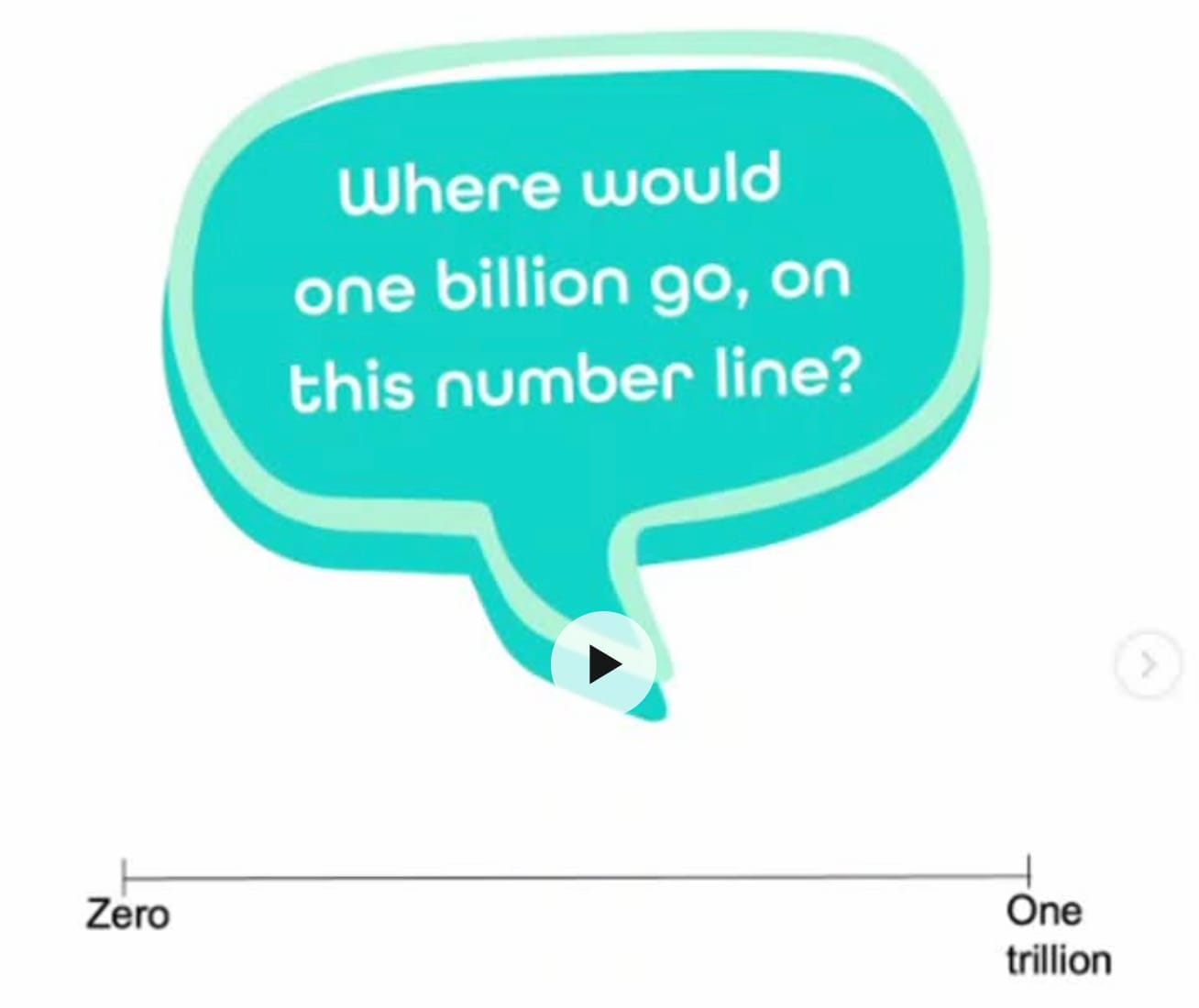
I keep hearing about billionaires or “billions of dollars budgeted for…,” but it’s easy to forget just how incredibly large this sum is. Not to mention… trillions! Thankfully, education consultants Nicole and Jess created this simple way to assess and visualize your own understanding of a billion vs a trillion [LI].
Oh, and a link in the LinkedIn comments shared the similarly themed Scale of Greed.
Systems Thinking Lessons from Monsters, Inc.
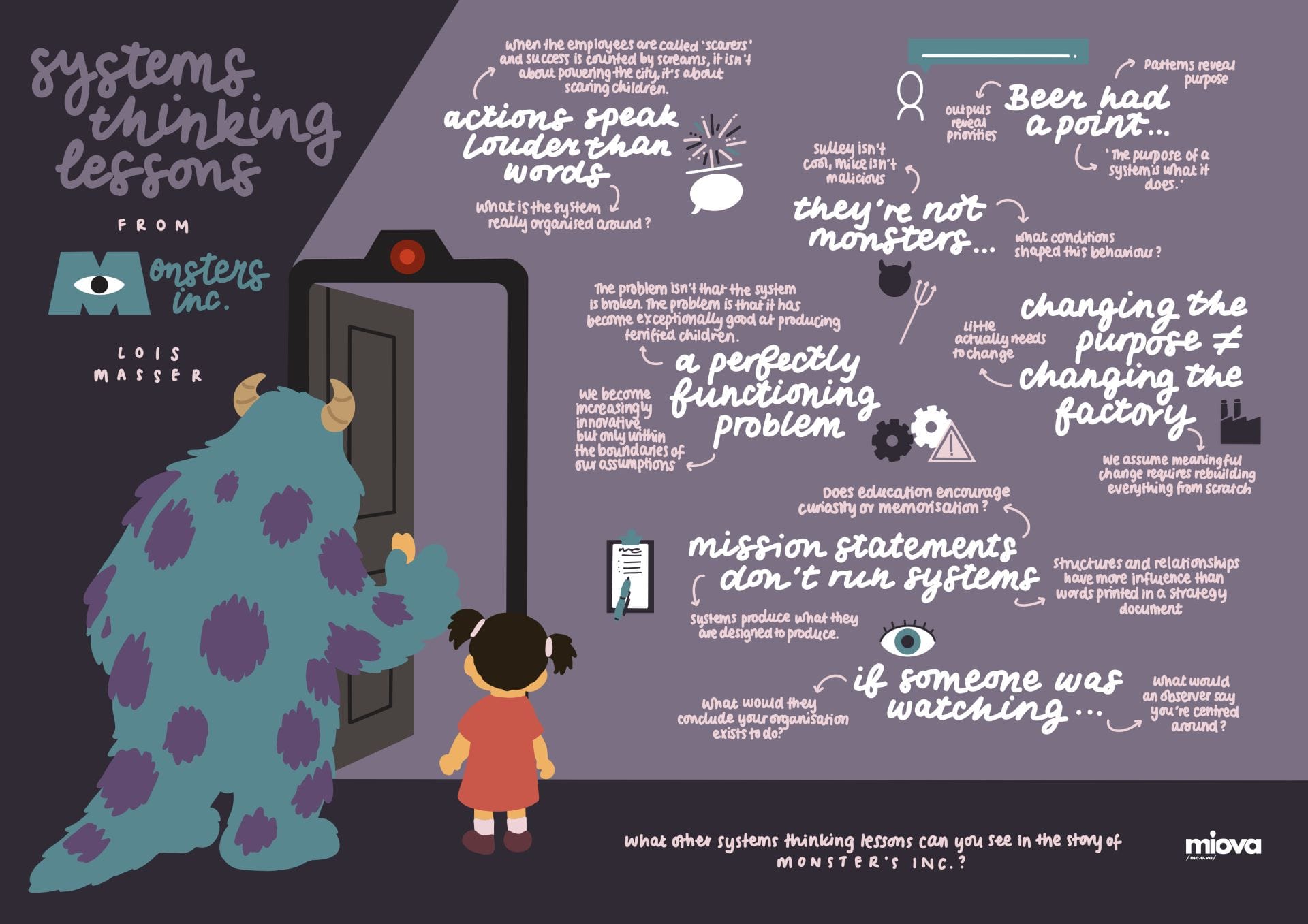
Yet another reason to love the Pixar movie Monsters, Inc. Somewhere in the back of my noggin, I might have been thinking about how our ‘frightening’ heroes reframed the problem to be solved, but… I’d never connected that theme to anything in my day-to-day experiences. Fortunately, we have folks like Lois Masser who can point out “Systems Thinking Lessons from Monsters, Inc.”
The Committee Game
You want to see my bias? I was reading about The Committee Game, a game in lieu of a talk, designed to show the failures of committees. Looking closely at this picture, I assumed it must be a kind of role-play/hidden role sort of game. And… one of these seemed “right” to me (the green club “game of hope” card, of course!).
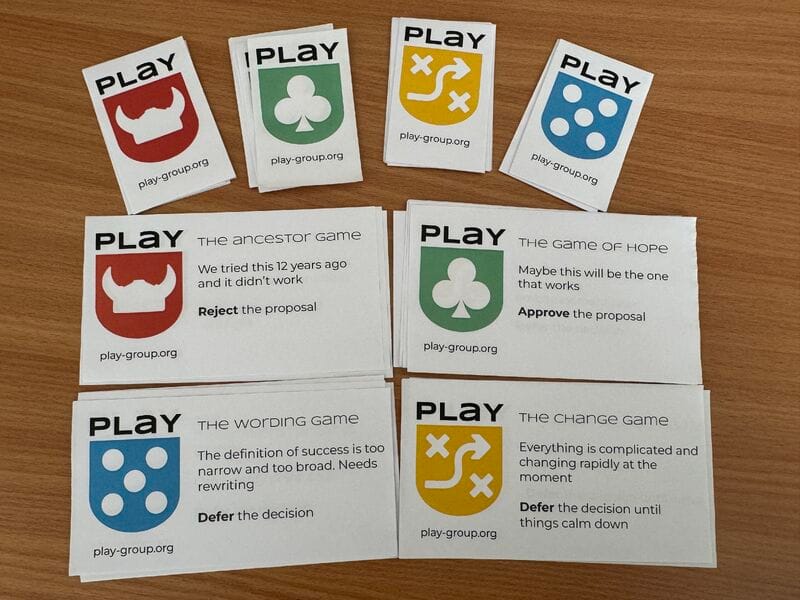
I mean, clearly, the other 3 options are the bad ones, right?
😂
Yeah… I think I misunderstood. Anyway, I don’t know anything about this game beyond the details shared in this LinkedIn post, but it looks like a playful way to raise awareness of all the biases and viewpoints that lead to committee failures.
We didn’t give a presentation so much as play with the audience, through the Committee Game. We asked our audience - What’s wrong with committees? They are ideally meant to be a system of representative meetings, equitable discussions, and consensus based decision making. The ‘talk’ of committees should allow different voices to be heard, and direct or enable actions to make differences in the work of learning. But the reality is often far from the ideal… Everyone had a vote, but proposals were performative instead of informative, voices were silenced, responsibilities were avoided (or deferred to a subcommittee of individual achievement) and the committee game finished with no real decisions and no actions.
I mentioned my penchant for structured thinking earlier. What I love about games like this is that they take the time to assess and analyze a “squishy” situation, then extract and classify recognizable patterns. The result? A game that is part satire, and a brilliant precursor to a healthy conversation. While this game doesn’t point the way forward, it does help to pave the way forward.
Playful framing of routine practices helps us to work out what the rules of play are, identify the win conditions and whose agency is being enabled, and engage in experiences rather than passive attendance.
Oh, and I can add The Playful Learning at York (PLaY) Group to my list of kindred spirits.
Speaking of structured thinking for squishy topics, here are two models for thinking about people at work…
A 3x3 for assessing stakeholders
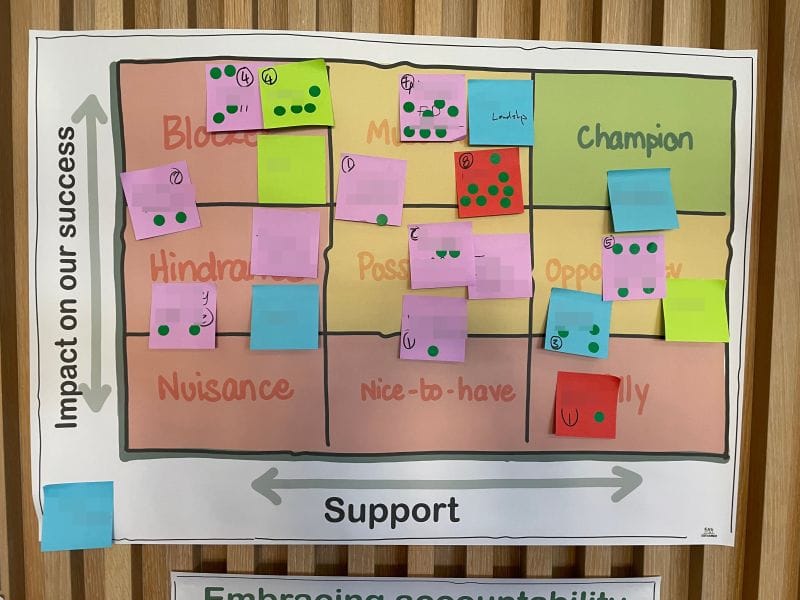
So, you’re working on a project, with a lot of stakeholders. We have established and useful frameworks like RACI/DACI (or my favorite AAI), but here’s one to add to the mix: 9 different types of stakeholders [LI] that emerge when you organize people into a 3x3 matrix based on support and impact on success.
6 ways leaders harness stress
Per this HBR article, we get a model that identifies 6 Ways Leaders Harness Stress. Other than naming these 6 patterns, the idea is that once we recognize how we respond in these situations, we can do two things: (1) watch out for the blind spots and challenges associated with that pattern (where each can go wrong), and (2) explore other ways to respond based on the situation.
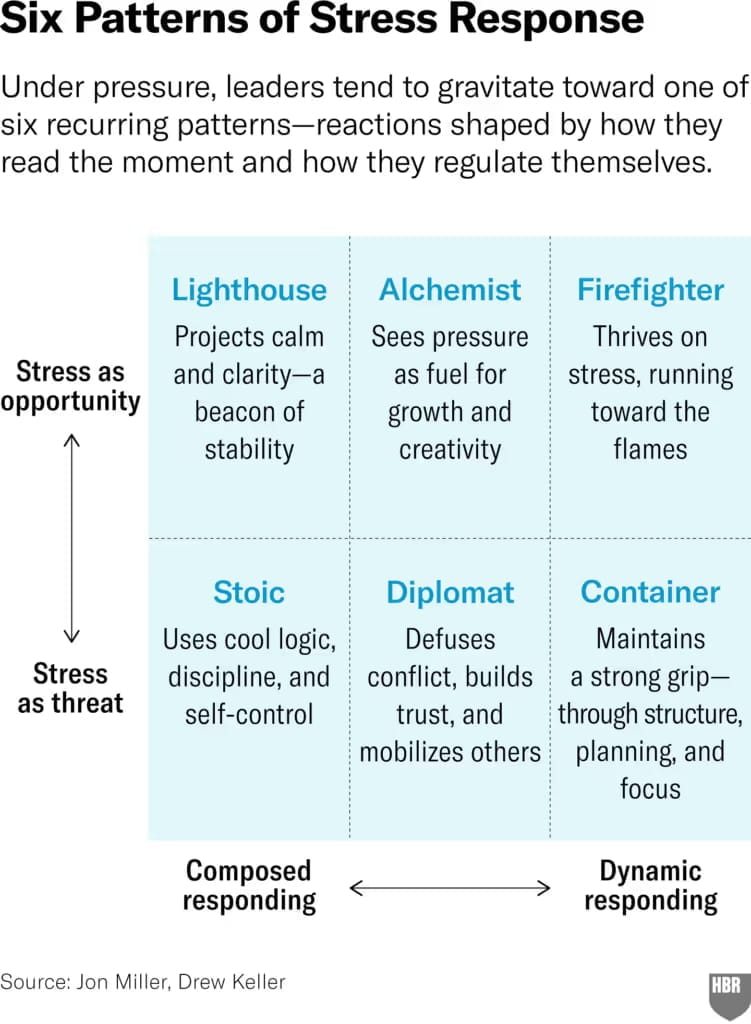
Oh, and in case you’re wondering, I’m an “Alchemist.”
Random finds:
- 📷 A different way to look at cities based on plotting photos taken by locals vs visitors [IG]
- 📞 An art project that uses tech to connect the 1% and the 99% [LI]
- 🇺🇸 Clever social/political commentary using lenticular posters
- 🔠 It’s amazing to consider how much effect one person at one company had on improving web typography; oh, and a story about rogue typographical vandalism!
- 🔄 Here’s a great look into a design process [LI]
- ⚽ Check out these FIFA World Cup 2026 Data Portraits