№ 120 | We Wunt Be Druv, If You Were a Ghost, What Would You Haunt?, Brick Starter, Can Trivia Save Us?, The Housing Game, 4 Forms of Hope, and Reality Strikes Back: A Cartoon Guide to Complexity

Welcome to another edition of Thinking Things, your regular roundup of ‘playful things to think with’ and things to think about!
This weekend, I’m back with not 1, not 2, but 3—count ‘em THREE—card decks.
We Wunt Be Druv
At the most recent Cardstock meetup, John V Willshire shared a bit about the “very modern ancient tradition” that is Sussex Day, and a recent workshop he led for the event. There’s a lot of rich, historical context; I’ll let John fill you in on that. Let’s jump to the card game.
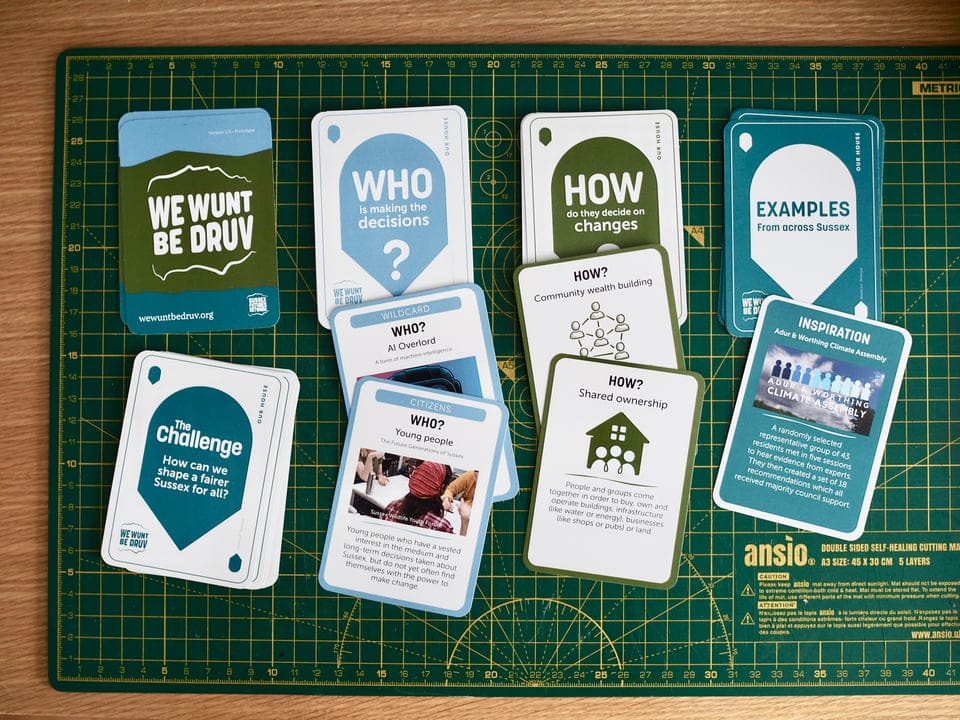
We Wunt Be Druv (named after the Sussex county motto) is a Sussex-specific variant of Our House’s charter game, which encourages citizens to “imagine how democracy could work better in the places they live.” I’d describe this as a game that helps players (local citizens) discuss ‘what could be’ for their county (or city), with a focus on actionable outcomes—ways to realize the platitudes contained in a town charter.
Per John:
[Players] are given one sentence at random from the Sussex Charter to offer what they see of their Sussex in that statement.Then everyone is given a ‘Who’ card and a ‘How’ card - who might hold power, and how might they exercise it? There are 16 of each of these cards, expanded a little from the original Our House deck.Then they will play two rounds - Dreadocracy, and then Dreamocracy. What’s the worst thing that entity might do with that power, and then what’s the best thing they might do.Finally, when each table has explored these angles, they will be invited to shape some new demands for how Sussex democracy should work for people moving forwards.
While you only read about the We Wunt Be Druv card game (unless you live in Sussex), you can download a PDF version of the official Our House charter building game + the facilitator’s guide, to help you build a People’s Charter.
Writing about this, I can’t help but pause… and think about the community where I live. I’ve been exploring where I want to steer my interest in ‘playful things to think with’ and a big part of my narrative is something local. What John shared here made me wonder ‘what kinds of thinking things could I share now—not in the future—with my community?’ That, and, my default mode of thinking is to imagine the things I make being played in business environments, or by interested individuals who stumble across this site. But, it’s a subtle and powerful reframing to imagine taking something I’ve shared here, and playing it with random strangers in my neighborhood. Hmm… 🤔
If You Were a Ghost, What Would You Haunt?
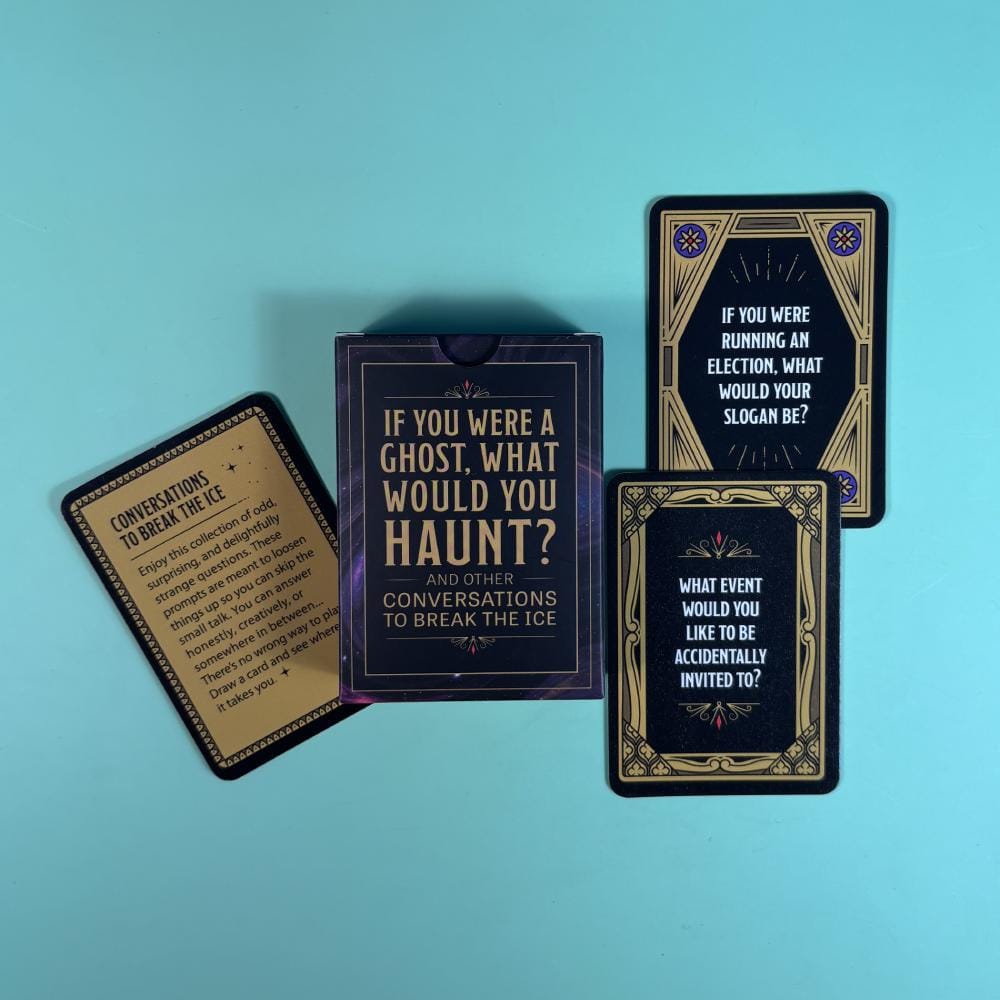
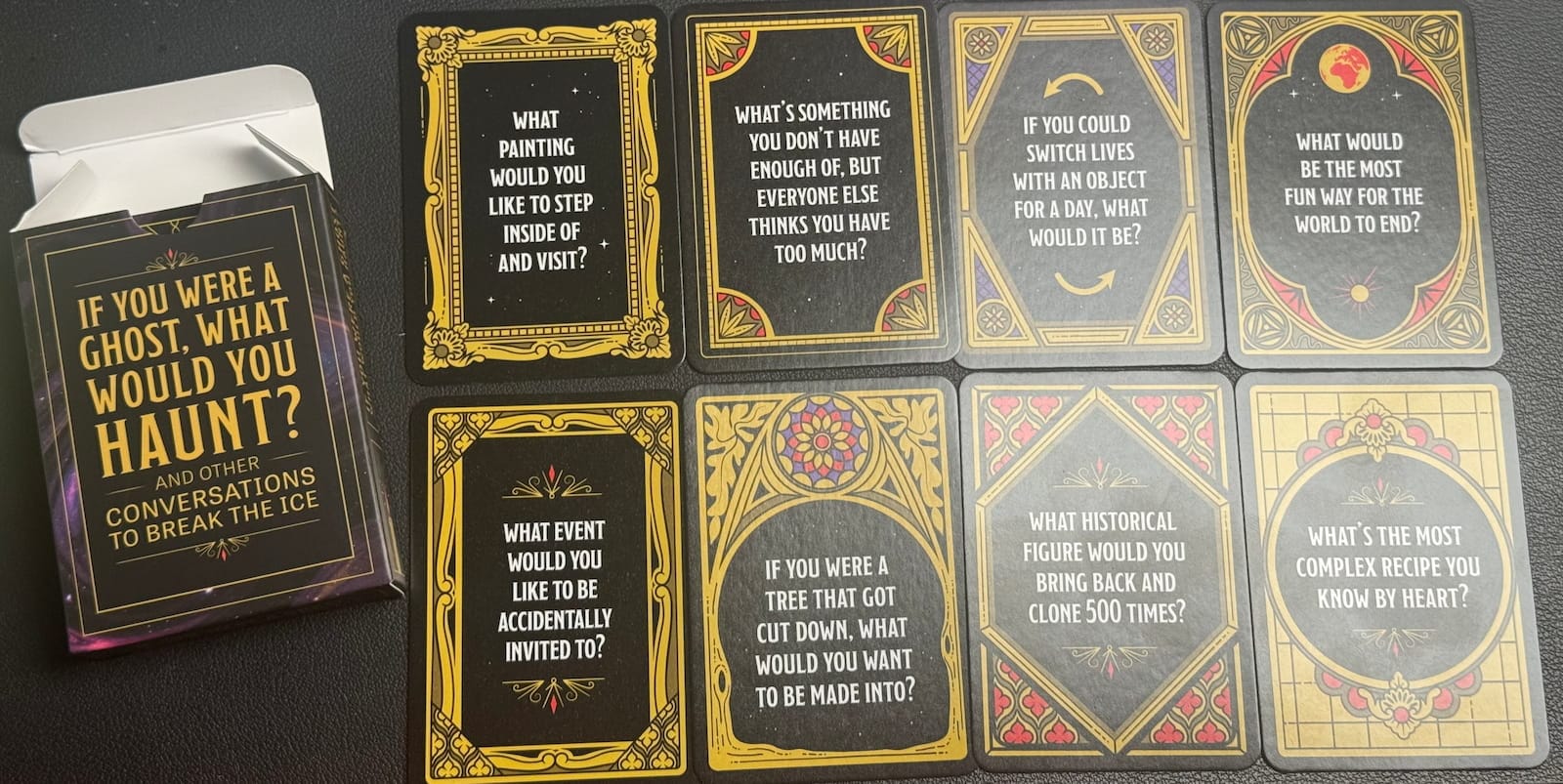
Cards that offer little more than a question for discussion are quite common. So much so that I rarely share those here unless they offer something new (e.g. the way Cozy Juicy Real turns ‘get to know you’ questions into a proper game). If You Were a Ghost, What Would You Haunt?: And Other Conversations to Break the Ice doesn’t change the formula, but… the questions themselves are so darn intriguing! Confession: I backed this on Kickstarter on the strength of the question in the title, in hopes that the rest of the cards would be similarly creative. It hasn’t disappointed.
Finally, to round out our trio of card decks…
Brick Starter
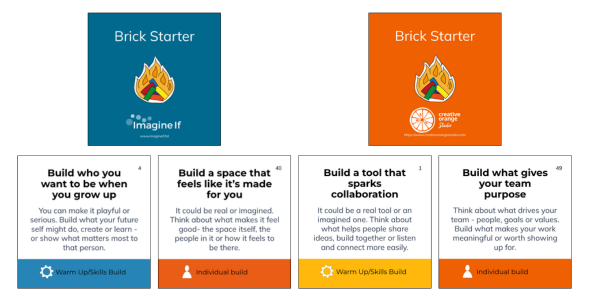
Fellow card enthusiast Cat Hase, along with AMC from Creative Orange Studio, recently launched the Brick Starter BIY card deck. Designed for LEGO Serious Play (LSP) facilitators, each card is a prompt or activity that can be used in an LSP workshop. Best part? This is a crowdsourced card deck. Every card was contributed by facilitators in the LSP community. For a deck like this, where each card presents a separate activity, this is a great way to curate a breadth of great ideas (I have a few card decks in the works that will be developed this way…).
I own 1 or 2 LSP books, and I’ve attended a couple LSP workshops. Adding to this an instant bank of the very best ideas from dozens of LSP facilitators—priceless!
I came across this next find while driving!
Can trivia save us?
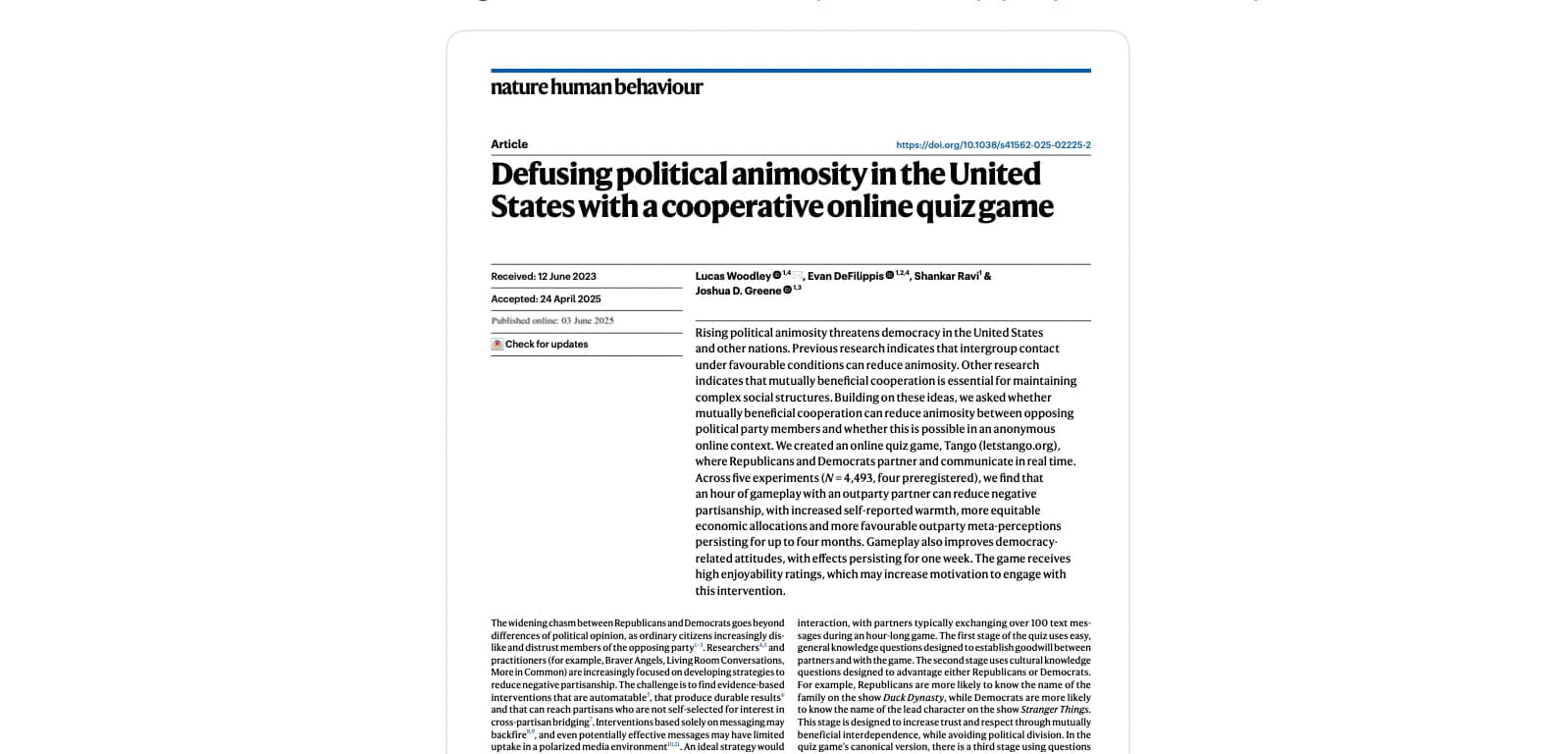
By way of a Here & Now segment on NPR, I learned about the work of Harvard psychologist Joshua Greene and his “evidence-based research and quiz game” Tango. Essentially, you’re paired with a random stranger—someone with different political views—to answer trivia questions together. Right away, I saw the elegance in this arrangement: Mutually beneficial cooperation. When we step into a game space, especially a cooperative game like this one, it’s no longer personal; we’re on the same team, trying to “win” by answering correctly. If what follows is something we might otherwise disagree on and even debate, that—for the moment—takes a backseat to us aligning on the right answer. At least, that’s how I see this construction. And, along the way, you start to appreciate the unique expertise that the other person offers. Anyway, there’s an academic paper you can check out, and you can listen to the same segment I did: Can a trivia platform help people break their partisan echo chambers? (Yes.)
The Housing Game
Over on LinkedIn, I’ve been following Micael Sousa as he frequently posts about various serious [analog] games he’s working on. Usually, these are teasers with nothing I can link to. Until now.
By way of the 3rd Geogames Symposium (3GGS), we can now learn about Sousa’s housing policy game, designed “to establish a more collaborative process for participatory budgeting aimed at housing policies.”
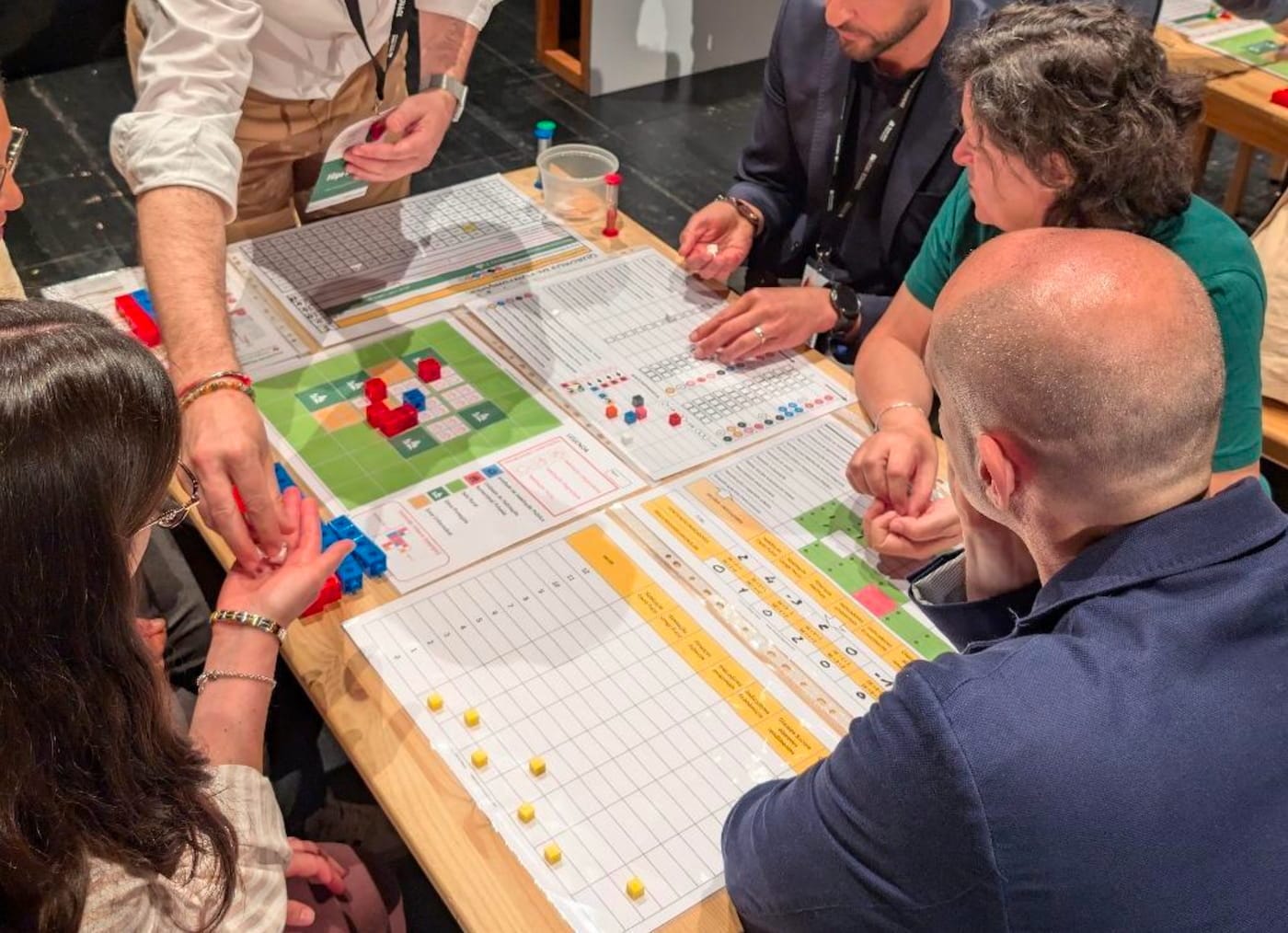
What jumped out to me was Sousa’s focus on the visual collaboration embedded into a game like his:
Participatory budgeting typically abstracts spatial considerations from the resource allocation process. This study evaluates whether municipal civil servants can facilitate game-based participatory budgeting that combines budget allocation with geographic visualizations.
I’ll be the first to argue that strategy board games (as this appears to be) are a sprawling, cardboard, card, and cube-driven form of data-visualization. If you’ve ever attended one of my talks or workshops, you probably heard this refrain: When we bring information into the world, and then arrange that information in meaningful ways, we’re able to support more complex thinking. This is as true of data visualizations as it is board games.
While his focus is more on the training necessary, Sousa’s research also seems to confirm the benefits of transforming abstract information into a visual form.
The spatial dimension proved critical: participants discussed not only which policies to fund but also where to locate them. Findings suggest that spatially explicit, game-based participatory budgeting can democratize introductory discussions of housing policy through existing municipal staff without extensive training.
😍
Oh, and for similar projects, check out more proceedings from the 3rd Geogames Symposium (3GGS), including:
- Pins, Pendulums and Pearls (3P)—A Board Game for Public Transport (PuT) and Transit-Oriented Development (TOD) (PDF)
- Friend or Enemy: An Urban Design Card Game (PDF)
- Compete, Collaborate, and Co-Create Your Circular City (C6) Serious Game (PDF)
4 forms of hope
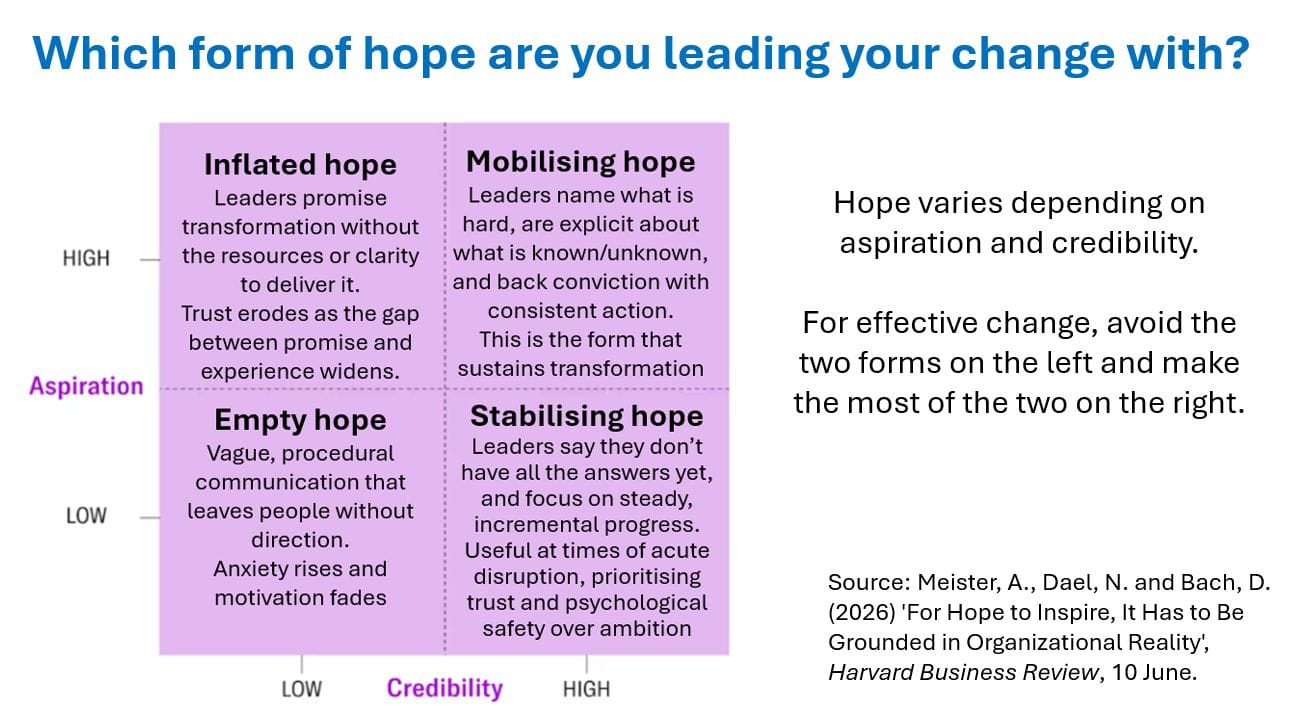
I love a thing that helps us to think more deeply about a ‘simple’ topic. In this case, it’s the idea of ‘hope’. Specifically, “which form of hope are you leading your [org] change with?”
It’s a simple 2x2, but splitting hope into four forms, based on Aspiration and Credibility axes, seems like a useful way to slice up this topic.
H/t Helen Bevan
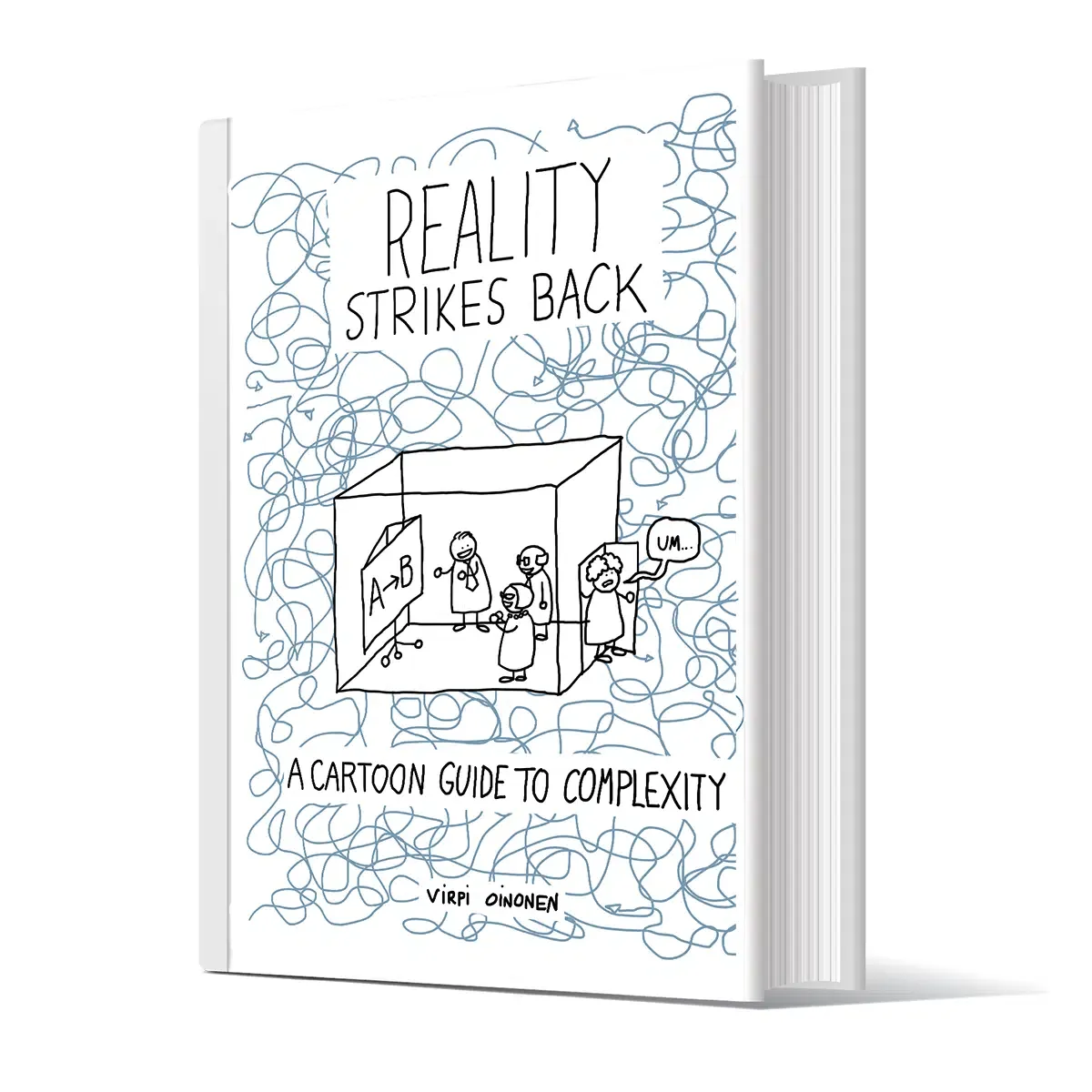
Reality Strikes Back: A Cartoon Guide to Complexity
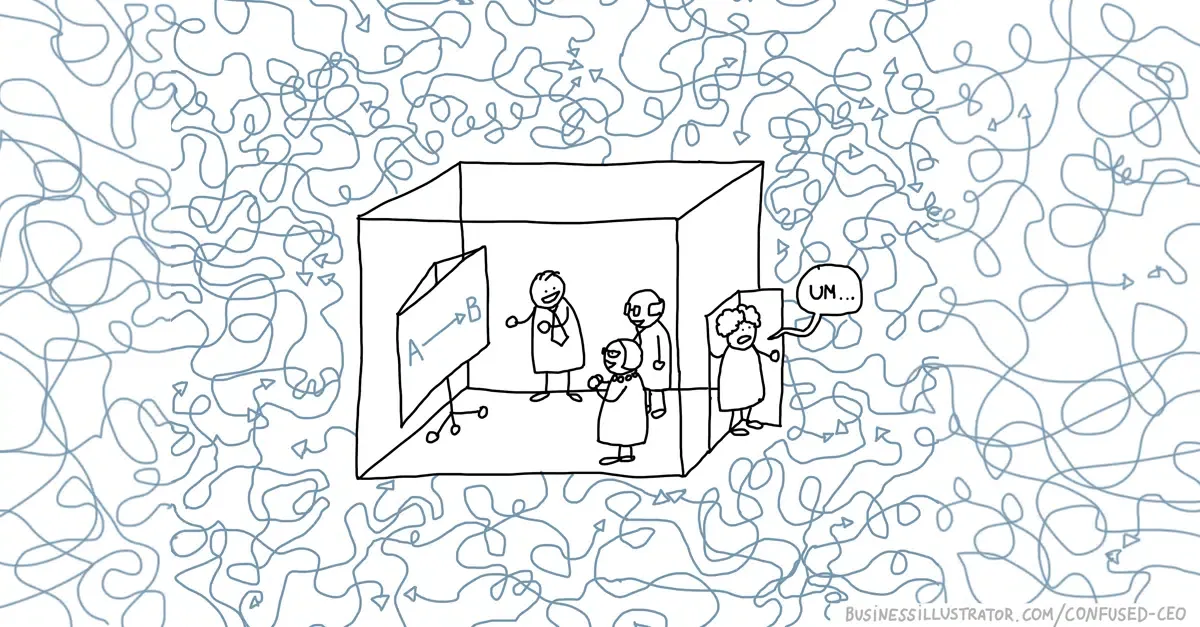
There’s a good chance you’ve encountered this comic, especially if you spend any time over on LinkedIn:
(I even shared it way back in Issue № 61).
It’s a punchy way to quickly communicate what can be a complex topic for many. Anyway, that singular comic—that’s gone kind of viral—has now grown into a full-blown book: Reality Strikes Back. 164 pages of illustrated goodness. This was an instant buy for me.
Random Stuff
- Check out the game Droplock to test—or develop—your spatial intelligence. (This plays easier on a mobile device.)
- I love the visual style of Messenger, a free-to-play, in-browser game. (I found the navigation controls a bit challenging on mobile, but easy on my laptop.)
- Listen and learn about AI data centers from Carl Setzer. Wow. Well-stated.
🫳
🎤 - I've been struggling with Wilde Cards. You're presented with a real literary quote… with one word removed! The challenge? Can you fill in the blank with the word the author actually chose? It’s actually quite challenging. I think.
- I’m kind of blown away by all the different sounds that sound designer Steve Forman gets from this sheet of stainless steel.