№ 124 | Deep Deck, Charismatic Language, “Are Student Attention Spans Really Shrinking?”, AI Divergence Engine, 10 Things to Watch Out for When Working with AI, “Society Begins at Home”, and Collective Madness Bingo Sheet

Deep Deck
Let’s kick things off with a good ol’ analog card deck!
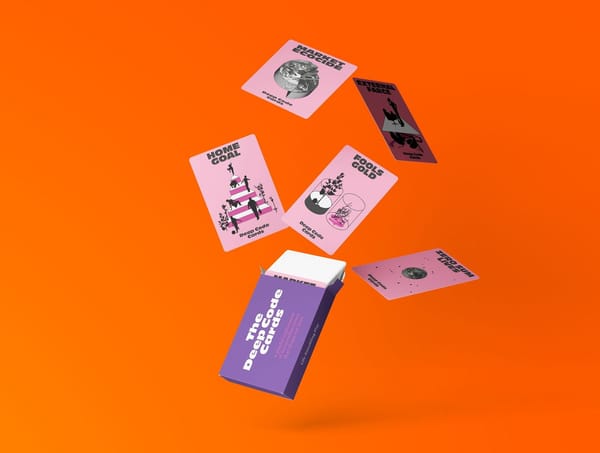
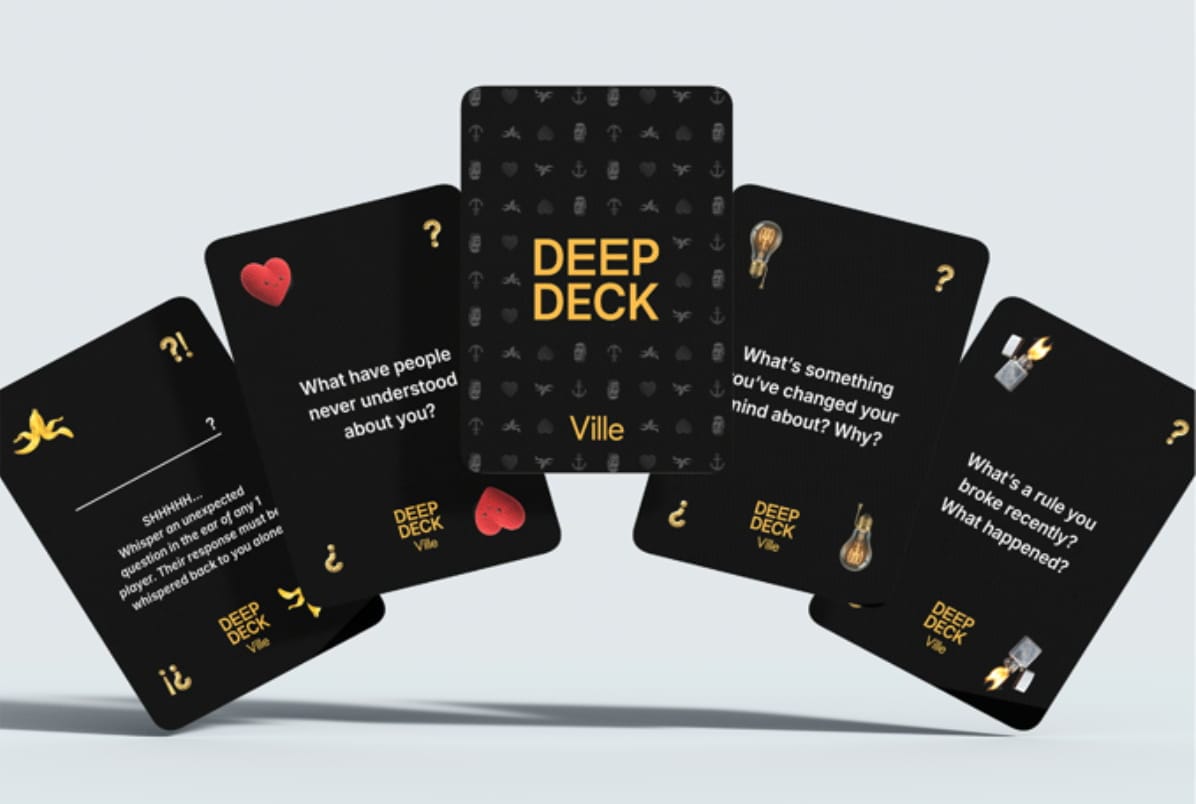
Deep Deck is a deck of conversation starters that promises to “push strangers closer and pull friends deeper.” Deeper connections and all that. Long-time readers will know how bored I am by most of the 🥱 ‘get-to-know-you’ conversation starter decks.
So why am I sharing this here? For starters, the questions look solid; the preview image has one of my favorite questions: “What’s something you’ve changed your mind about?”
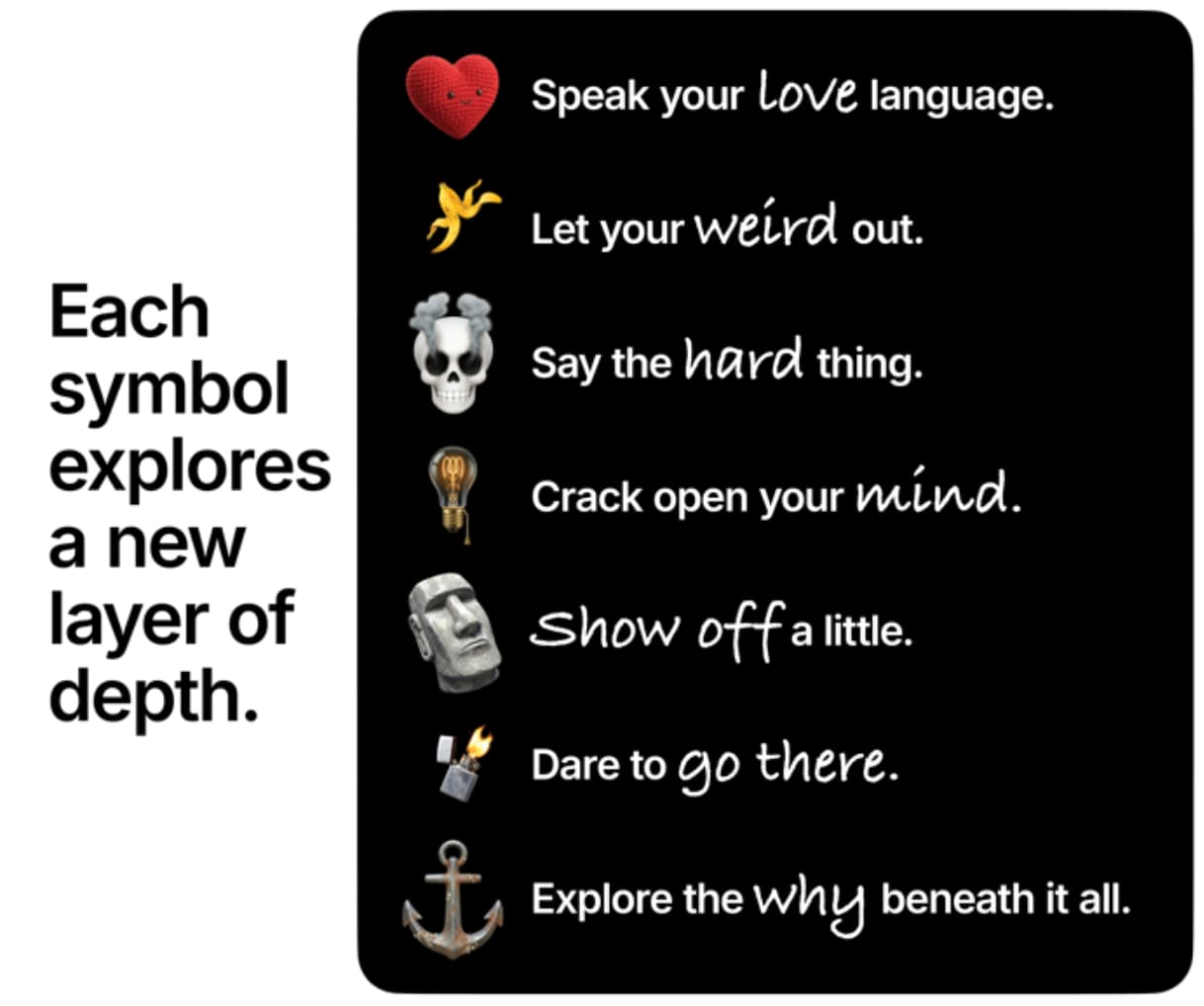
But, good questions are the cost of entry for card decks like this. To get my attention, a conversation deck needs a hook or twist, something more than mere questions on cards. What’s different about the Deep Deck? The symbols on each card, and how they’re used to add a gamelike layer to the questions. Aside from being a way to classify the questions, your classic ‘suits’ pattern, they allow you to do things like flip the question back on the asker—if you have a matching symbol—and take an additional card into your hand (or something like this, the instructions on the pledge page are a bit unclear!). These mechanics get you closer to the “win” condition of being the first person to collect either 4 cards of the same symbol, or all 6 different symbols.
You can back this project over on Kickstarter; it has 10 days to go as of this publication date. Selfishly, I’d like to see it cross the $15,000 mark, so we can all unlock ‘The Frolic Pack’ stretch goal! 😄
Charismatic language
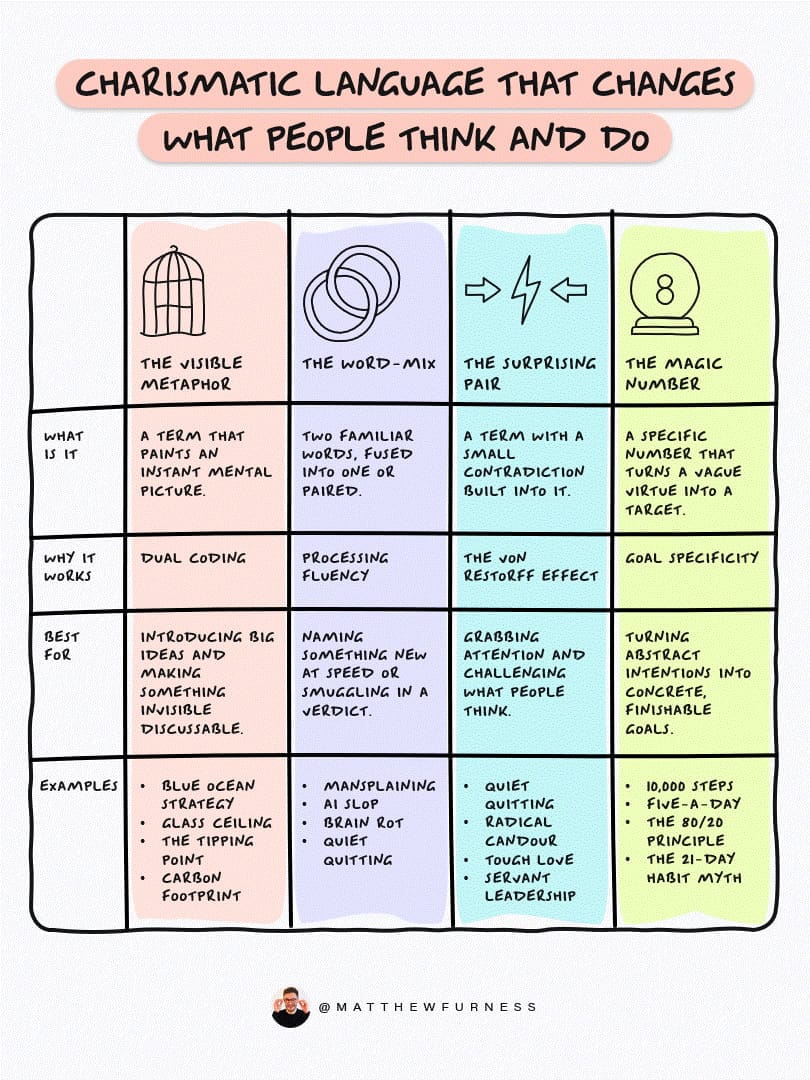
AI slop. Dry January. Couch to 5K. Quiet quitting. Designated driver.
These are powerful phrases (or labels) that have quickly become familiar terms. But what makes them catch on? For a useful perspective on this, I appreciate this bit of analysis from Matt Furness:
“Are Student Attention Spans Really Shrinking?”
Ooh. I love a good provocation, something that challenges our prevailing assumptions or asks us to consider another perspective. Here’s a good post on the topic of “Are Student Attention Spans Really Shrinking?”
It’s not that attention spans are getting shorter, it’s that we’re more sensitive to delays. Constant exposure to notifications, short videos, countdown timers, and progress bars “heighten temporal salience,” the study argues, making us more conscious of the passage of time—and more impatient to move on to the next thing.
Interesting… 🍿
Check out the post—and associated research—over on Edutopia.
Speaking of provocations…
AI Divergence Engine
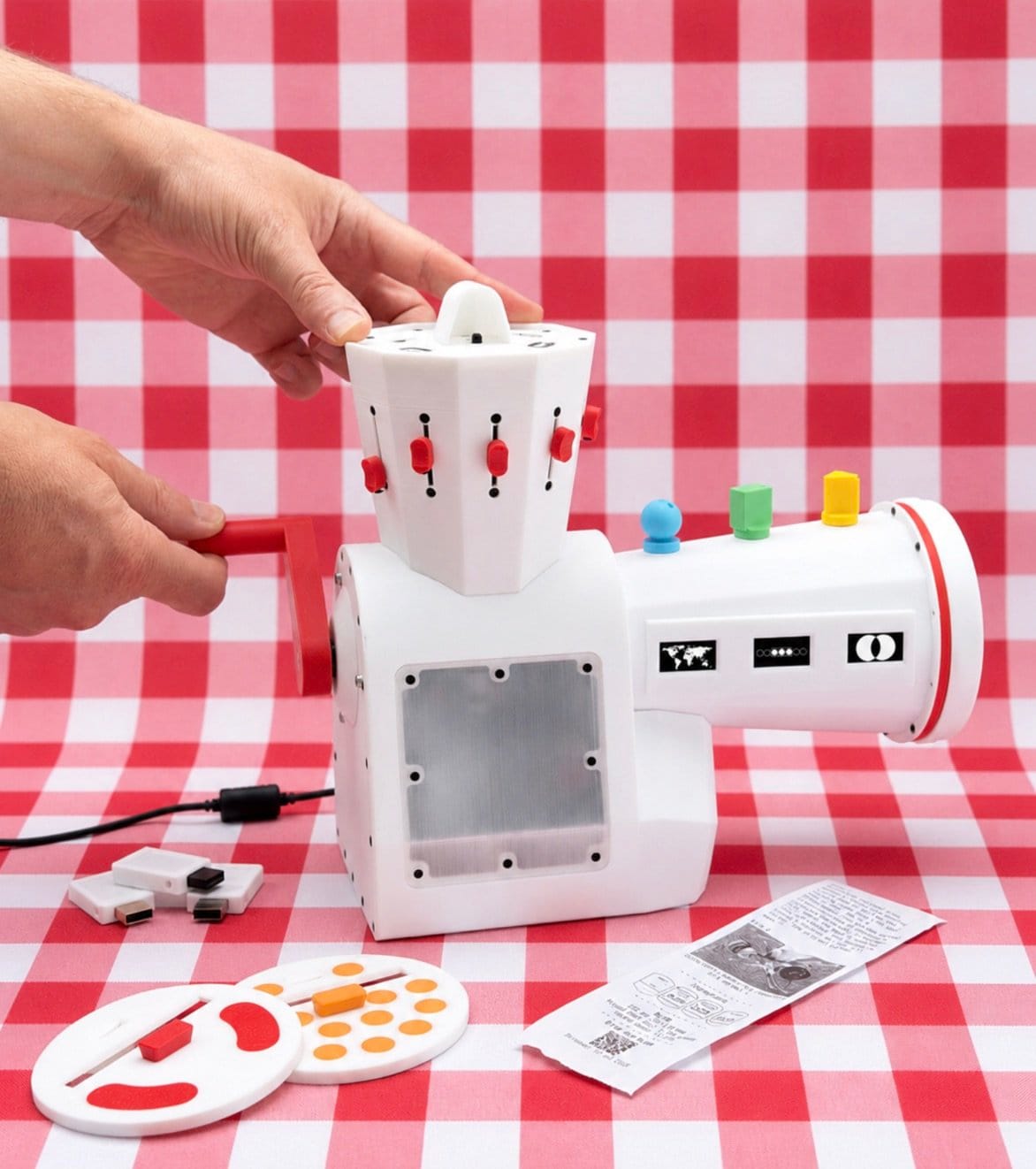
Uhm… I’m not sure how to classify the AI Divergence Engine. It’s a ‘tech-art’ project commenting on “human creativity and AI data bias.”
The Divergence Engine turns hidden choices about GenAI such as filtering, ranking and bias into dials, plates and inputs that can be adjusted. Rather than returning a definitive answer or another flood of text, it offers breadcrumbs: sourced fragments, scattered clues and disparate ideas that invite people to make discoveries of their own while questioning how online knowledge is shaped.
Definitely a playful thing to… challenge our thinking?
🤪
Speaking of AI…
10 things to watch out for when working with AI
I’ve been keeping my own small collection of things to watch out for when working with AI (see my thoughts on ‘Cognitive Surrender, Judgement, and AI’ in issue № 112), planning on some eventual synthesis and analysis of my own. But, this is a broad and rapidly expanding topic at a time when my focus is elsewhere. Fortunately, this is precisely what behavioral scientist Julia Kołodko, PhD, is focusing on, in preparation for her upcoming book on this topic. Here, she shares 10 things worth watching out for as you work with Gen AI [LI], based on “104 academic papers, 11 reports, and 24 articles on human–AI collaboration” (specific citations included in the LinkedIn comments).
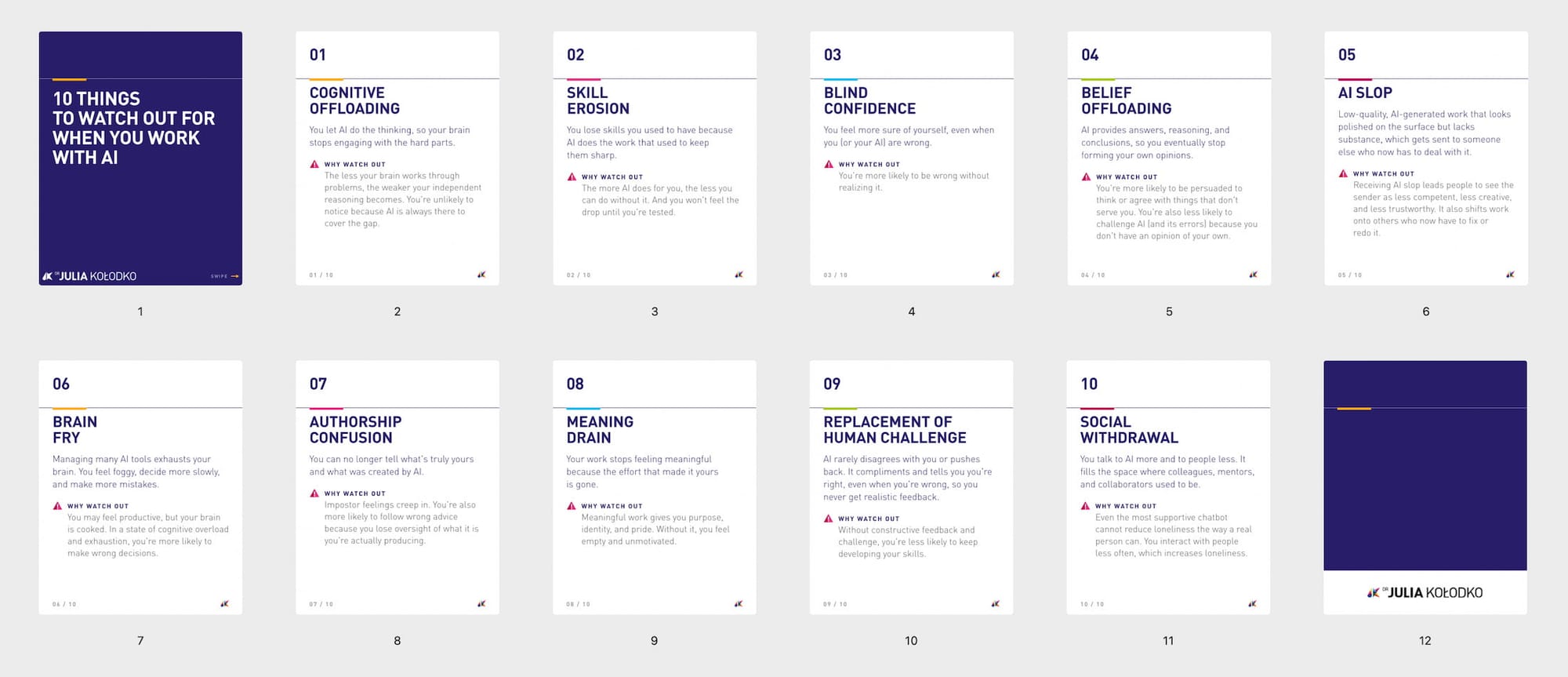
I’m not sure about you, but this looks like the start of a card deck to me… 😉
🤖 More links concerning AI and humans
I tend to shy away from sharing too much AI stuff. My focus is and has always been on the active construction of knowledge—and tools that support this active construction of knowledge. I know that understanding comes through (1) giving ideas form, (2) manipulating these forms, and (3) doing so together. AI usage—as it’s commonly practiced at this point in our history—is often the antithesis of this, and the opposite of everything I deeply value about how learning happens. By design, AI tools are solitary and discourage interrogating information (not that this can’t be changed, mind you…).
That said, as the dialogue has shifted to focus on the curious relationship between AI and humans, I find this space a wee bit more interesting; this topic begins to dovetail with more human and humane concerns.
On that note, here are some of the many posts I’ve come across just in the last 2 weeks related to humans and AI.
- A sneak peek at an upcoming book The Truth Detective: A field guide to real thinking in the age of AI [LI] (aimed at educators and students).
- A Kickstarter for Game Over, a video game from The School of Thought designed to spread awareness of AI risks and the need for regulations.
- This curious visual concerning AI vs Human Expertise [LI].
- This post on The future of decision making from Duke Corporate Education.
- This LinkedIn post on “Why are so many people afraid of AI?”
- This post from HBR (via LinkedIn) where “Researchers Asked LLMs for Strategic Advice. They Got ‘Trendslop’ in Return.”
[Essay] “Society Begins at Home: Do the Dishes, Change the World”
I think a lot about how to make the world a better place, and my part in this effort. I have toolkits in the works to sharpen critical thinking skills. I’m laying plans for a community-oriented thing. There are the workshops I already offer. All good stuff. But, maybe it’s all this lofty envisioning that made this essay hit harder for me:
The home is the smallest unit of society. If you want to change the world, maybe take the bin out. After all, if we can't be mutually supportive in our own household, how can we dream of a workable society?
Continue reading: Society Begins at Home: Do the Dishes, Change the World
Let’s wrap up this issue with a game you can play at home!
Collective Madness bingo sheet
Normally, these kinds of parody bingo sheets are mostly for fun. But this Collective Madness bingo sheet [LI], based on years of pattern recognition, seems more useful than merely delightful. A playful thing to think with?
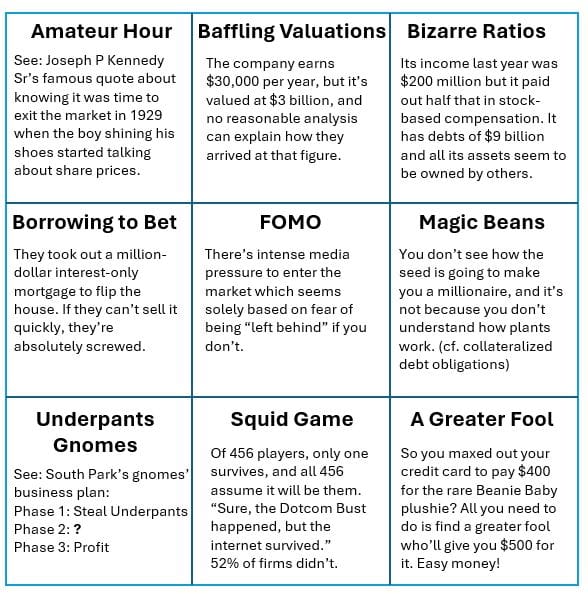
I've previously attributed my [disaster] fortune-telling to "pattern recognition", but what I'm really doing is playing a type of bingo game, based on common factors in previous speculative investment bubbles. When even fleeting market analysis points to magical thinking, things will usually not end well for most.
Most of this list was given to me as a young child in 1987, when my dad noticed the similarities to 1929.
I saw the same things in 2001, then 2008, then 2018, then 2022.
Rather than spelling it out for each round of collective madness, I'm sharing my bingo card so you can play at home.
😄 / 😬
Random…
- As a native English speaker, I’ve never paused to consider when we use “in” vs “on” (e.g “in the plane” vs “on the plane”); I found this short video [Instagram] informative.