№ 123 | Deep Code Cards, Cultural Differences and Storytelling, “So You Want to Be an American?” (the Game), Work-Life Balance, the Smiley Model, Playful Visualizations—Using Trees!, and Deep Reading

Howdy! Welcome to another roundup of ‘playful things to think with’ and things to think about.
Let’s kick it off with…
Deep Code Cards
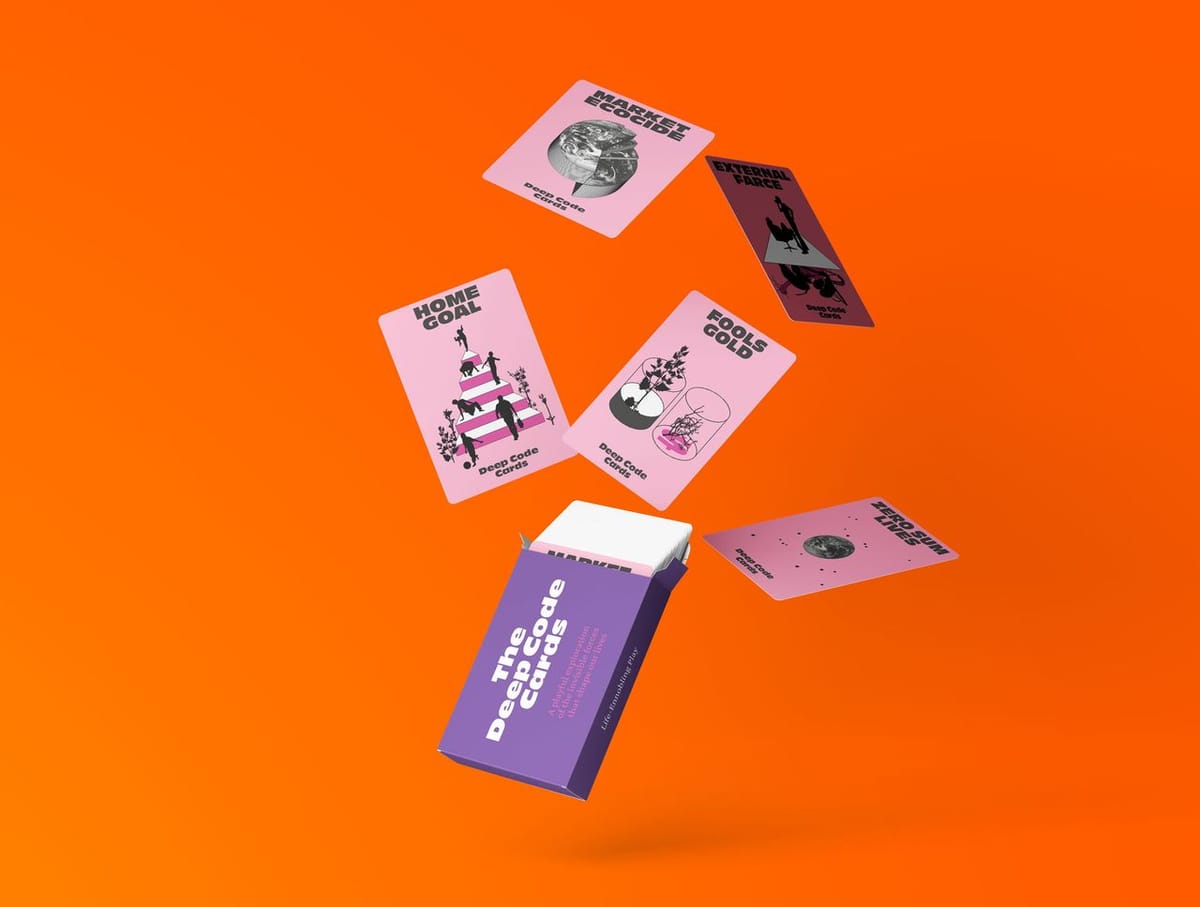
Ooh… Another project from Dark Matter Labs. The Deep Code Cards offer a “playful exploration of the invisible forces that shape our lives.” Nice.
Maybe it’s part of getting older, but with every year, I recognize more and more things for what they are—social constructs. I wrote about this in Figure It Out, when I discussed color associations, especially the whole notion that “pink is for girls / blue is for boys” (an idea foisted on us in the 20th century by manufacturers). But there are more insidious things we often fail to recognize as social constructs, such as when Ursula K. Le Guin offers us this challenge:
We live in capitalism. Its power seems inescapable. So did the divine right of kings. Any human power can be resisted and changed by human beings.
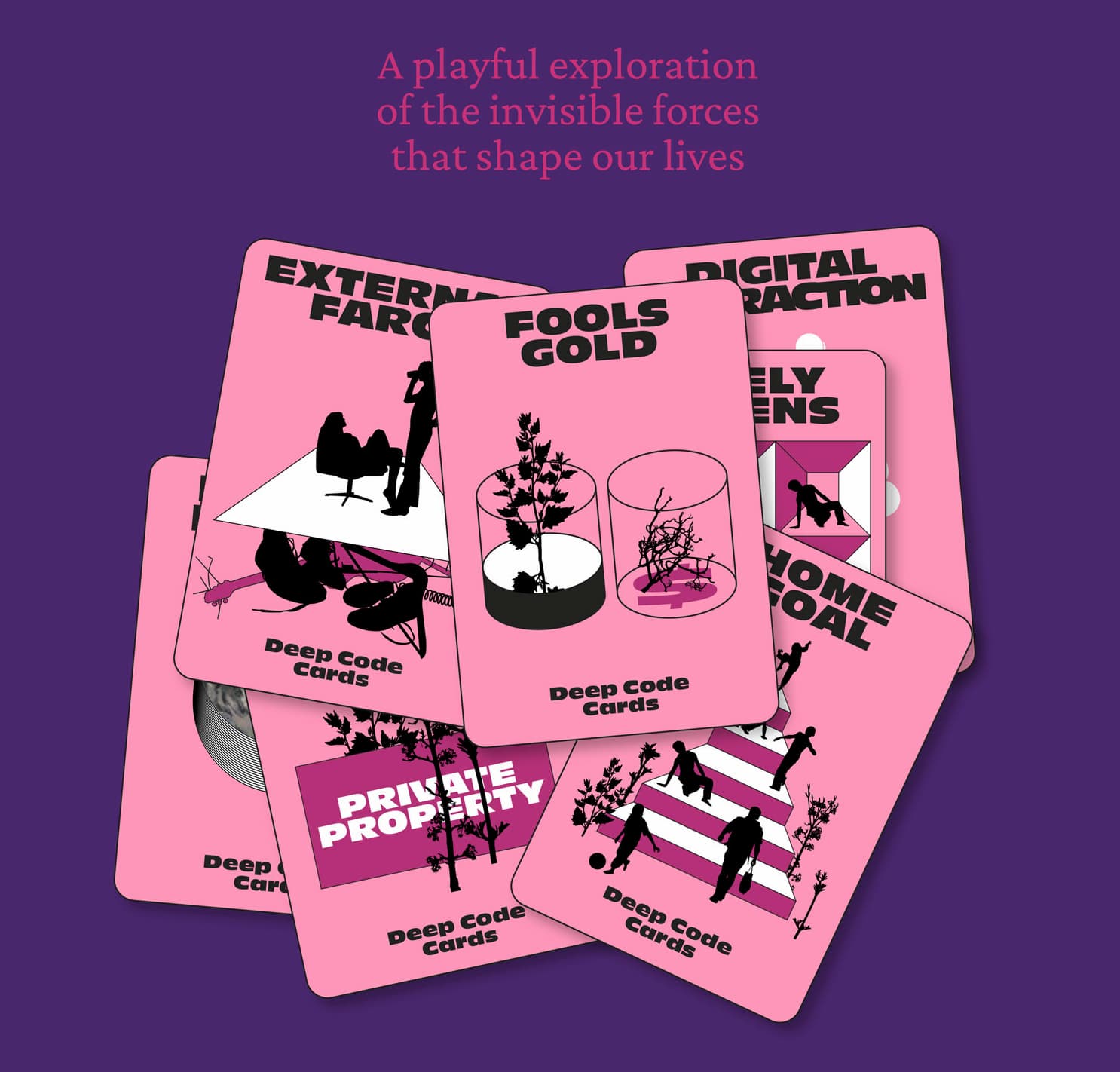
It is this kind of deep, structural norm that the Deep Code Cards ask us to reconsider, with cards for things like:
- the ‘Home Goal’ shared by most countries—“If a country’s GDP is falling but its rivers are cleaner and people sleep and eat better than 10 years ago — is it failing?”, or
- the notion of ‘Zero Sum Lives’, that we must “fight for personal happiness and material comfort above all else”
The cards are a structured reflection tool, with a simple goal: To help us see and reflect upon these deep codes; especially things that may, as the creators remark, “seem normal, harmless even… But are they?”
The cards themselves are freely available as a PDF download (in multiple languages!), along with a treasure trove of supporting material. My only complaint is that there are only 8 cards—I want more!!
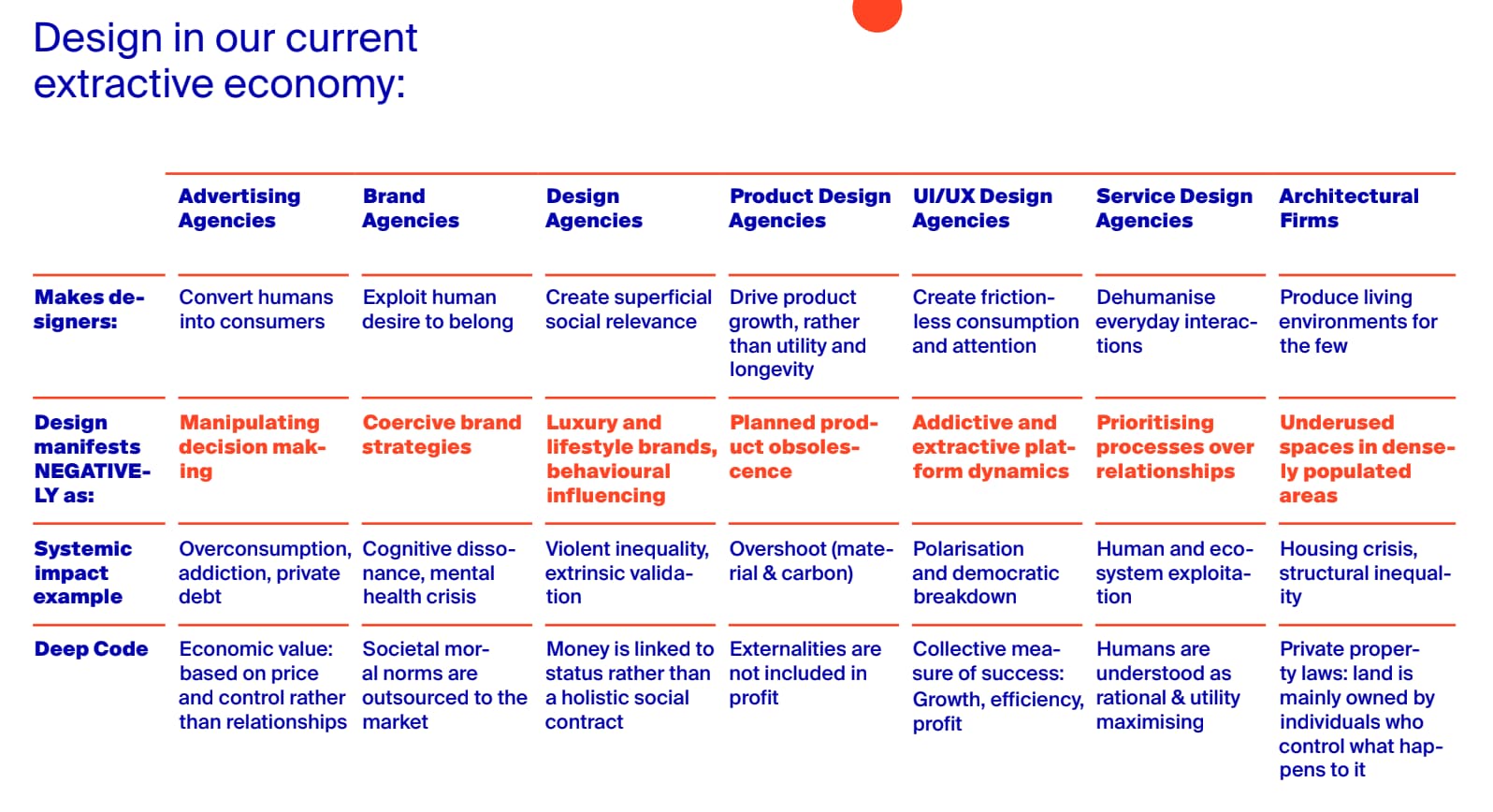
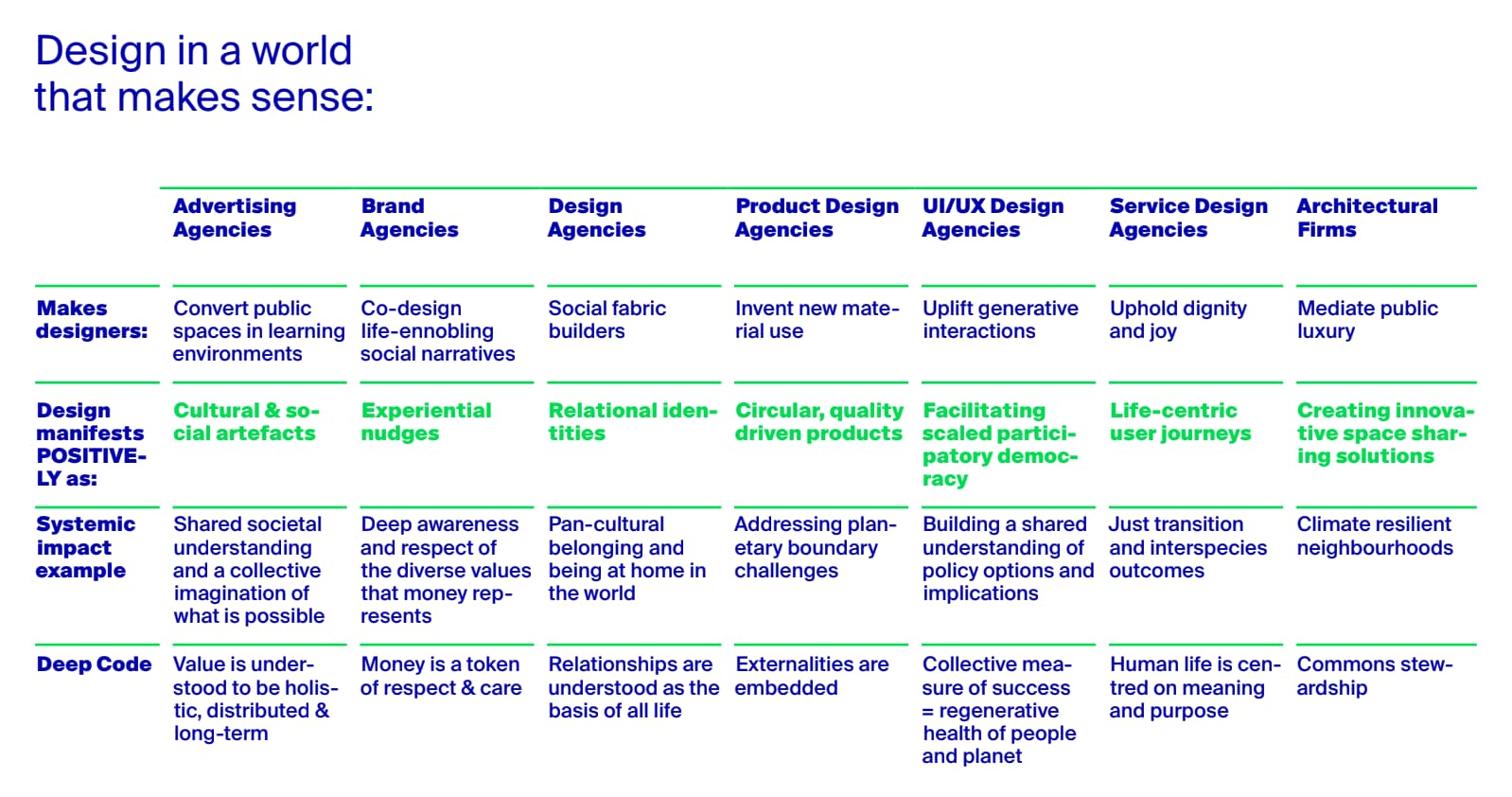
I also found that The Deep Code Cards are a complement to the Anti-Brief tool. Digging around some of these files (again, freely available 😍) I found this nice analysis of the different deep-code-driven worldviews behind various forms of design.
What we (mostly) have now:
What is possible:
Wow.
In a way, this brings us back round to the second half of that famous Le Guin quote, where she went on to extol the virtues of art and writing as a catalyst for change.
Any human power can be resisted and changed by human beings. Resistance and change often begin in art, and very often in our art, the art of words.
It is precisely this kind of questioning—and action—that Dark Matter Labs is trying to inspire us toward.
Speaking of deeply rooted beliefs…
Cultural differences and storytelling
I have this idea that a great story is a great story. Period. But as story expert David Hutchens reminds us, not all stories are right for the audience [LI].
The French CEO delivered a speech that freaked out the organization…
I thought it was beautiful and vulnerable. But I’m an American.
In the French organization, it was controversial. It didn’t land at all. They said, “c’est trop, non?”
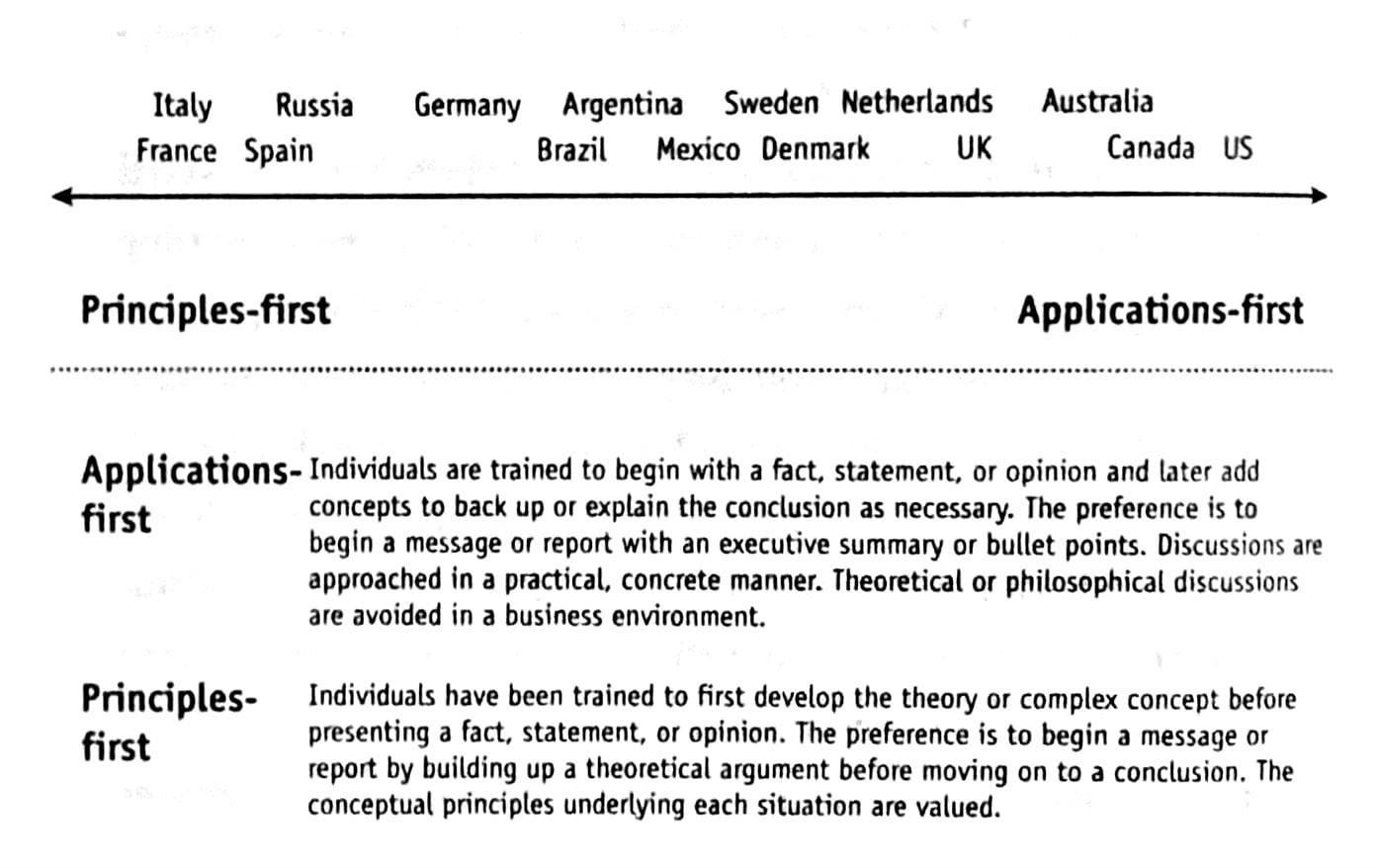
Hutchens goes on to look at cultural differences in the application of story, citing Erin Meyer’s The Culture Map specifically her “persuading” scale:
🤔
Full disclosure, I’m skeptical of cultural generalizations like this one—I feel that other factors like social group identity (e.g. “I’m an engineer” or “I’m a designer”) tend to override cultural norms. But I’m intrigued by this nuanced distinction between “principles-first” and “applications-first” persuasion. I’ll have to bring this up with my Italian co-workers, since we apparently sit on opposite ends of this scale!
“So You Want to Be an American?”
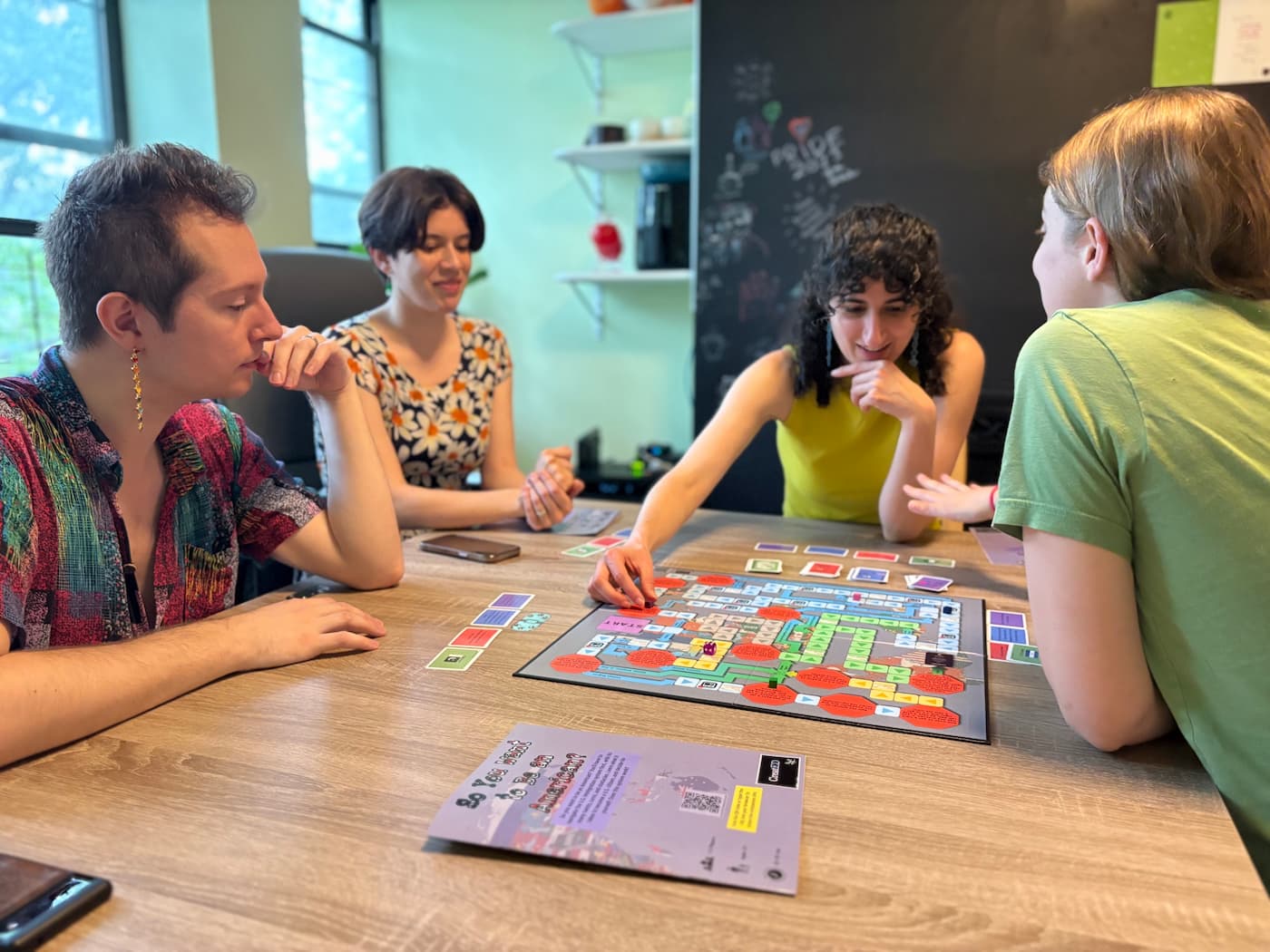
What a simple—and brilliant—idea. Take (a) a system that already has rules in place, that is also (b) a hot topic that many people think they know about (but probably don’t)… and turn this into a game. The topic? The U.S. immigration system. So You Want to Be an American? lets us play through this reality… 😬
So you want to be an American? You'll have to navigate the U.S. immigration system first, with all of its twists, turns, and obstacles. Each player's path through the game is their own; there is no competition between players to get to the end. Everyone has the same goal: to become a U.S. citizen. Learn what it takes to get there, and decide for yourself: Does this system work?
I also love the answer to why this is an analog game and not a digital one.
On a lighter note, maybe…
Work-life balance
Okay, I have a challenge for you! How would YOU draw your work-life balance?
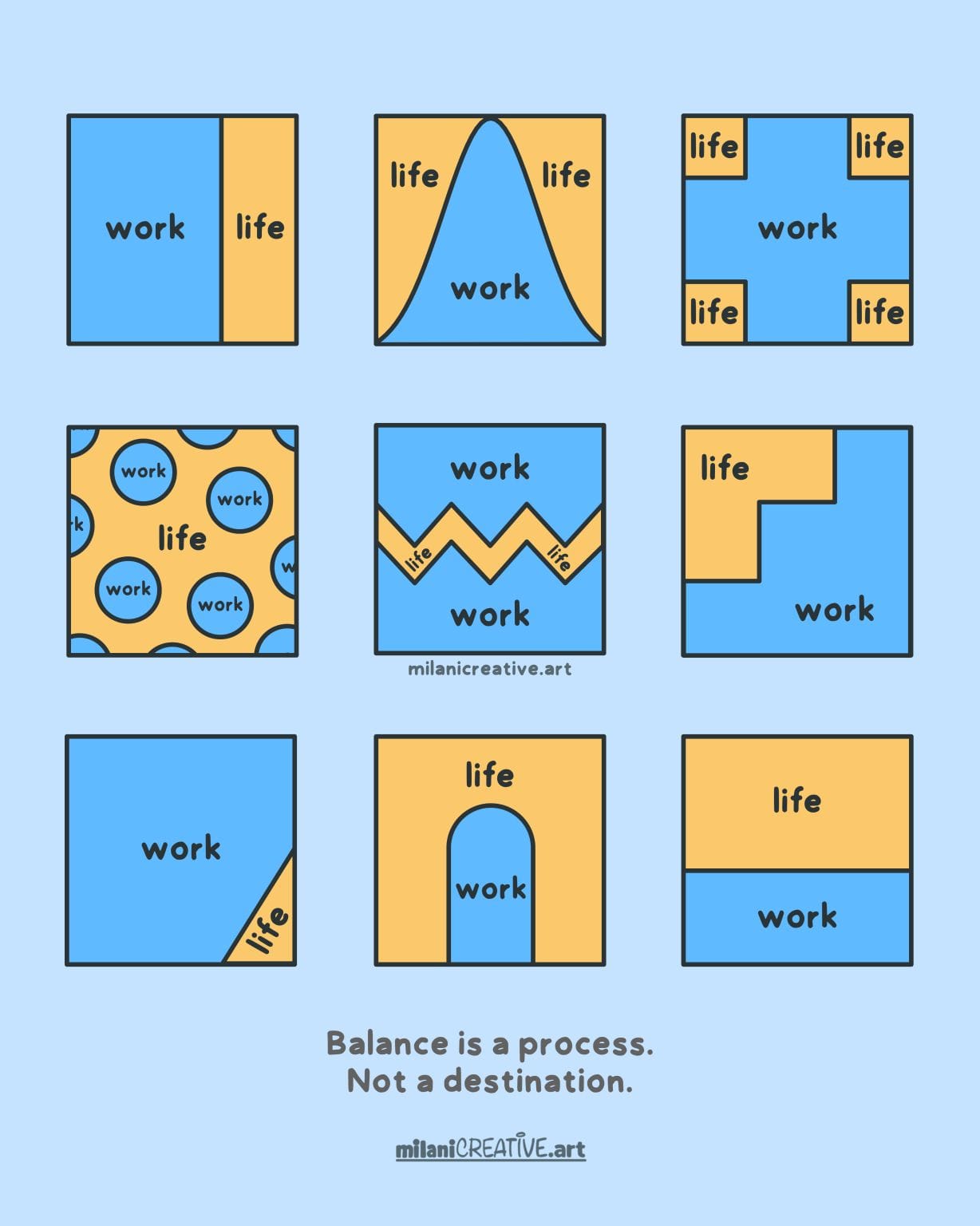
This particularly poignant image is from Pejman Milani [LI], who regularly distills complex ideas into some of the most amazing visual metaphors.
I kind of love this as an exercise, and can see it showing up in one of my Visual SenseMaking workshops. Drawing work-life balance in this way is simple and straightforward, and yet… the visual choices—the rendering of different shapes and containment of shapes—speak volumes.
The Smiley Model, a framework for learning and play
It’s been a minute since I shared a proper games and learning framework (I think the last one was the Historical Problem Space Framework in issue № 108?). Here we have the ‘Smiley Model’, “a framework for designing engaging learning experiences in games.” Named after… the smile formed by the playful elements? 😛 (Hey, this kind of naming has worked before—anyone ever heard of the Double Diamond?).
The Smiley Model combines learning design and game design—learning and play. It is a theoretical model that addresses 1) how to design learning processes and 2) how to implement learning elements into a game, while also considering 3) how to make the game motivating and engaging.
The paper behind this goes on to elaborate on each of these elements (every labeled dot).
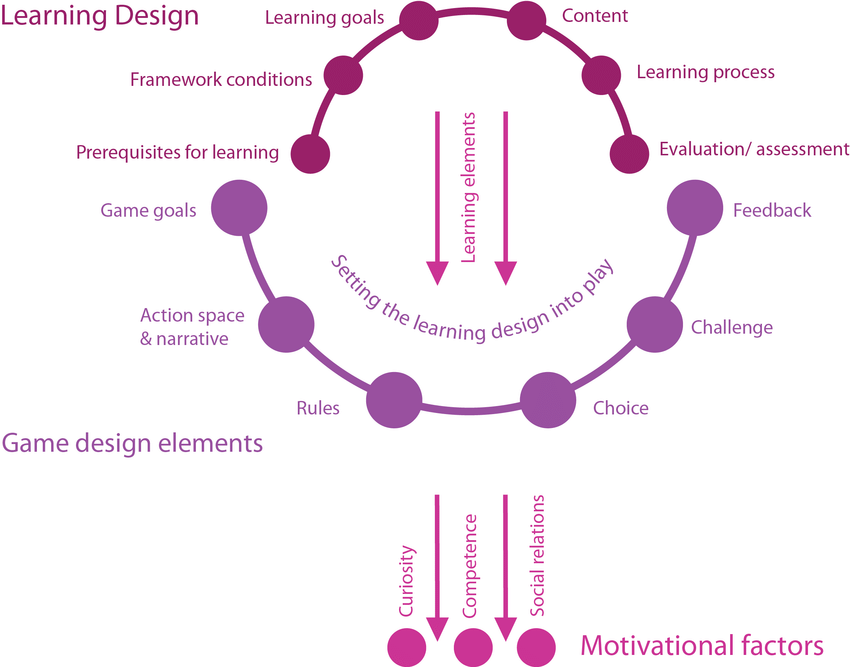
At first blush, this looks pretty solid—I’ll have to do my thing and tear it apart, then rebuild piece by piece. But, the identified pieces are many of the same ones I’d call out. FWIW, my interest in learning and game design frameworks goes back at least to the time when I was writing Seductive Interaction Design, a time when I was sorting out for myself a model that integrated elements of play, games, and motivation (at a time when “gamification” was all the rage 🙄). In the years since, I’ve become even more interested in game design proper, but I still haven’t arrived at a model that successfully integrates aspects of learning design.
Playful visualizations
From time to time, I still make my way over to Twitter / X 🤢. But you know what? People are sharing some fascinating experiments. AI-generated, but still… I love the playfulness in these visual representations.
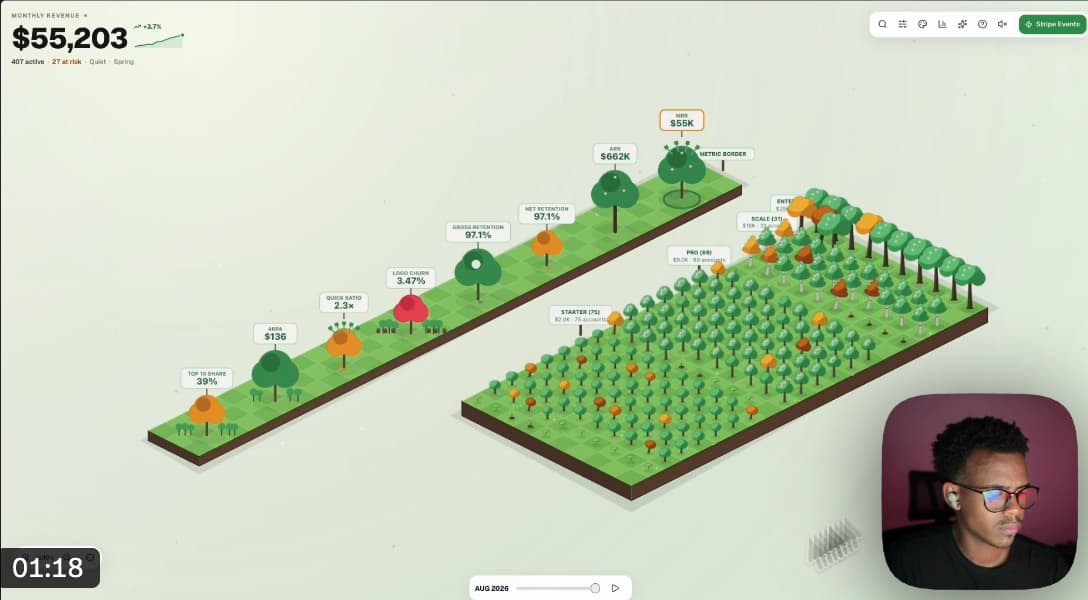
The first of these is a way to visualize growth (as in growth of a product) using the metaphor of a forest [X].
Stripe dashboards are boring.
So I built mine as a forest.
Every tree is a real subscriber.
Big customers grow into big trees.
When someone is about to cancel, their tree turns orange.
When they churn, the tree dies.
When a payment comes in, it rains.
You can scroll back in time and watch your whole business grow.
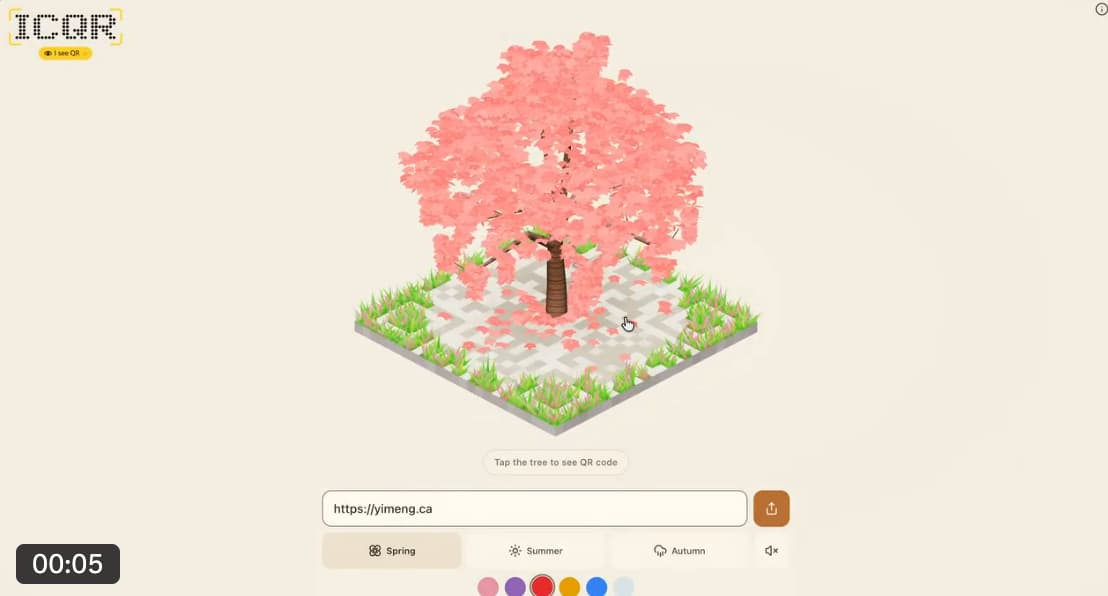
The second of these also uses the tree metaphor—a single tree—as a way to bring QR codes to life [X]. (Yes, you read that right!)
On deep reading
Instead of closing out this edition of the newsletter with a few random things, like I often do, I want to share one image that feels… oddly comforting [LI]. Not just for the sentiment, but for how it’s presented.
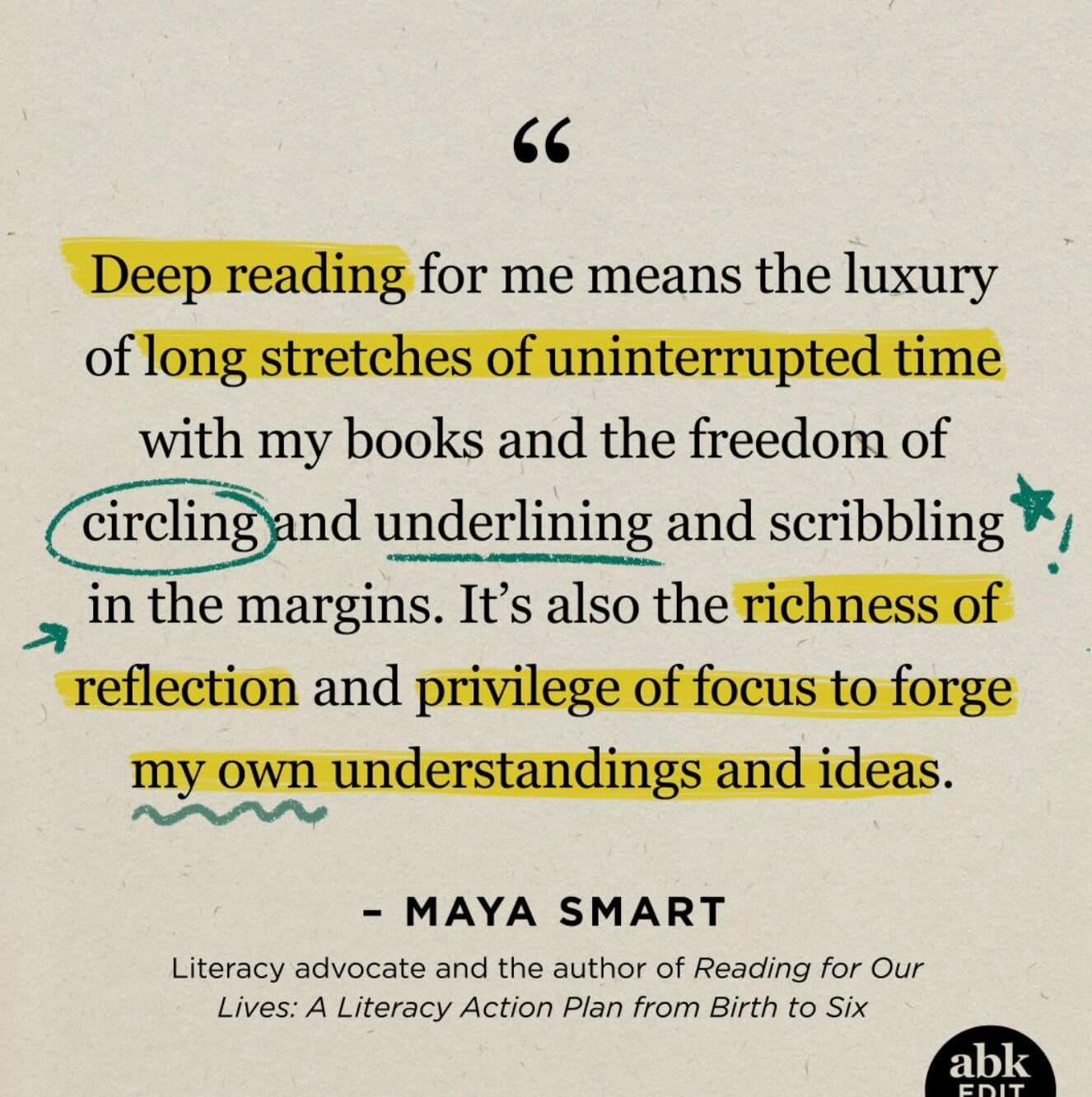
Highlighting sentences, scribbling in the margins, circling and starring words—these markings all reflect an active engagement with the text. Outside of work, I increasingly struggle to carve out the time and space for deep reading, but it is something I deeply cherish, and recognize as valuable. Yes, this is how I try to engage with a text (and the reason why I don’t like audiobooks for non-fiction).
And here’s an odd quirk: Given the choice, I’d prefer to buy a used book loaded with notes and comments in the margins. It doesn’t happen very often, but when it does I feel like I’m getting to have a conversation, not just with the author but with another reader.
Here’s to deep and active reading. 🥂