№ 126 | People’s Emergency Briefing Action Cards, The Neuroinclusive Design Toolkit, System & Self Deck, Disagree Differently, Izdihar, Books in Space, The ETHIC Framework, and Believe and Be Like Cards

Welcome to another edition of Thinking Things, your increasingly irregular roundup of ‘playful things to think with’ and things to think about!
This edition of Thinking Things features cards, Cards, and more CARDS! (And a few non-card and card-adjacent things! 😉)
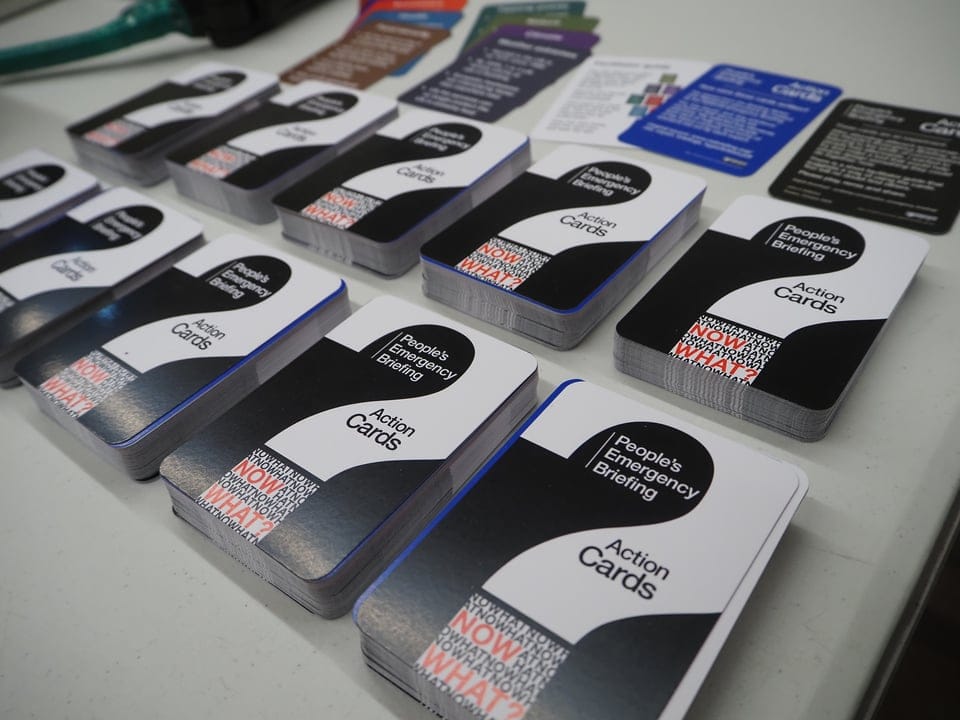
People’s Emergency Briefing Action Cards
Here’s a simple reminder that even the most basic use of cards can make a big difference—in places we might not expect.
Context:
Various communities in the UK are hosting screenings of the People’s Emergency Briefing, a 50-minute public information and documentary film campaign focused on the realities of the climate and nature crisis. Through a curious turn of events, John V Willshire ends up being asked to host one of the screenings. While there is a facilitator’s guide to go along with the screening, John felt that the discussion afterwards could benefit from a wee bit more…
I had previously attended two other screenings, and felt that we needed a different way to end in which we can inspire local commitment and action.
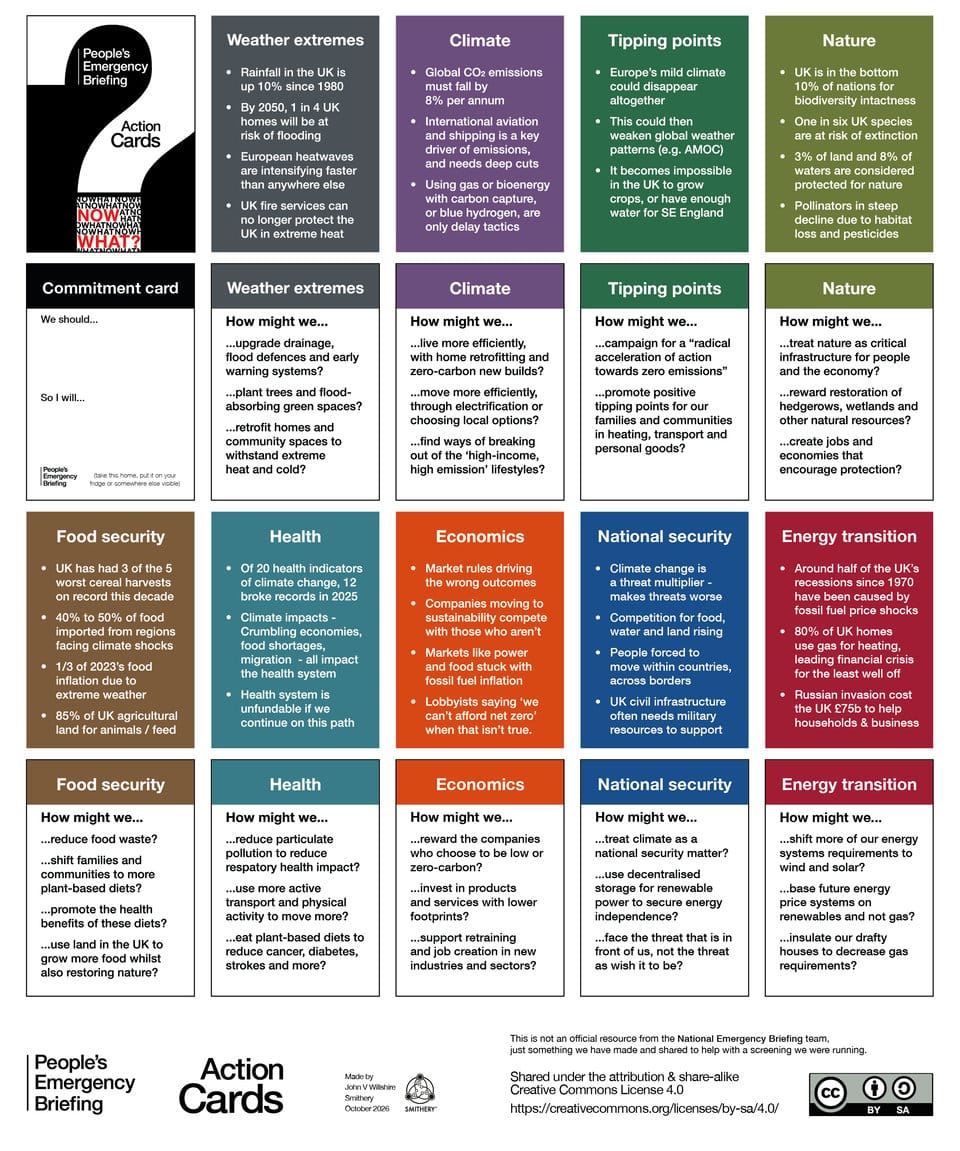
In response, John created a small set of 9 cards, each narrowly focused on a key area presented in the film, with:
- relevant facts on the front side, and
- “How might we…” questions for reflection on the back side.
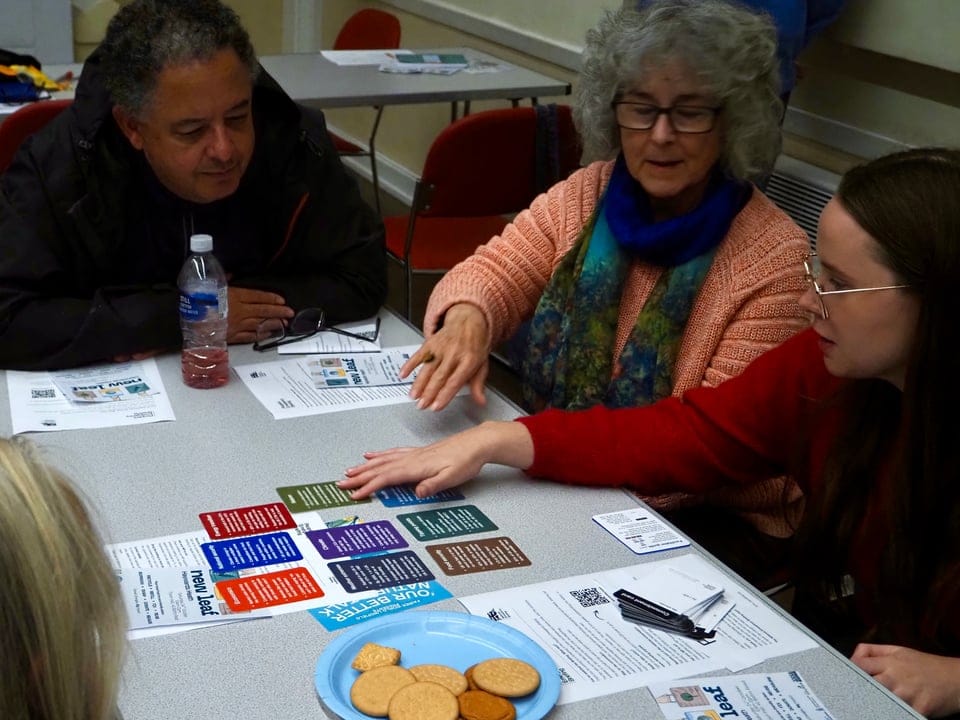
Following the screening, folks broke into smaller groups to discuss what they’d just seen, with the cards as tools for this conversation.
Why cards?
Firstly, even in the 50 minute film version, there is a lot going on.
Asking the audience in a local screening to react to all of it makes some pretty big assumptions about what they’ve managed to retain. Having simple summaries in front of them is a useful prompt for discussion.
Secondly, having these prompts as cards allows people to move around and prioritise, making informed judgements on which go where when making a rough map of the priorities as they see them.
For this prioritization, John used the Diamond Nine technique, a simple way for groups to produce a general sequence of priorities.
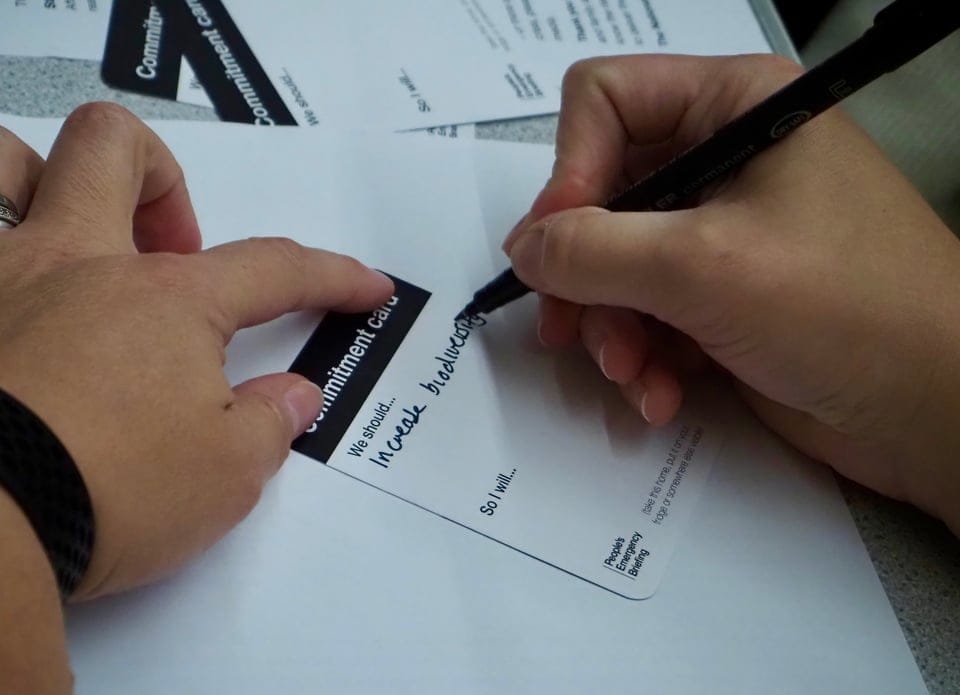
And… the pièce de résistance that ties this all together? A “tenth” Commitment Card, which simply asks each person to answer “We should…” and “So I will…” statements.
🤩
As with the We Wunt Be Druv cards mentioned previously (see Issue № 120), I continue to be inspired by how John is using his unique skills and expertise to benefit local communities.
The People’s Emergency Briefing Cards are freely available for download, use, and remix.
Speaking of simple card decks…
The Neuroinclusive Design Toolkit
Here’s a classic case of taking your existing ideas, and translating them into a card format to make them more accessible (and engaging!)
Clocking in at just 10 cards (plus the 11th index card), The Neuroinclusive Design Toolkit represents 10 heuristics to consider when designing train experiences (e.g. lighting, colors, signage) for diverse cognitive needs.
These heuristics draw upon guidance from the built environment (BS 8300-2:2018, BS 8300-1:2018, and PAS 6463), have been adapted specifically for the rail environment…
Each card approaches the design from a different angle, containing a series of prompts that encourage the design team to evaluate the impact of the current design and question how it could be improved. The cards serve as prompts for the Human Factors team, as well as collaborative artefacts that can be shared with a diverse range of stakeholders.
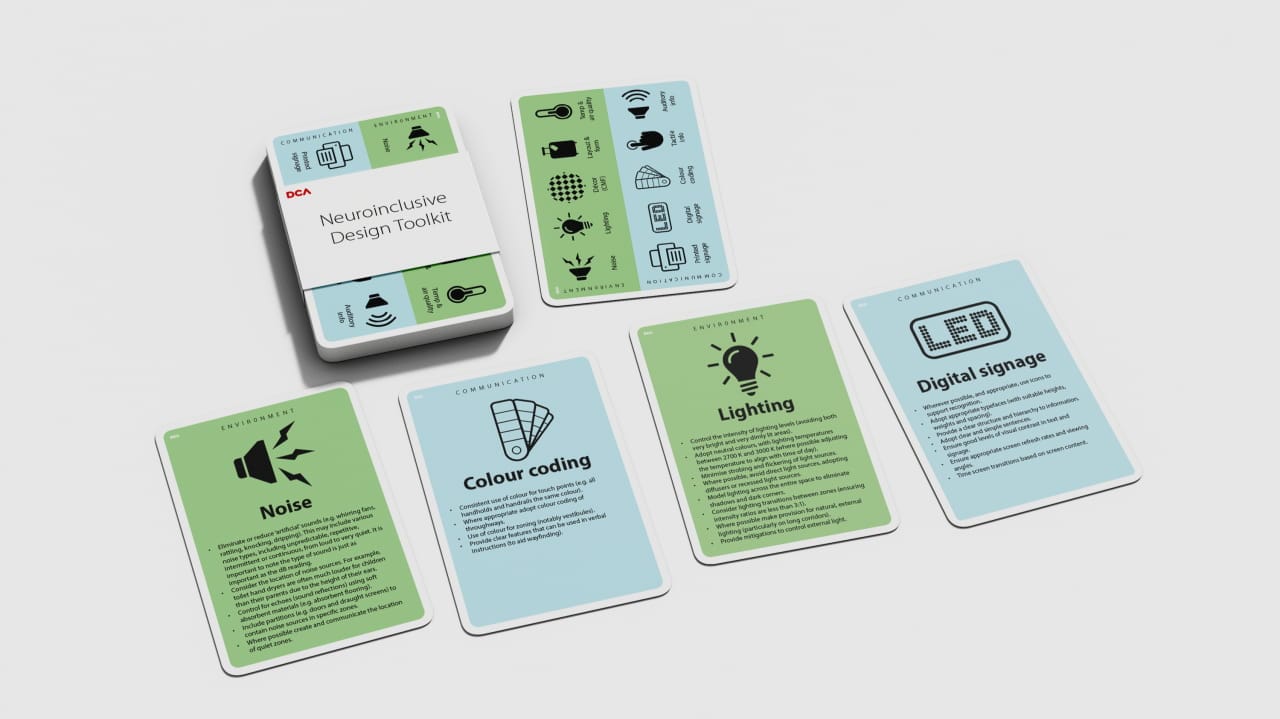
You can read more about these heuristics in this post “All aboard for neuroinclusive train design.” For a discussion of the content, check out the comments in this LinkedIn post.
System & Self Deck
This next find came to me by way of the Cardstock community, where Regina exclaimed “Finally, an agenda agnostic futures deck… very handy for provoking proper questions at q&a events.”
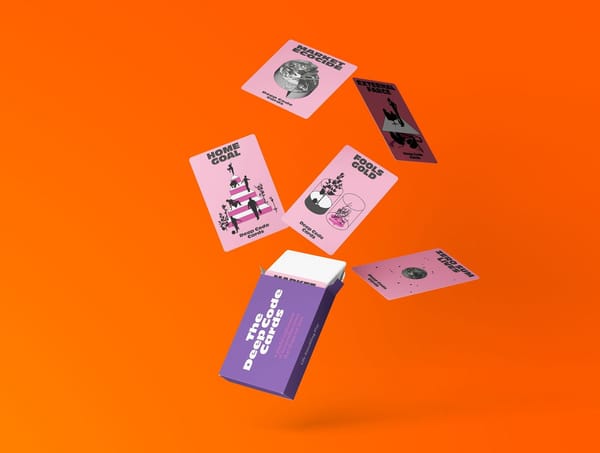
As the name suggests, the System & Self deck contains two suits of cards (cards for reflecting on the system and cards for reflecting on the self) that you pull into a forced pairing. The goal is to “help you surface tensions, challenge assumptions and see a situation from a different perspective.”
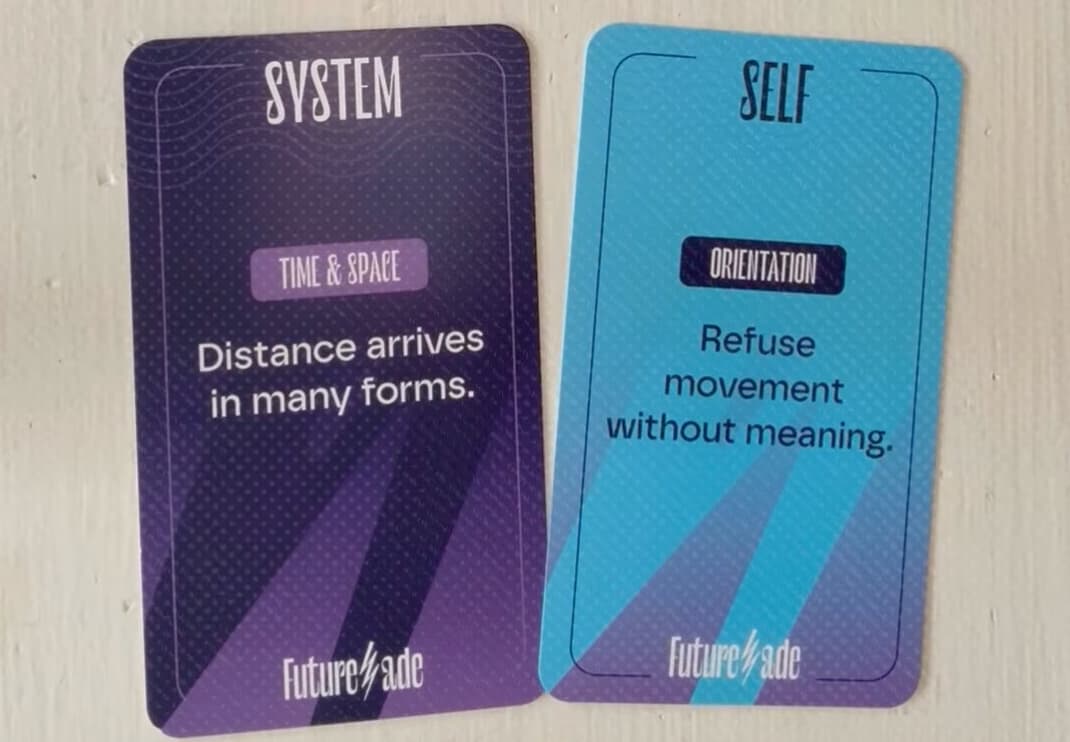
Like tarot cards, which these seem inspired by (the creator of this deck, Tracey Follows, has a series of “readings” for different card pairings), meaning depends on your (or a group’s) prior associations and what you project into the cards.
Disagree Differently
I often think about the arguments that result from critical differences in opinion, belief, or perception, and… how a card and/or board game might facilitate healthy dialogue (admittedly one of my more ambitious projects!). Naturally, I was thrilled to stumble across the Disagree Differently card game (thank you Deb!).
Disagree Differently is a trail guide that helps two people stay close and feel heard through any disagreement. Start silly. Get confident. Bring up what matters, without fear.
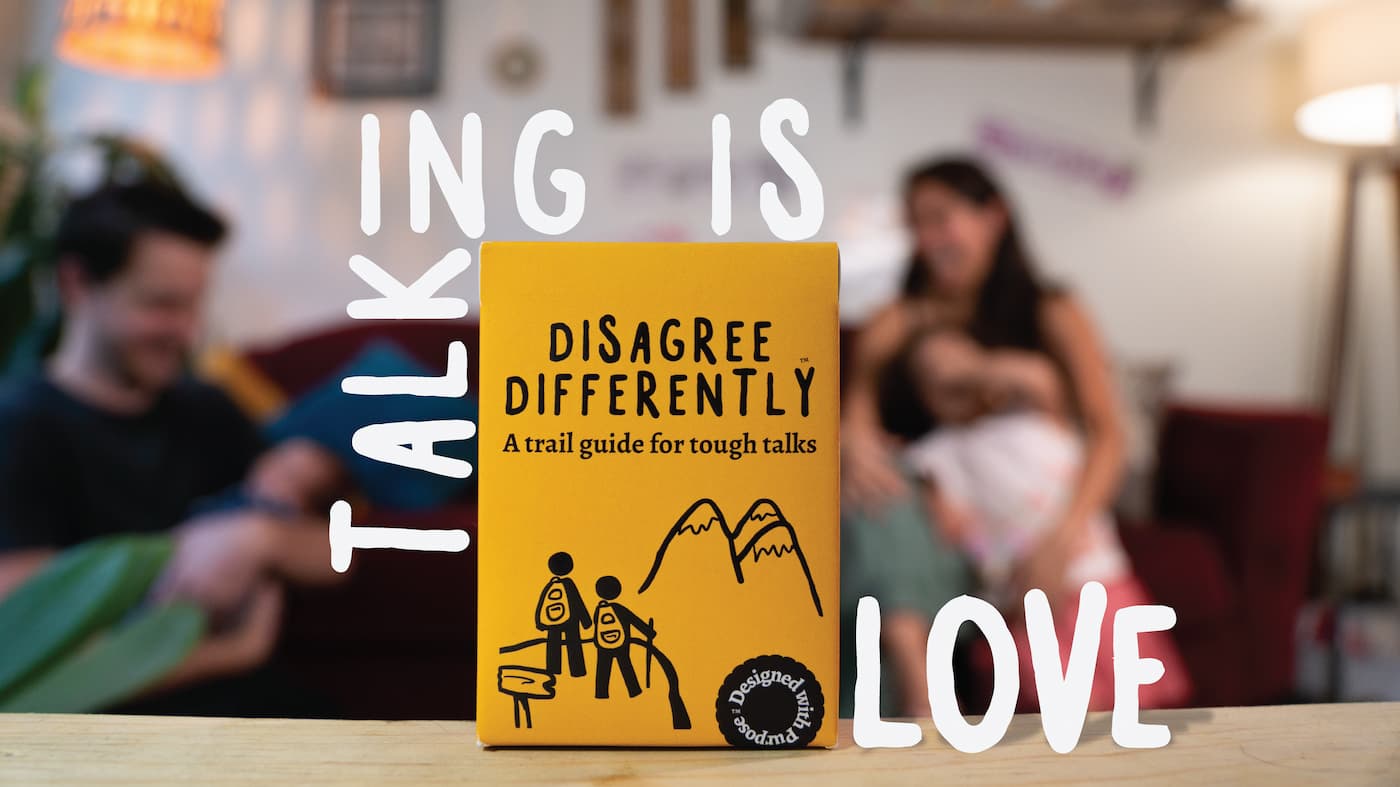
Using the analogy of a trail you’ll hike together, players first prepare for their hike:
Choose a topic (silly, serious, or your own), set shared goals, agree on communication styles, and define clear boundaries.
Then, you hit the trail…
Tak[e] turns speaking and truly listening. Each turn follows four guiding questions. After listening, you summarize what you heard in your own words. Your trailmate decides if they feel heard. If they do, switch roles and keep climbing.
And the win condition? Reaching the summit together. But, this only happens when you both feel genuinely heard.
Research shows you can't learn it just by reading or watching, only by practicing.
This game gives you a structured way to practice staying close while you disagree
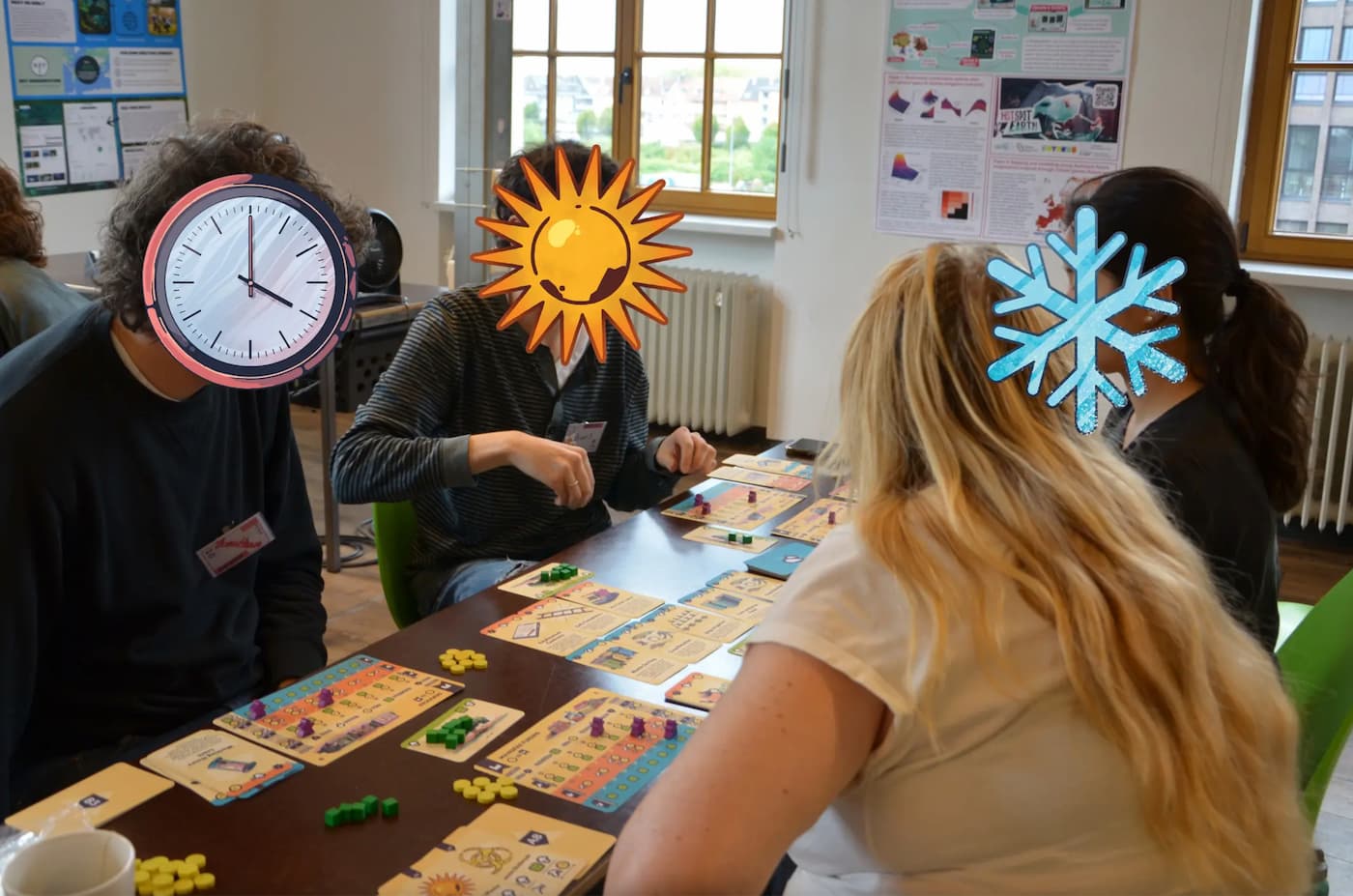
This structure is what you see in the photo below:
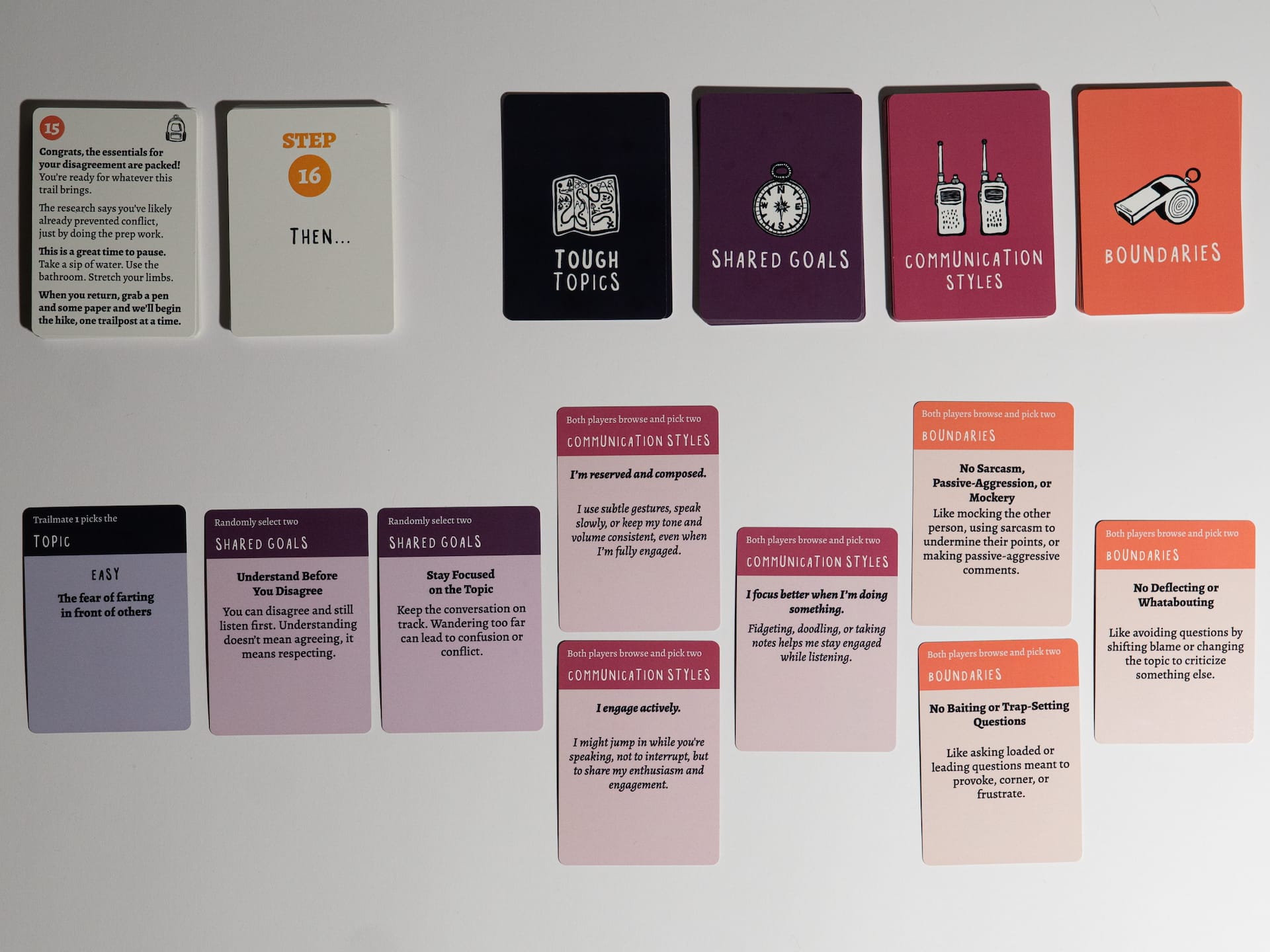
We have our steps in the upper right corner, our draw pile to the left. Below all this are the topic, our shared goals, communication styles, and shared boundaries. Aside from scaffolding to practice healthy dialogue, this tableau—from a cognitive perspective—serves as a persistent record of information, your shared agreements and the current state of your journey together.
At the heart of this deck are the 28 steps, which draw from “dozens of research fields (couples therapy, conflict mediation, behavioral science, communication research) rather than one theory, translating what works into a simple framework anyone can follow.”
But, there’s another layer to all this.
Disagree Differently is the outcome of research focused on serious games more broadly and the creator’s “Designed with Purpose” method, an approach to designing serious games that “begins with a documented societal problem and works backward to the artifact best suited to address it.” For more details on this, and findings from playtesting Disagree Differently, we have a proper white paper: Designed with Purpose: Putting Behavioral Science Upstream in Serious Game Design [PDF].
Next up, not strictly a card deck, but it uses cards…
Izdihar (serious game)
Izdihar is a playful way to “teach sustainable business development in Syria”—using a board game, of course. 😀 Not a lot to go on, other than what’s on the game’s webpage:
Izdihar is a cooperative board game we developed for the renowned Czech NGO People in Need. In Izdihar, players represent local businesses – over the course of 8 rounds, they have to grow their business and implement policies while protecting natural resources and environment.
The game is based on a situated research: it models real-world situations and proposes cooperation and adaptation as ways to solve climate challenges without hindering business growth.
A game of cooperative resource management? A way to simulate present and practical concerns? Yes!
[Books in Space]
J. Elise Keith is the queen of meetings. THE expert on all things meetings. A meeting guru. All that.
Naturally, she’s built up an extensive collection of books on the topic of… you guessed it… meetings!
What I’m sharing here has very little to do with meetings. Or books. Or books about meetings.
Rather, this brief post from J, Elise Keith [LI] stood out to me for one very simple reason: It’s about using space to hold meaning. Using the floor as a surface upon which to organize a specific category of books along a specific and singular spectrum: how positively or negatively the book frames the topic of meetings.
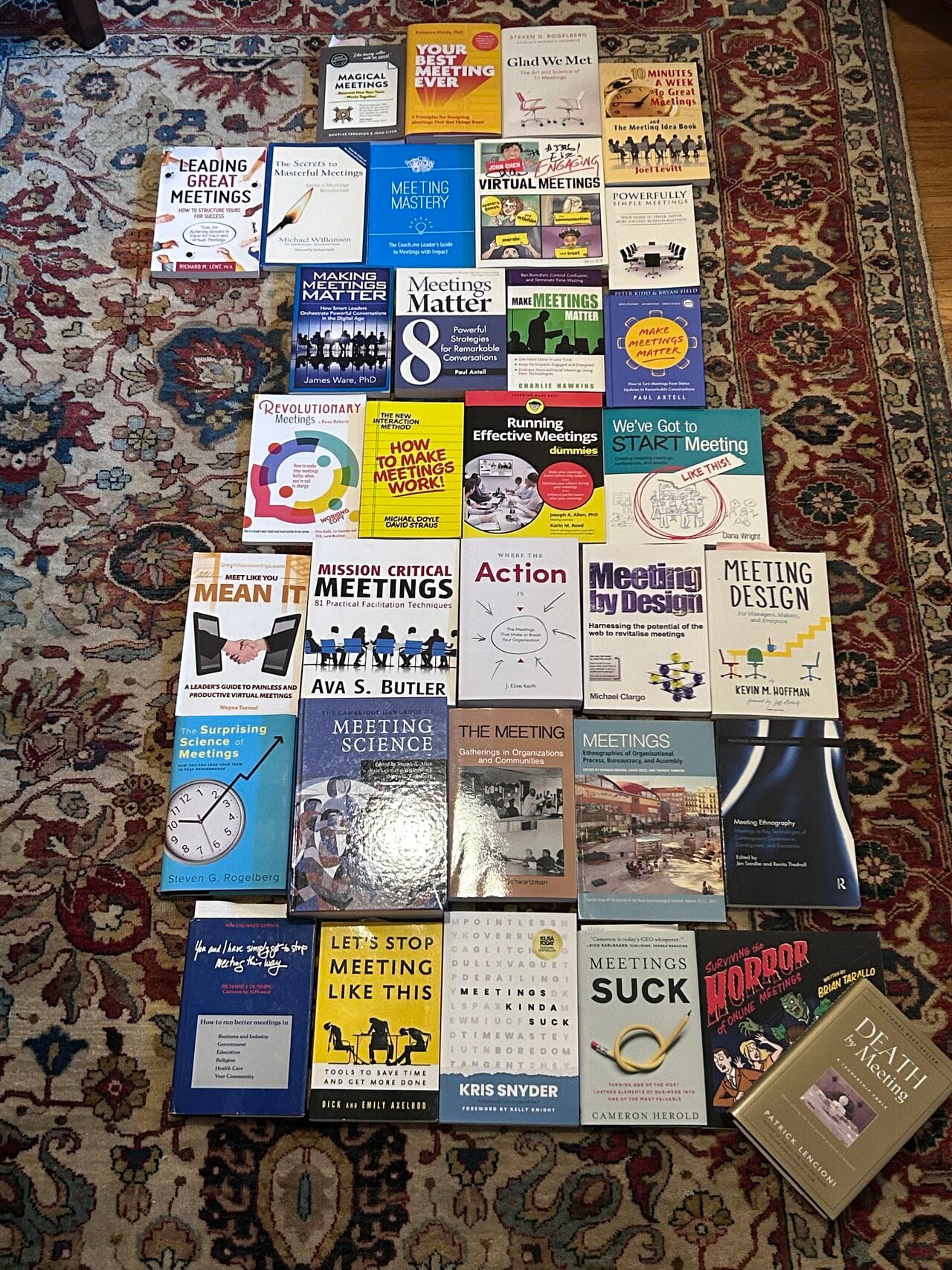
I pulled all the books specifically about business meetings off my shelves. I arranged them by valence—positively framed titles at the top, negative ones at the bottom.
When I teach about the spatial arrangement of objects to hold and convey meaning, I often reference real world examples: Preparing a complex recipe with lots of ingredients, organizing a pantry, organizing books… I love that this simple example uses physical objects (the books) but organizes them along an implicit concept (valence).
This also brings to mind John V Willshire’s thoughts on “What is a library?” and how he reorganized his bookshelves:
The ETHIC Framework: Designing Ethical Gamification That Actually Works
Setting aside hangups with the “gamification” label, there’s a lot to get out of this post from Sam Liberty on “The ETHIC Framework: Designing Ethical Gamification That Actually Works.”
Two ideas here that stood out for me:
First, the point of the post, the ETHIC framework itself. At first glance, this looks solid. I’ll have to see how this folds into my growing catalog of playful and gamelike approaches to playful learning, before I can offer a more critical take.
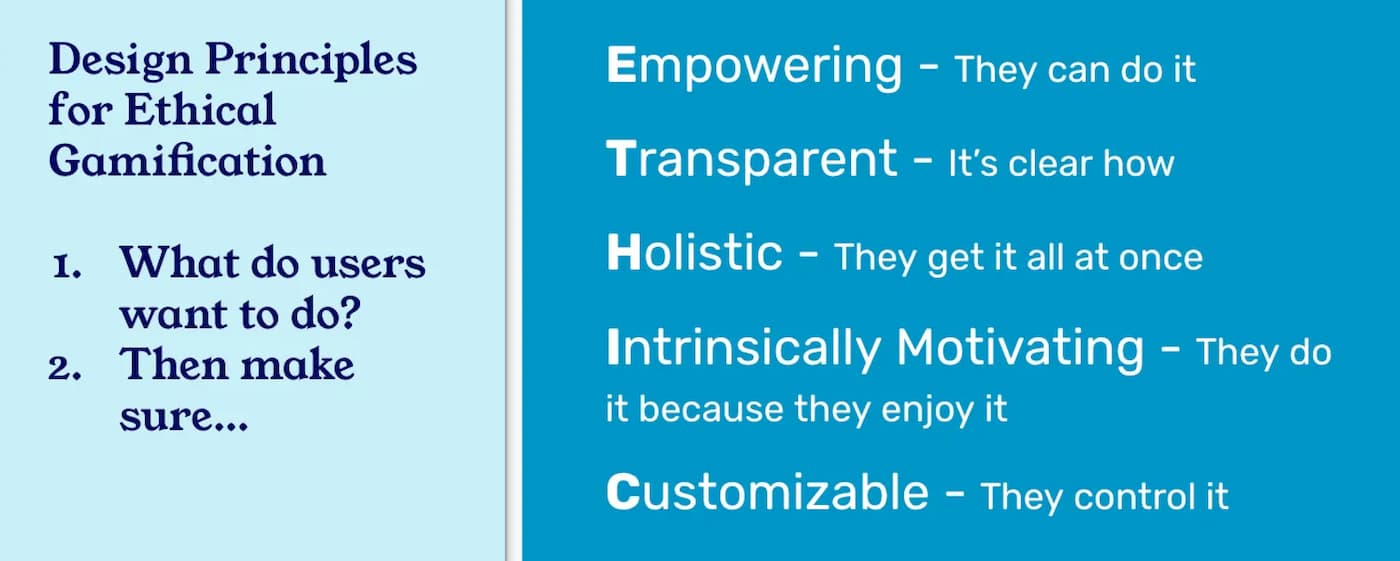
Second, and the bit I find more interesting here, is the “problem framing” section on what makes gamification predatory:
What Makes Gamification Predatory?
Before diving into what makes gamification ethical, let’s identify the warning signs that your gamification might be heading into dark territory:Compulsion, Not MotivationOpaque EconomiesDiscomfort as a LeverCollection TreadmillsLack of Control
Wow. This is such a clear articulation of the problems I see and feel with everything from loyalty programs to mobile games to “gamified” workout and learning apps. Seeing these deceptive design patterns articulated and named makes them easier to spot.
Oh, and then there’s this philosophical bit that aligns with my own views:
“The most powerful engagement doesn’t come from psychological manipulation but from genuine value creation.”
Beautiful.
And let’s wrap up things with… another card deck!
Believe and Be Like cards
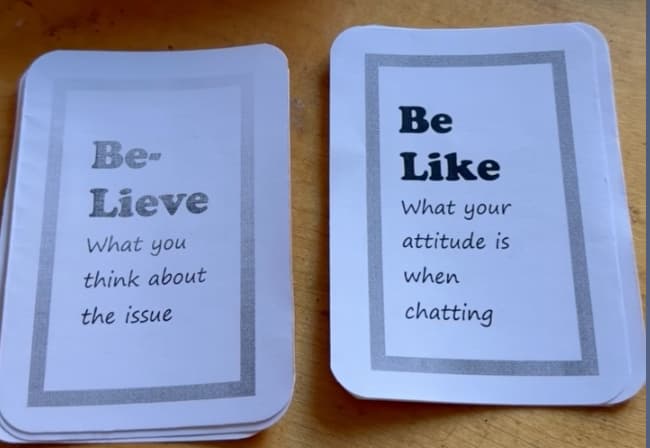
Also for a community event (yes universe, I hear you!), Alastair Somerville created this small deck of cards as a way for people to explore “what they think about an issue and how they act when chatting.”
RANDOM STUFF:
- 🎧 I really enjoyed this podcast (created in part by two former Radiolab interns) about “an entomologist named Martha Weiss got a letter from a little boy in Japan saying he wanted to replicate a famous study of hers.” It only gets better from there!
- 📄 I’m not clear on whether this Weird Works Cootie Catcher qualifies as a playful thing to think with, or not. But, it looks very cool.
- 🍪 Cookie Monster Tries to Meet His A.I. Mandate
- 📚 Books we’ll never get to read in our lifetime? The Future Library [LI] is “a 100-year art project in Oslo, started in 2014 by the artist Katie Paterson, where one writer each year is invited to create a new piece of work that will remain unread until 2114.”
- 🎮 A breath of fresh writing supports a poignant essay: “Retro Gaming: It’s Not Nostalgia, It’s Resistance”
- 🥯 I can’t verify the findings, but if you happen to be in NYC, I present “Bagel-Bench: the definitive guide to NYC bagels” [LI]