№ 127 | The 77 Fun, Remodeling Transparency, Visualizing Complexity, In Case… Card Game, The Rumble Royale, Eight Architectures of Agreement, and “What Happens When You Ask AI a Question?”

Share
№ 127 | The 77 Fun, Remodeling Transparency, Visualizing Complexity, In Case… Card Game, The Rumble Royale, Eight Architectures of Agreement, and “What Happens When You Ask AI a Question?”

Hello, and welcome to another edition of Thinking Things, your increasingly irregular roundup of ‘playful things to think with’ and things to think about!

I’m writing this from the airport, where I’m about to head out for a week of hiking and board games with three of my closest friends. 😄

The 77 Fun

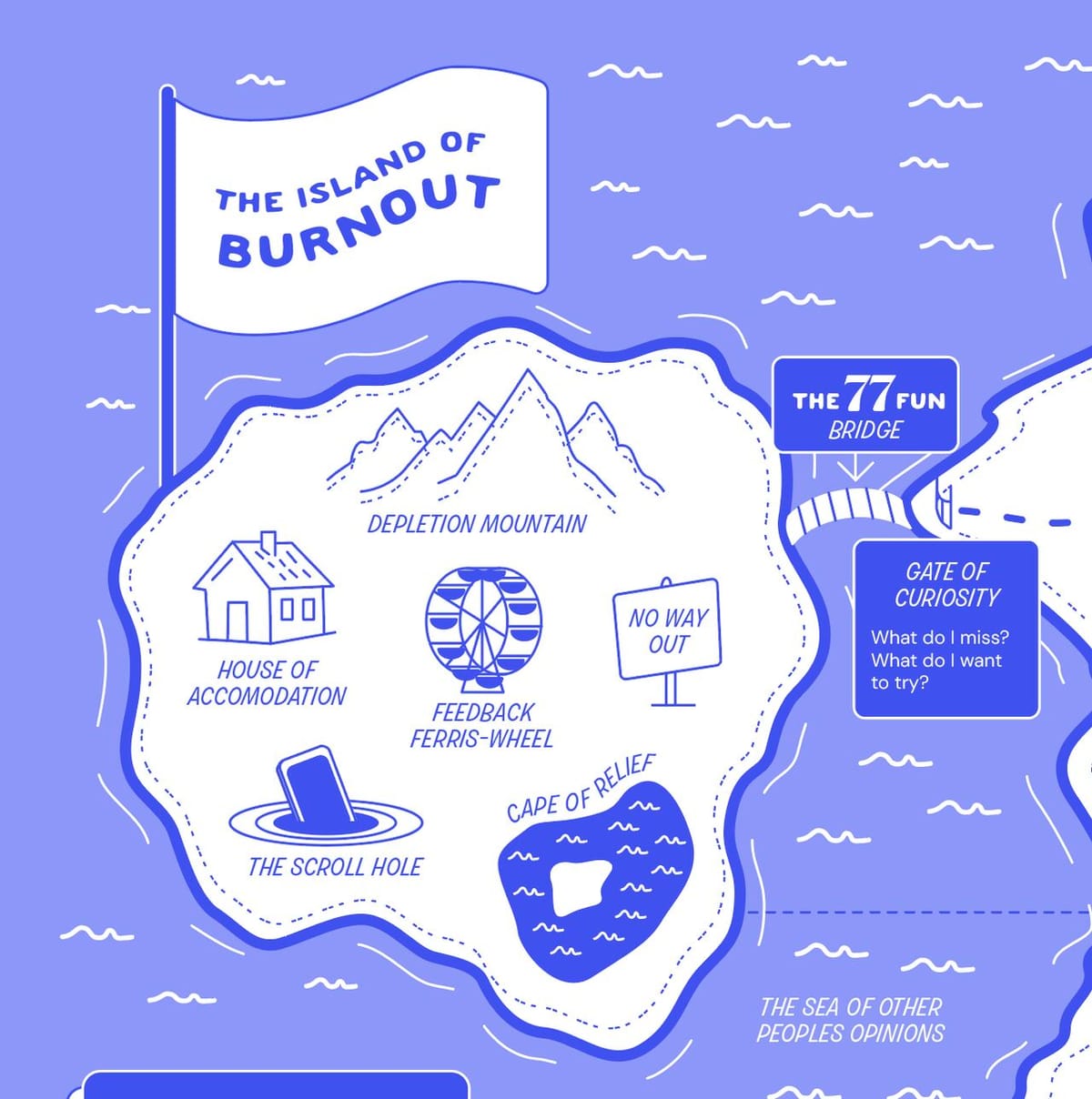
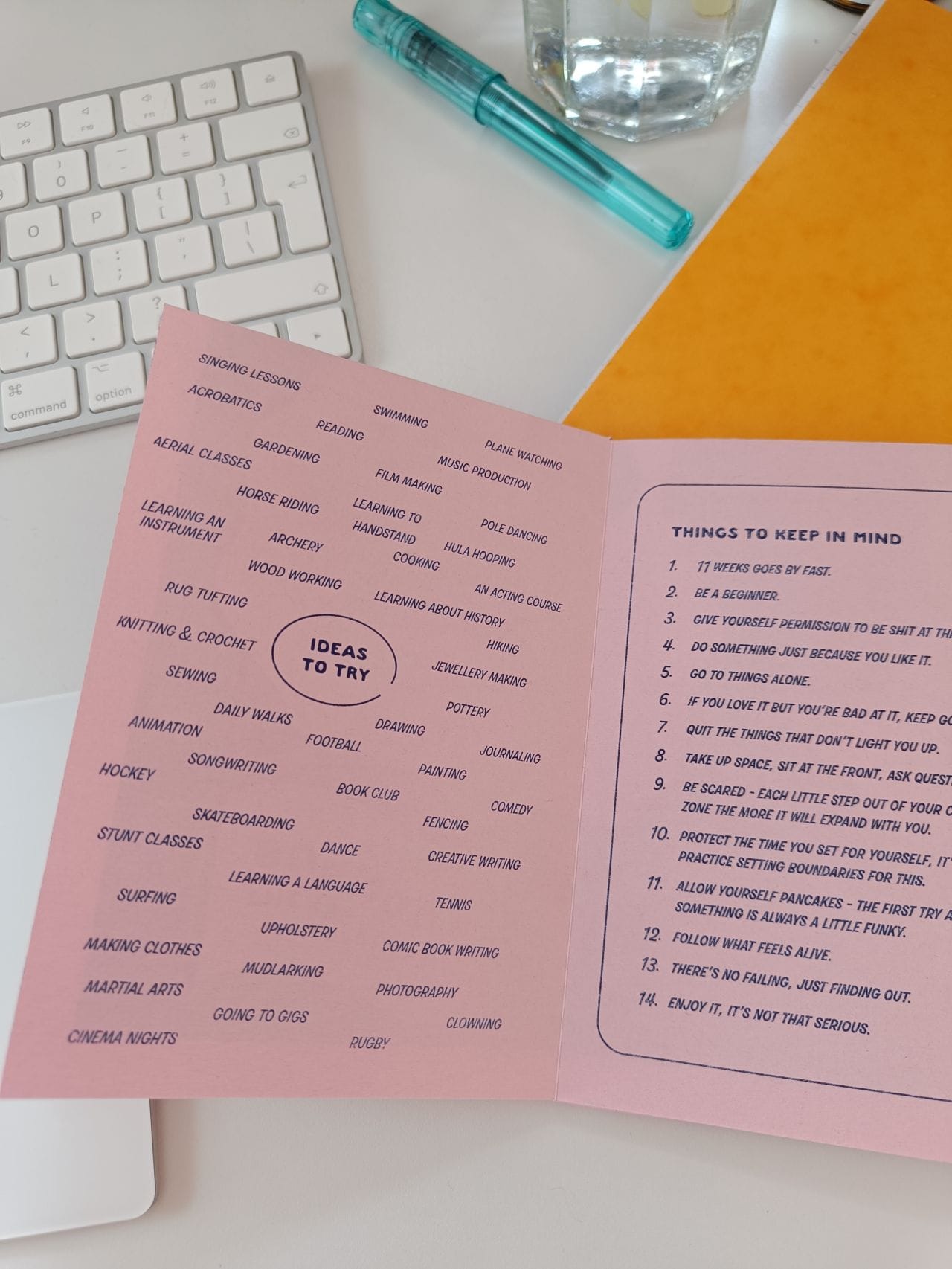
I’m not sure if it’s the Map of Curiosity, the fact that this is a zine, that it is (appears to be?) a risograph print, or the list of “ideas to try” [LI], but… there’s plenty here to be inspired by! From what I can piece together, these things were handouts that designer Emilia Kireli-Reed created for her talk on how to feel alive again after creative burnout.

What if recovering from burnout isn’t just about rest, but expanding your life to rediscover who you are? In this interactive workshop, Emilia introduces The 77 Fun: a 77-day framework for rebuilding self-trust through following curiosity. Participants will explore forgotten interests and leave with the foundations for creating their own 77-day practice.

A bit more content can be seen in this earlier LinkedIn post and in these notes (and more photos) from after the event [LI].
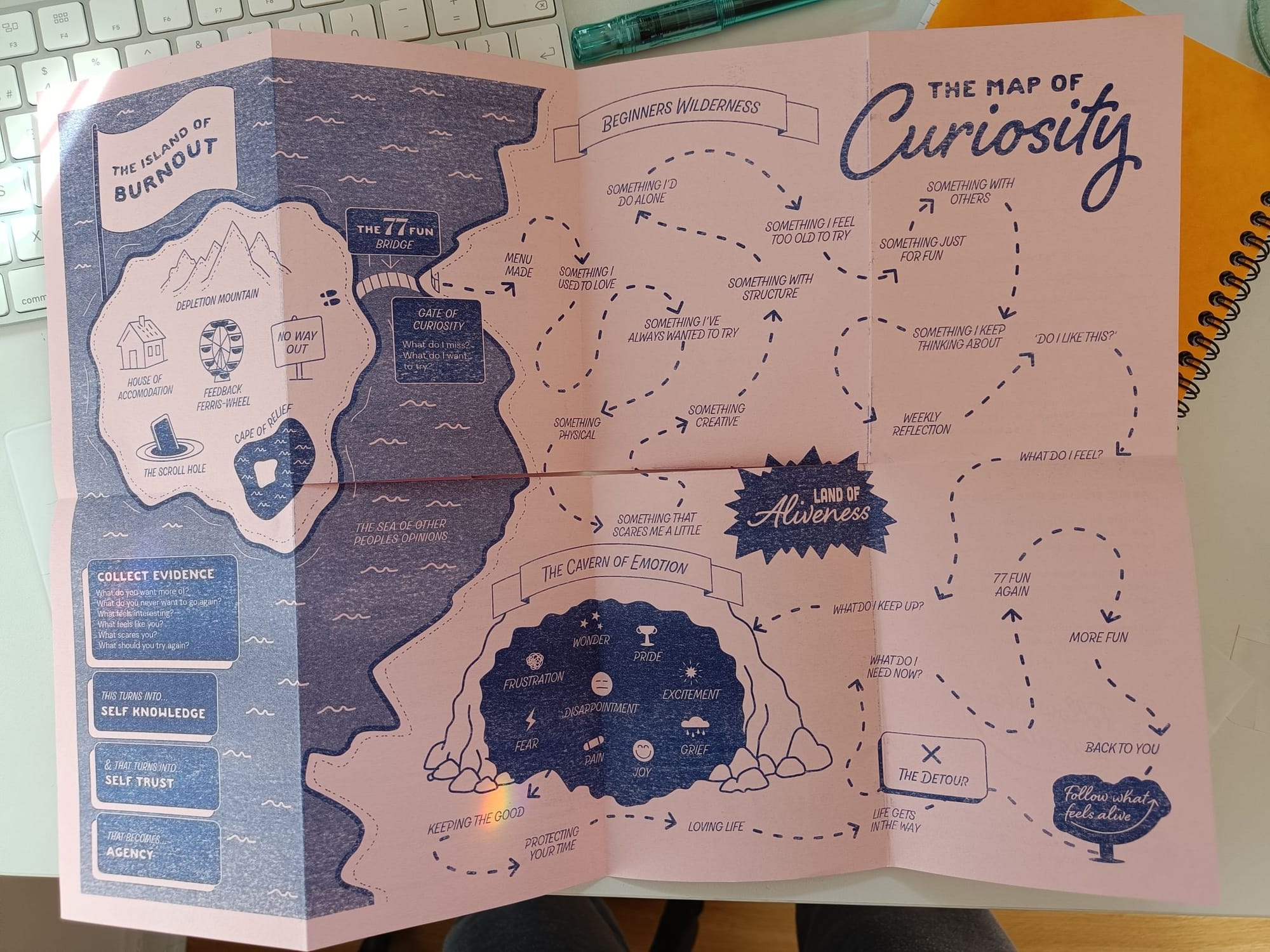
A risograph-printed “Map of Curiosity” fold-out. On the left, a dark “Island of Burnout” with landmarks like Depletion Mountain, the Feedback Ferris-Wheel, the Scroll Hole, and “No Way Out,” ringed by “The Sea of Other Peoples Opinions,” crossed via “The 77 Fun Bridge” and the “Gate of Curiosity.” On the right, a dotted path winds through the “Beginners Wilderness” (prompts such as “something I used to love,” “something that scares me a little,” “something just for fun”) into the “Land of Aliveness” and down through the “Cavern of Emotion” (wonder, pride, frustration, fear, joy, grief), looping back to “Follow what feels alive.” A side panel traces Collect evidence → Self knowledge → Self trust → Agency.
An open pink zine on a desk beside a keyboard and a turquoise pen. The left page, headed “Ideas to try,” scatters dozens of activities around a central circle — among them singing lessons, acrobatics, gardening, pole dancing, rug tufting, archery, woodworking, skateboarding, learning a language, and clowning. The right page, “Things to keep in mind,” lists 14 numbered notes, including “11 weeks goes by fast,” “Be a beginner,” “Go to things alone,” “Follow what feels alive,” “There’s no failing, just finding out,” and “Enjoy it, it’s not that serious.”

Remodeling transparency

Remodeling… with a transparent photo? Here’s an interesting way to pick color for interior design [LI]. You know my love of analog technology. And dang if I’m not going to include this as an example of a playful thing to think with, or at least envision (colorful) possibilities with.
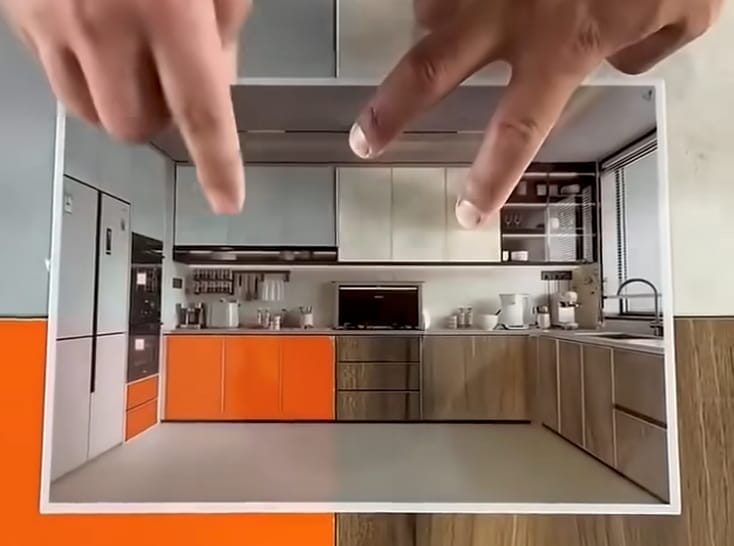
A small printed photo of a finished modern kitchen printed on transparent paper such that colored panels below the photo show through, providing a low-tech way to test an interior color scheme.

Visualizing Complexity: Modular Information Design Handbook

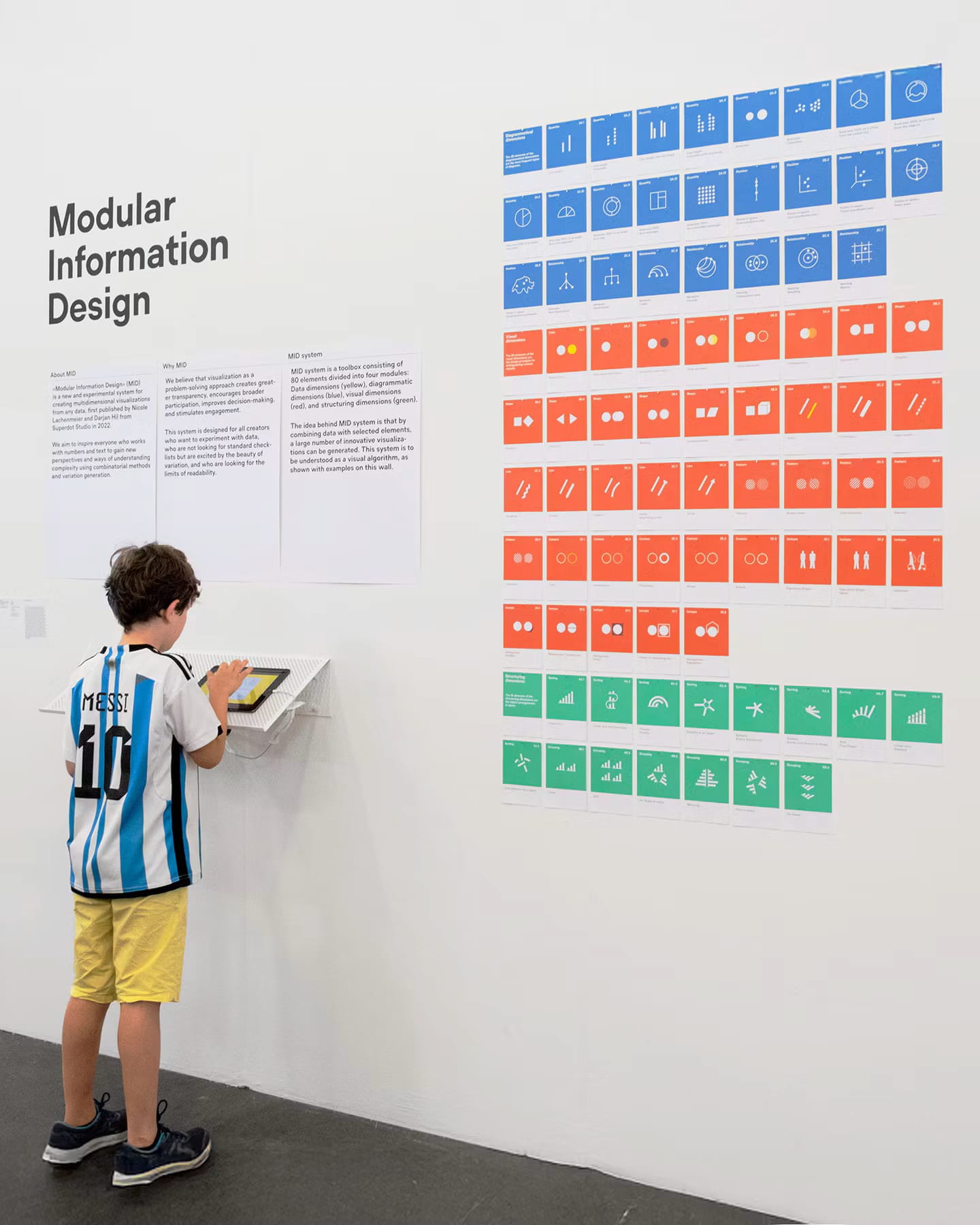
New book alert! By way of my interest in all things Visual SenseMaking, plus assorted projects where I am identifying ‘fundamental’ patterns (Spatial Thinking Tiles, How Cards Work), I think you’ll see why this book caught my eye. Visualizing Complexity: Modular Information Design Handbook presents “a flexible, structured system for anyone working to communicate information through design.”

MID systematically breaks down visualizations into 80 basic elements that are structured in four interconnected dimensions. These elements can be encoded in almost unlimited combinations. Just as the periodic table organizes chemical elements and makes new compounds predictable, MID structures visual building blocks to support systematic creativity.

This lives as a poster, a book, and… an exhibit? I’m sold! While the first (English) edition is out of print, it looks like there’s an upcoming Kickstarter for Modular Information Design 2.0 that’ll launch later this month (Nov 24th).
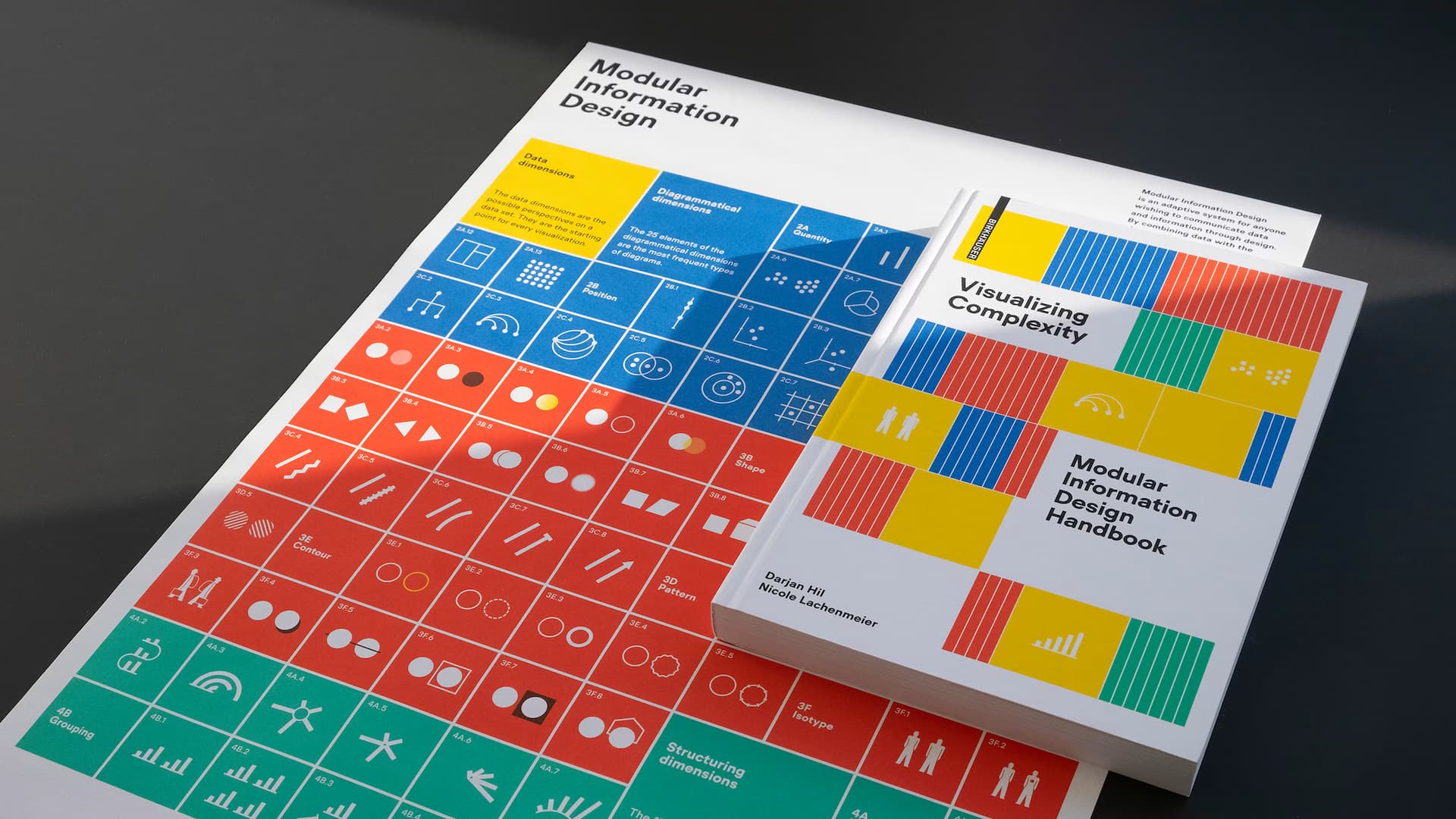
The “Visualizing Complexity: Modular Information Design Handbook” (Birkhäuser; Darjan Hil and Nicole Lachenmeier) resting on its companion poster. The poster lays the MID system out like a periodic table — yellow “Data dimensions,” blue “Diagrammatical dimensions,” red “Visual dimensions,” and green “Structuring dimensions” — each cell a coded icon (quantity, position, shape, line, pattern, contour, isotype, sorting, grouping). The book cover renders the same four-color palette as a grid of striped and dotted blocks.
A gallery wall for “Modular Information Design,” where a young boy taps an iPad mounted below a grid of roughly a hundred small cards. The cards are grouped by color into the system’s four modules — blue (diagrammatical dimensions), red (visual dimensions), green (structuring dimensions), plus data dimensions — each showing a tiny visualization primitive. Wall text explains that the MID system is a toolbox of 80 elements, first published by Nicole Lachenmeier and Darjan Hil of Superdot Studio in 2022.

In Case… Card Game

“Be Ready, Stay Resilient, Thrive Through Any Crisis”

The In Case… card game takes the “what would we do…?” conversation we’ve all played after a crisis—from natural disasters and cyberattacks to pandemics and power outages—and formalizes it into a game.

Players assess their resources, build an Escape Pack, make difficult decisions about priorities and budgets, and discover how well prepared they really are when disaster strikes.
More than just a game, In Case... encourages meaningful conversations, critical thinking and practical action, helping players explore personal and community resilience in an engaging and accessible way.

It looks like the structure this brings to an otherwise freeform conversation is (a) the limited resources you can choose, and (b) being able to check those chosen resources against what the unexpected event calls for. Basically, taking that “what would we do…?” conversation to a “how did we do?” bit of discussion.
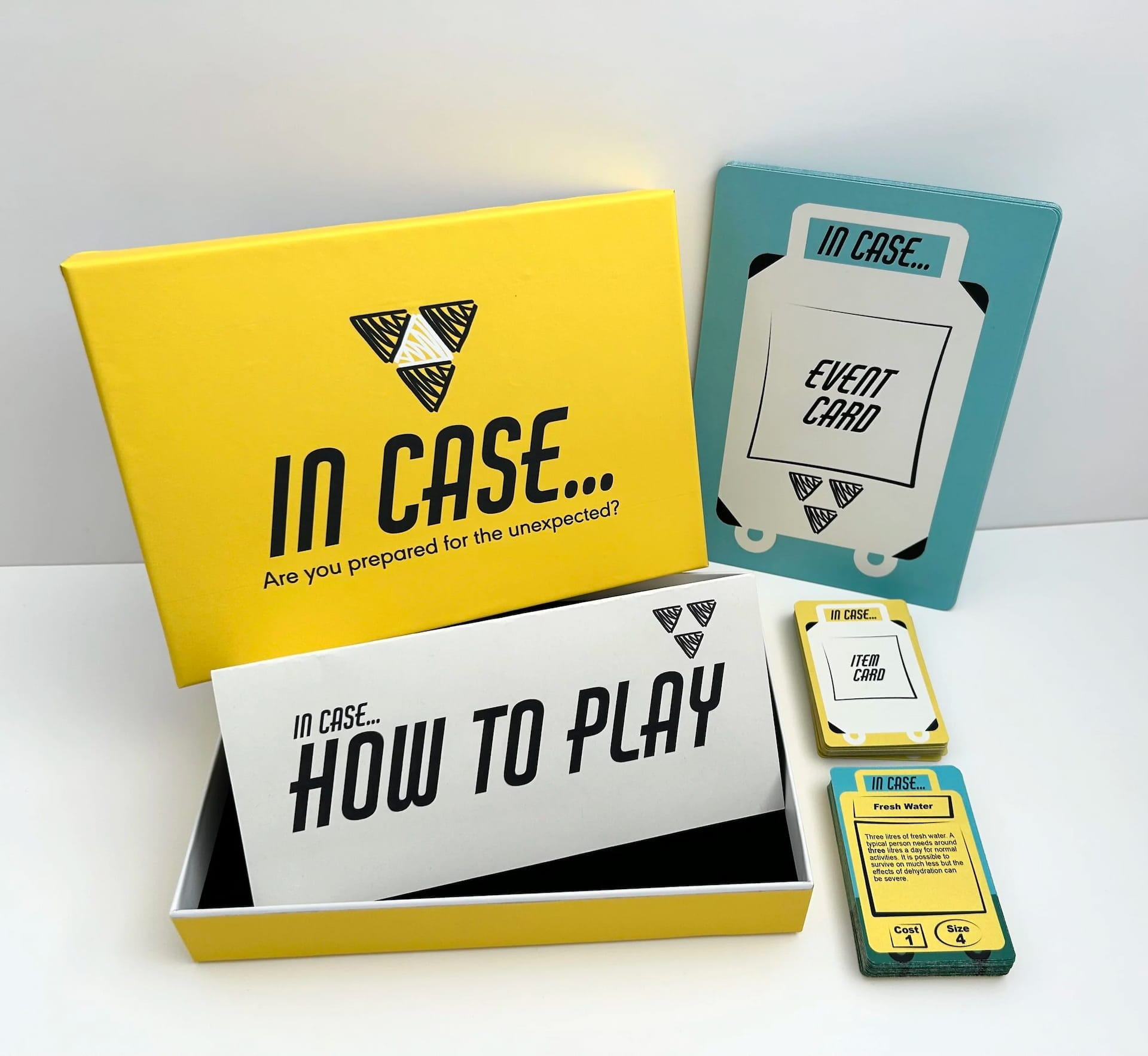
The “In Case…” card game: a yellow lid reading “In Case… — Are you prepared for the unexpected?” beside the open box, a “How to Play” card, a teal “Event Card,” and a yellow “Item Card” deck. The top item card, “Fresh Water,” notes that a typical person needs around three litres a day, with “Cost 1” and “Size 4” values in the corners.

The Rumble Royale — The Creative Characters Game

The Rumble Royale looks like a fun, brainstorming deck.

a card game for agencies, founders and creative teams that turns idea-making into a fast, competitive, imagination-fuelled arena
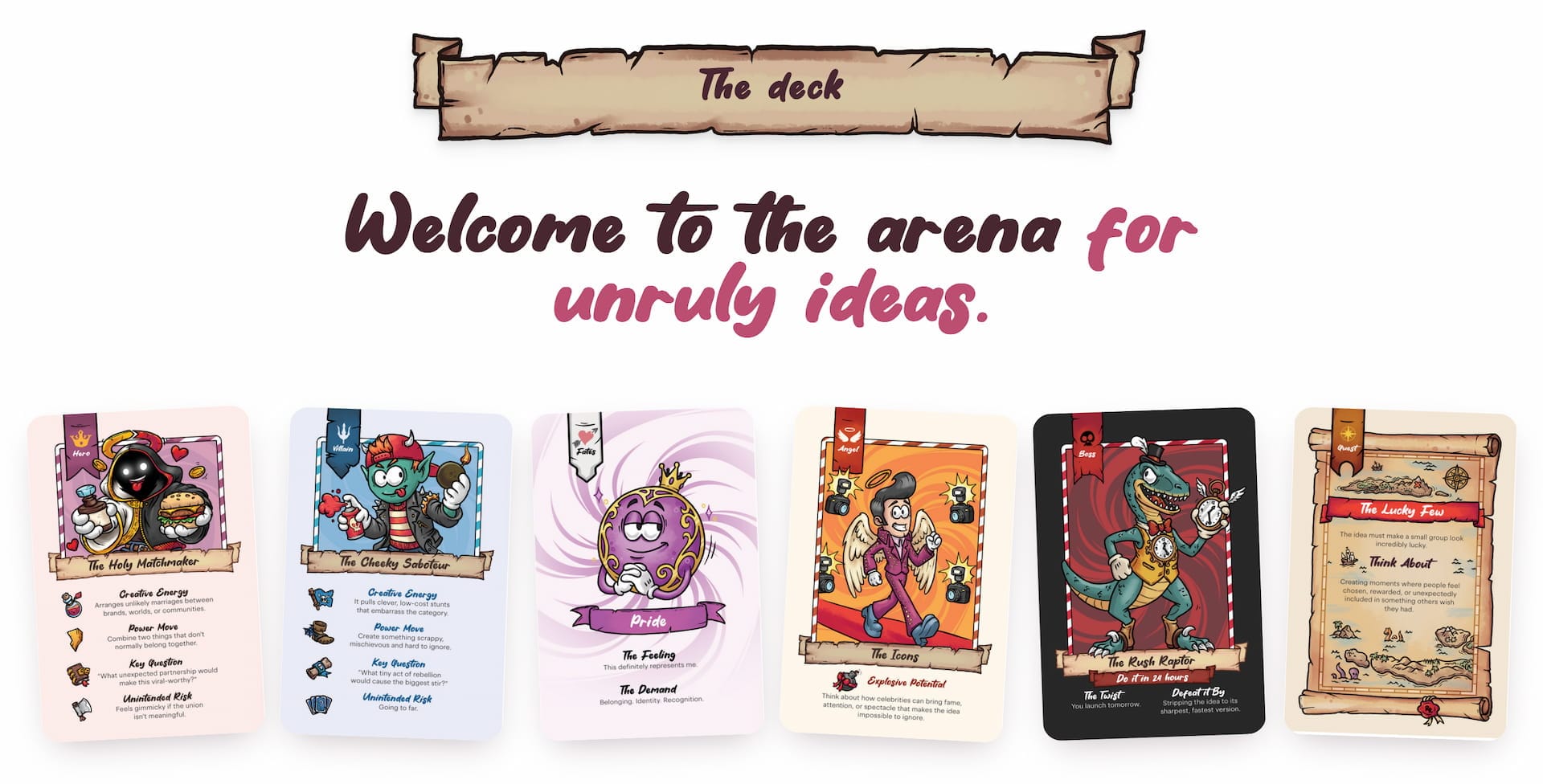
Promo art for The Rumble Royale under a banner reading “Welcome to the arena for unruly ideas.” Six illustrated cards fan out, each a role in the game: a Hero (“The Holy Matchmaker”), a Villain (“The Cheeky Saboteur”), a Fates card (“Pride”), an Angel (“The Icons”), a Boss (“The Rush Raptor — Do it in 24 hours”), and a Quest scroll (“The Lucky Few”), each with cartoon character art and prompts like Creative Energy, Power Move, Key Question, and Unintended Risk.

From the ‘How it works’ description, it looks like the forced pairing of cards from 3 different suits: a Creative Character, an Emotional Fate and an Amplifying Angle.
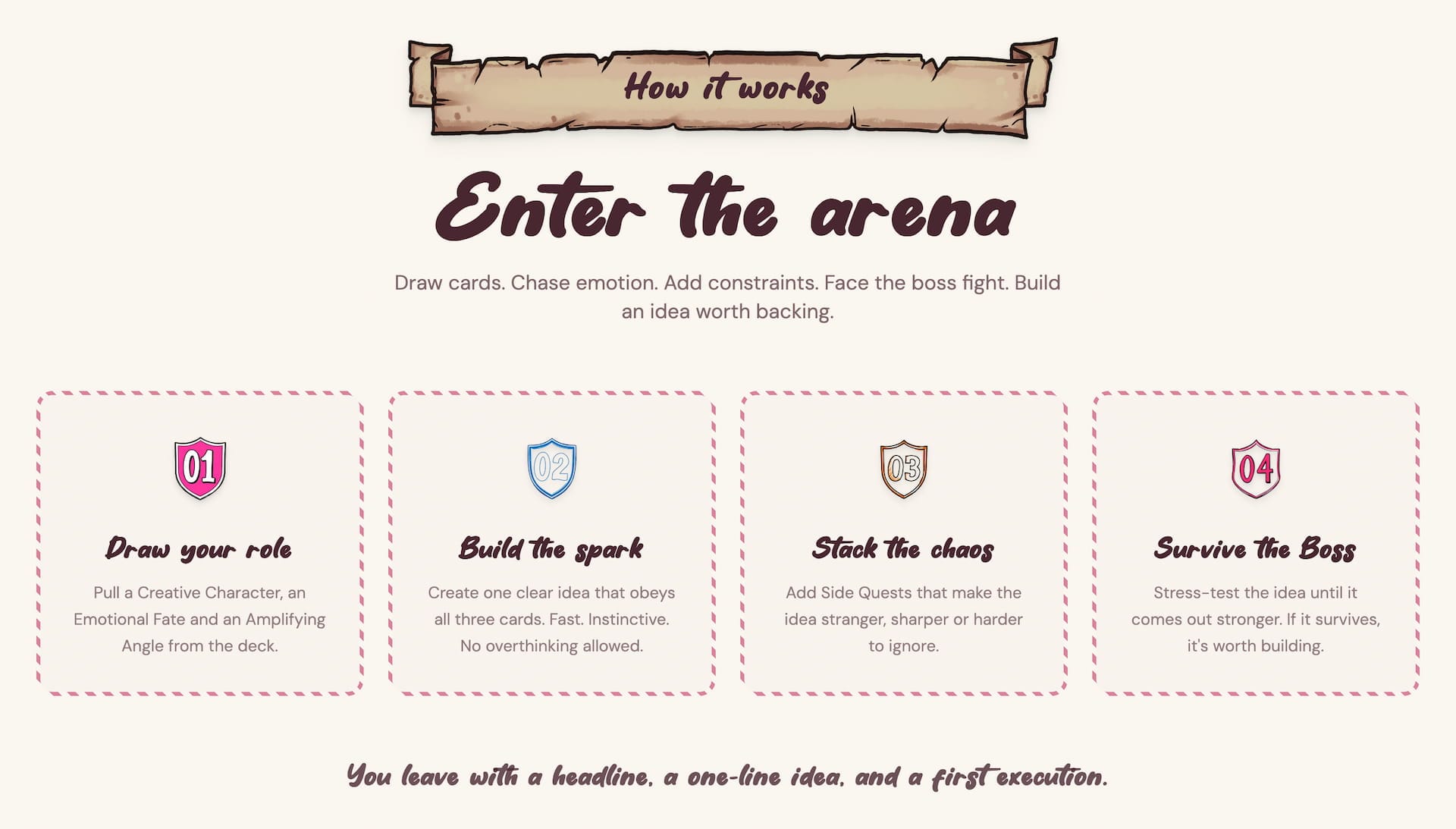
A “How it works — Enter the arena” page with the line “Draw cards. Chase emotion. Add constraints. Face the boss fight. Build an idea worth backing.” Four numbered badges lay out the steps: 01 Draw your role (pull a Creative Character, an Emotional Fate, and an Amplifying Angle), 02 Build the spark (one clear idea obeying all three cards), 03 Stack the chaos (add Side Quests), and 04 Survive the Boss (stress-test the idea). Footer: “You leave with a headline, a one-line idea, and a first execution.”

A few months ago, I stumbled across Raspberry Ripple, the company/team (?) behind The Rumble Royale, and the thing that struck me was the whimsical branding. While I speak often about play, I tend to drift toward a more subtle kind of playfulness that shows up in the play itself, and forget about the power of a playful presence. The site screams fun, and has a strong personality. Makes me want to rethink some of the projects I’m working on!

Eight architectures of agreement

I’m not sure what to do with this, but… intellectually, I’m intrigued by these eight architectures of agreement [LI]. And of course, I always love to see how people use visuals to represent abstract concepts.
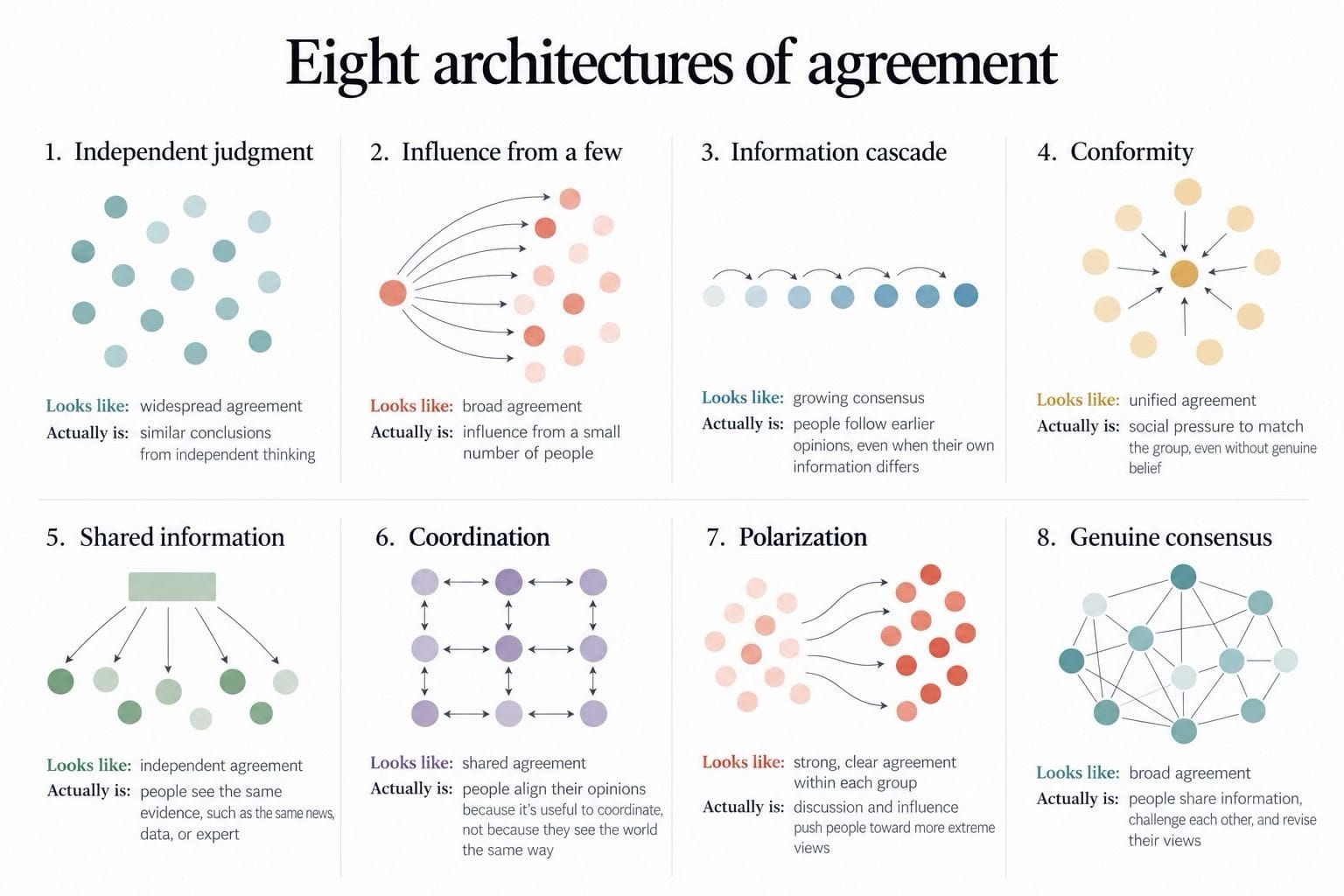
An eight-panel diagram titled “Eight architectures of agreement,” each panel a dot-and-arrow sketch contrasting what a pattern “Looks like” with what it “Actually is”: 1) Independent judgment, 2) Influence from a few, 3) Information cascade, 4) Conformity, 5) Shared information, 6) Coordination, 7) Polarization, and 8) Genuine consensus. Several patterns that look like broad agreement are shown to actually stem from social pressure, cascades, or a few influential voices, while genuine consensus appears as a densely interconnected network.

“What happens when you ask AI a question?”

I feel like people should have at least a basic understanding of how LLMs like Claude and ChatGPT work before they use them. Back in Issue № 93, I shared how Alexandre Eisenchteter makes an understanding of LLM fundamentals accessible to a broader audience via role-playing an LLM. In the time since, I’m always on the lookout for other explanations that make this technology at least somewhat scrutable. This page for the product Pzio is one of the best—accessible—explanations I’ve come across. It does a great job explaining how LLMs actually work, and why they can return incorrect information.

When you type a question into ChatGPT or Claude, what happens? Most people don't know how the model reads your words, why it sounds so sure, why it forgets you, and why it sometimes misses the one line that mattered.
This is a plain-English tour of how a chatbot really works – and how Pzio does it differently. No math, no jargon. By the end you’ll understand tokens, attention, hallucination, context windows and why bigger models cost more and still get things wrong, and why Pzio does it better.
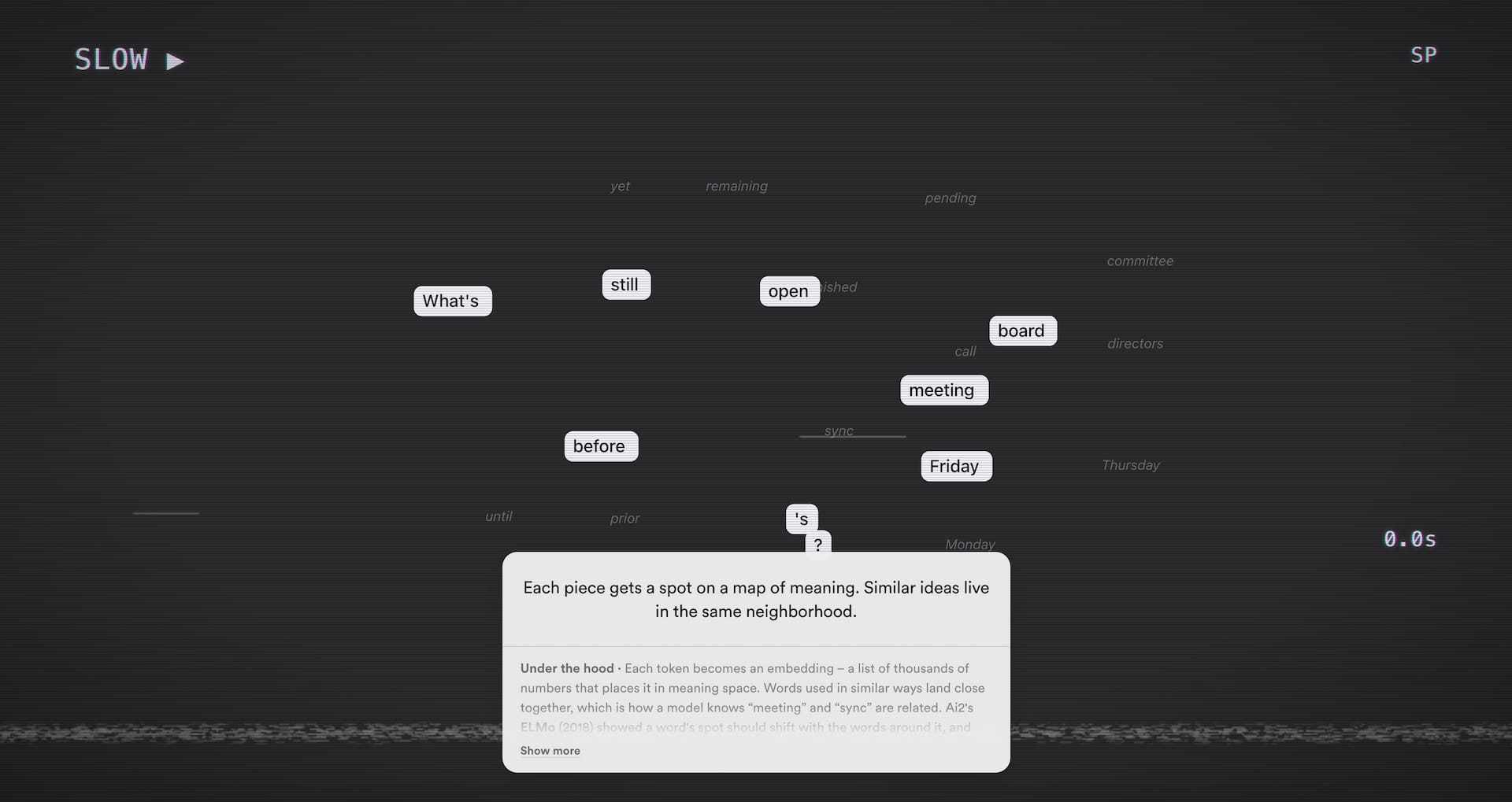
A dark screen from the Pzio explainer, paused at 0.0s in “Slow” mode. Scattered word tiles — “What’s,” “still,” “open,” “board,” “meeting,” “before,” “Friday,” “‘s,” “?” — float above fainter related words (sync, committee, directors, Monday, Thursday). A caption reads, “Each piece gets a spot on a map of meaning. Similar ideas live in the same neighborhood,” with an “Under the hood” note beginning to explain tokens and embeddings.

Yes, this explanation is designed to frame the problem that Pzio helps to solve, but… intent aside, this is a darn good explanation of how LLMs work. At least, I think it is?

Here’s a bit more about Pzio from the creator Brian Fling [LI].

Until next issue… cheers!
Read more

№ 126 | People’s Emergency Briefing Action Cards, The Neuroinclusive Design Toolkit, System & Self Deck, Disagree Differently, Izdihar, Books in Space, The ETHIC Framework, and Believe and Be Like Cards

№ 126 | People’s Emergency Briefing Action Cards, The Neuroinclusive Design Toolkit, System & Self Deck, Disagree Differently, Izdihar, Books in Space, The ETHIC Framework, and Believe and Be Like Cards

Welcome to another edition of Thinking Things, your increasingly irregular roundup of ‘playful things to think with’ and things to think about! This edition of Thinking Things features cards, Cards, and more CARDS! (And a few non-card and card-adjacent things! 😉) People’s Emergency Briefing Action Cards Here’s

By Stephen P. Anderson
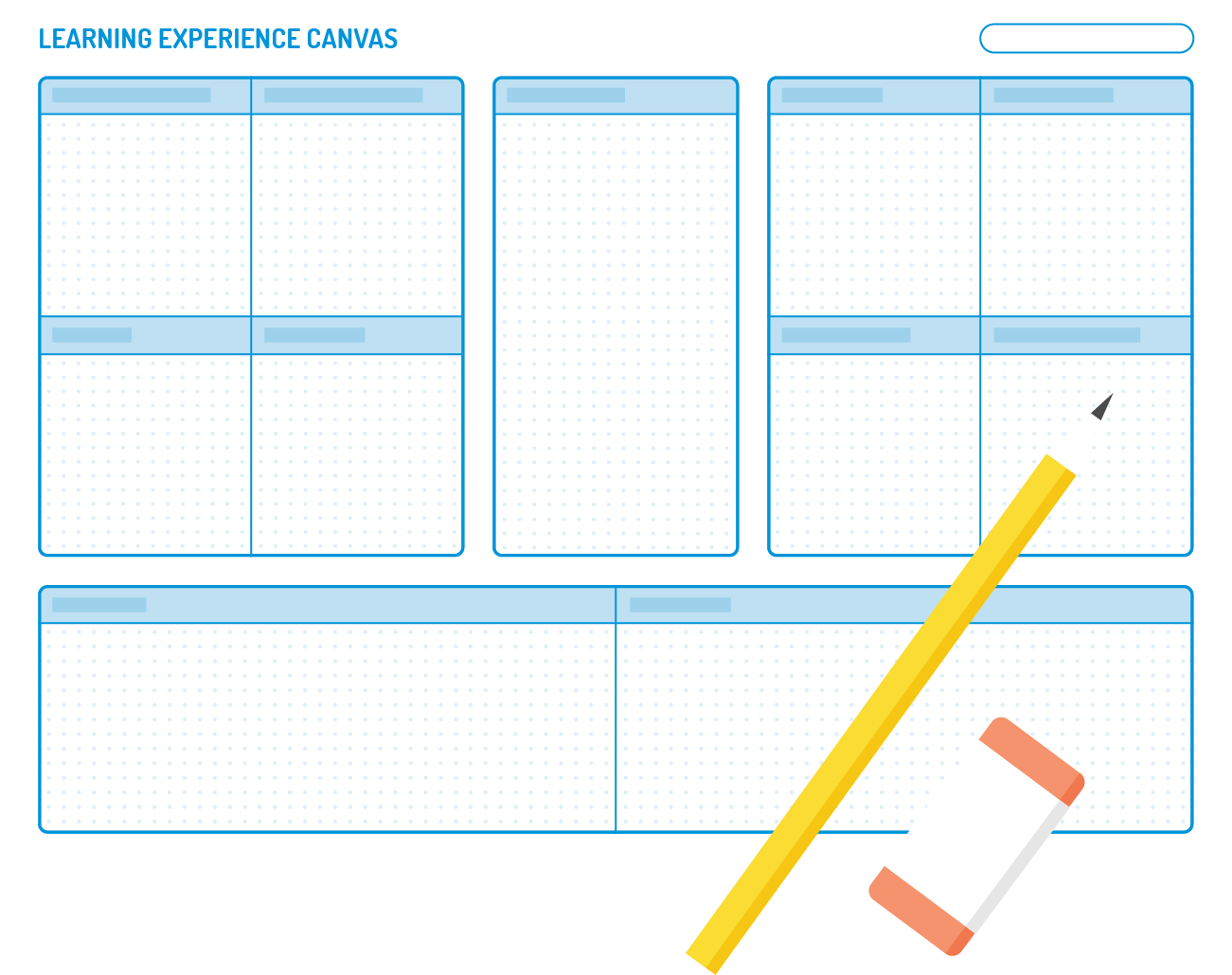
№ 125 | Harms of the AI Ecosystem, OK Go Sandbox, Learning Experience Canvas, Family Tree of French Sauces, How Nouns and Verbs Shape Game Design, Harm Along a Spectrum, and Pain Point Bingo

№ 125 | Harms of the AI Ecosystem, OK Go Sandbox, Learning Experience Canvas, Family Tree of French Sauces, How Nouns and Verbs Shape Game Design, Harm Along a Spectrum, and Pain Point Bingo

Harms of the AI ecosystem At this point, just about anything Per Axbom creates is an instant share from me. His latest creation, an infographic identifying various “Harms of the AI ecosystem” is a fabulous ‘thing to think with’. Brief. Good use of dual coding. Seemingly comprehensive. I was initially

By Stephen P. Anderson
№ 124 | Deep Deck, Charismatic Language, “Are Student Attention Spans Really Shrinking?”, AI Divergence Engine, 10 Things to Watch Out for When Working with AI, “Society Begins at Home”, and Collective Madness Bingo Sheet

№ 124 | Deep Deck, Charismatic Language, “Are Student Attention Spans Really Shrinking?”, AI Divergence Engine, 10 Things to Watch Out for When Working with AI, “Society Begins at Home”, and Collective Madness Bingo Sheet

Deep Deck Let’s kick things off with a good ol’ analog card deck! Deep Deck is a deck of conversation starters that promises to “push strangers closer and pull friends deeper.” Deeper connections and all that. Long-time readers will know how bored I am by most of the

By Stephen P. Anderson
№ 123 | Deep Code Cards, Cultural Differences and Storytelling, “So You Want to Be an American?” (the Game), Work-Life Balance, the Smiley Model, Playful Visualizations—Using Trees!, and Deep Reading

№ 123 | Deep Code Cards, Cultural Differences and Storytelling, “So You Want to Be an American?” (the Game), Work-Life Balance, the Smiley Model, Playful Visualizations—Using Trees!, and Deep Reading

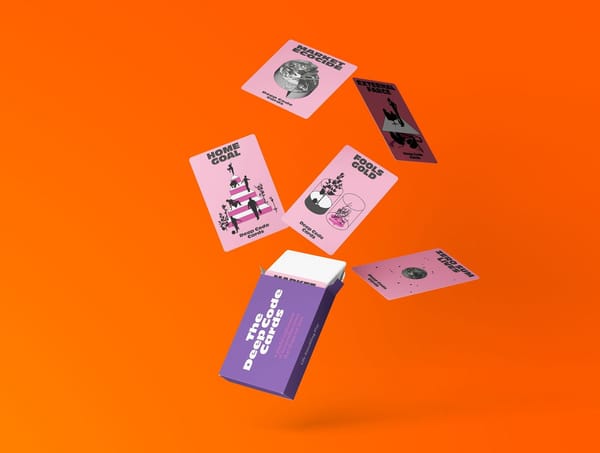
Howdy! Welcome to another roundup of ‘playful things to think with’ and things to think about. Let’s kick it off with… Deep Code Cards Ooh… Another project from Dark Matter Labs. The Deep Code Cards offer a “playful exploration of the invisible forces that shape our lives.” Nice. Maybe

By Stephen P. Anderson