№ 21 | Climate Ready Board Games, an Intro to Cooperative Games, Synthesis of 5 Behavioral Models, the Manual of Me, and 4 Psychological Skills

Share
№ 21 | Climate Ready Board Games, an Intro to Cooperative Games, Synthesis of 5 Behavioral Models, the Manual of Me, and 4 Psychological Skills

Board games solving real-world problems?

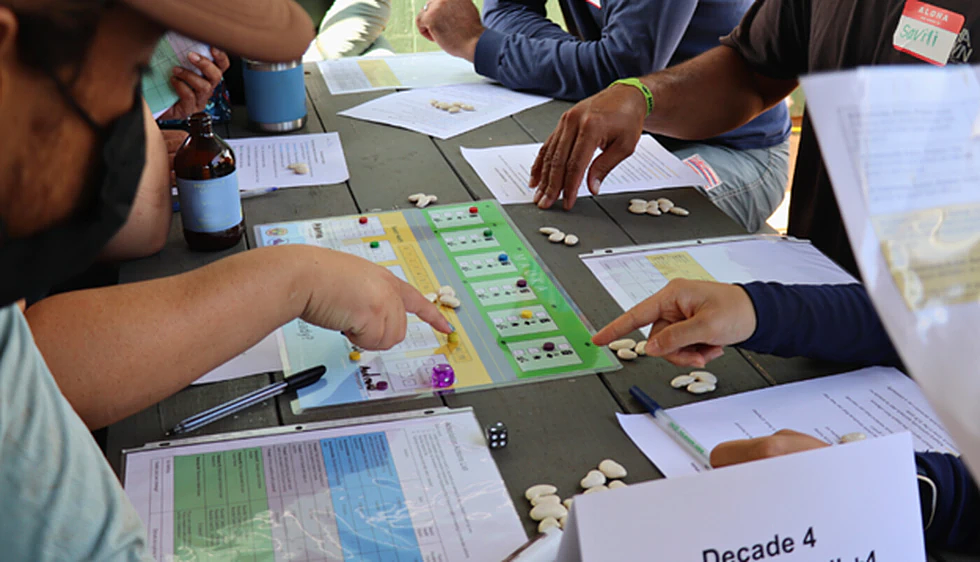
Raising awareness of an issue is one thing, as is bringing about understanding. But to facilitate actual problem solving? YES! Hailey Campbell, a city climate adaptation specialist in Hawaii, is the person behind a pair of  (yes, TWO!) board games to facilitate difficult conversations around how their communities might respond to climate change.

The interview—“These board games are finding tangible solutions to climate change in Hawaii”—is light on exploring the actual gameplay; for this you can go to the Climate Ready Games web site, where everything you need to play the game is free to download. 🎉

** SIDENOTE: I picked up on a number of phrases typically used by facilitators and coaches… “Adaptive capacity” / “learned experiences” / “solution oriented games” / “facilitate difficult conversations” / “bring people together” / “inspire rich conversations and move toward solutions” 😉
This pairs well with…

Cooperative games will change the world!

This is a fantastic, well-produced video focused exclusively on… collaborative board games (also the premiere (!!) episode of Mental Floss’s new series, The History of Fun).

As an avid board gamer, I was impressed by how thorough the research is, all the various shout outs, and the overall production value. Highly recommended. A good return on investment  for 20 minutes of time. And… cooperative games!!

Synthesizing 5 behavioral models

I love it when someone stacks up multiple models / theories/ frameworks alongside each other for comparison. That’s what this post—“Major behavioral theories, explained”—does with 5 different behavioral models:

  • Transtheoretical model
  • Theory of planned behavior (based on the theory of reasoned action)
  • MINDSPACE approach
  • Fogg model
  • Hook model 

Short and sweet. To the point. This post presents each model, then lays out a visual to show how they relate to each other:

“Manual of Me”

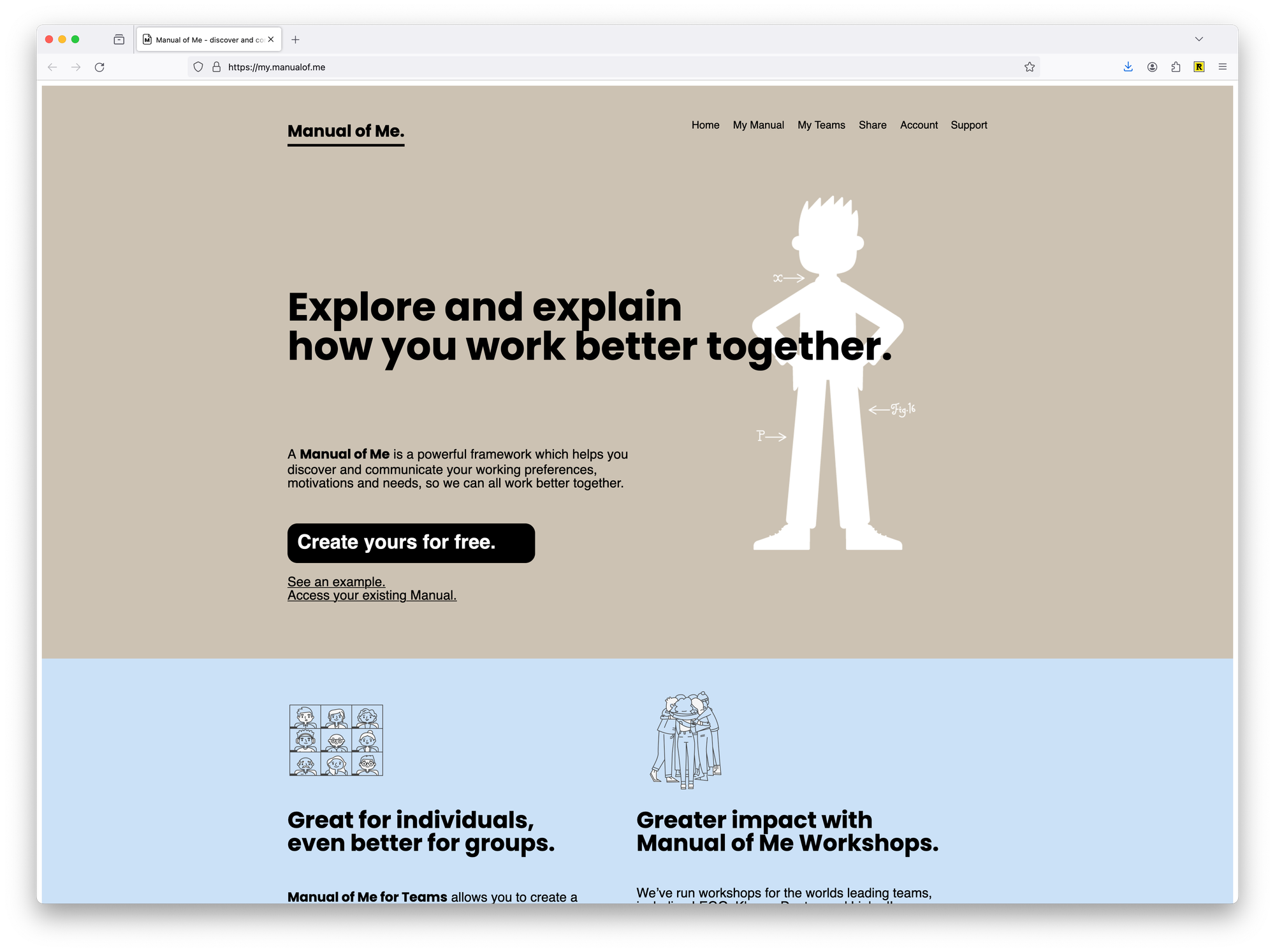
I’m seeing more of these ‘personal blueprints’ and ‘operating manual for working with [insert name]’ kinds of guides. Here’s a tool—Manual of Me—that’s claims to make it easier to “discover and share how you work best with others.”
4 Psychological Skills

“Psychological Skills I Stole From Super-Smart People.” More like four good lifehacks / mindsets picked up from folks like Adam Grant and Derek Sivers. I especially enjoyed the first suggestion:

While eliciting feedback, instead of asking, “How is it? Do you have any suggestions?” Ask the person to rate it from 0–10. It’s very likely that no one would give a score of 10. Even if they like you, they might give a score of say, 8 or 9.

And then, you simply ask them, “What can I do to move closer to 10?”
Read more

№ 124 | Deep Deck, Charismatic Language, “Are Student Attention Spans Really Shrinking?”, AI Divergence Engine, 10 Things to Watch Out for When Working with AI, “Society Begins at Home”, and Collective Madness Bingo Sheet

№ 124 | Deep Deck, Charismatic Language, “Are Student Attention Spans Really Shrinking?”, AI Divergence Engine, 10 Things to Watch Out for When Working with AI, “Society Begins at Home”, and Collective Madness Bingo Sheet

Deep Deck Let’s kick things off with a good ol’ analog card deck! Deep Deck is a deck of conversation starters that promises to “push strangers closer and pull friends deeper.” Deeper connections and all that. Long-time readers will know how bored I am by most of the

By Stephen P. Anderson
№ 123 | Deep Code Cards, Cultural Differences and Storytelling, “So You Want to Be an American?” (the Game), Work-Life Balance, the Smiley Model, Playful Visualizations—Using Trees!, and Deep Reading

№ 123 | Deep Code Cards, Cultural Differences and Storytelling, “So You Want to Be an American?” (the Game), Work-Life Balance, the Smiley Model, Playful Visualizations—Using Trees!, and Deep Reading

Howdy! Welcome to another roundup of ‘playful things to think with’ and things to think about. Let’s kick it off with… Deep Code Cards Ooh… Another project from Dark Matter Labs. The Deep Code Cards offer a “playful exploration of the invisible forces that shape our lives.” Nice. Maybe

By Stephen P. Anderson
№ 122 | A “Horseshoe” Diagram, Slow AI, the Data Communication Triangle, The Invisibles, A Simple Clustering Algorithm for Lists, Ordinary Abundance, and “Certainty, Variety, and Delight”

№ 122 | A “Horseshoe” Diagram, Slow AI, the Data Communication Triangle, The Invisibles, A Simple Clustering Algorithm for Lists, Ordinary Abundance, and “Certainty, Variety, and Delight”

A ‘horseshoe’ diagram Ooh… A horseshoe diagram?! That’s a new-to-me pattern; I’m adding this to my collection of visual primitives. Pretty much a cycle, with emphasis on the starting and ending points (before the cycle begins again). That’s all. Oh, and as for the content

By Stephen P. Anderson
№ 121 | EVOLUTION: A Card System to Break Automatic Patterns, Visualizing a Billion, Systems Thinking Lessons from Monsters, Inc., The Committee Game, A 3x3 for Assessing Stakeholders, and 6 Ways Leaders Harness Stress

№ 121 | EVOLUTION: A Card System to Break Automatic Patterns, Visualizing a Billion, Systems Thinking Lessons from Monsters, Inc., The Committee Game, A 3x3 for Assessing Stakeholders, and 6 Ways Leaders Harness Stress

Welcome to another edition of Thinking Things, your (mostly) regular roundup of ‘playful things to think with’ and things to think about! EVOLUTION: A Card System to Break Automatic Patterns You might know I’m just a wee bit (ahem) analytical. I like to take “squishy” concepts—conflict resolution, collaboration,

By Stephen P. Anderson