№ 45 | Board Games for Change, Psychological Safety vs Comfort, Climate Hope, Tinkering with Tools for Thought, and Ursula K. Le Guin

Share
№ 45 | Board Games for Change, Psychological Safety vs Comfort, Climate Hope, Tinkering with Tools for Thought, and Ursula K. Le Guin

Board Games for Change

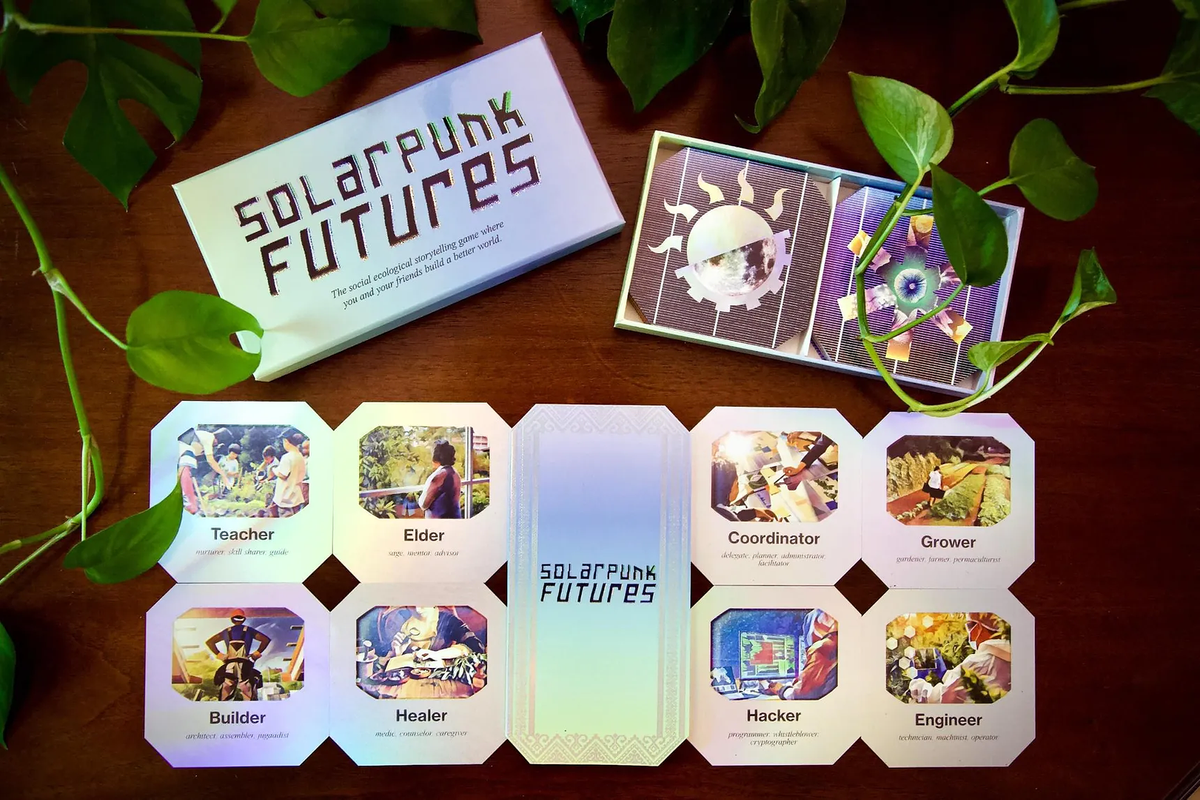
‘And the nominees are…’  Games for Change, known for recognizing video games with a social impact, has added a new category recognizing…wait for it… board games!! 🎉

Check out this article from Polygon for more about each of the four nominees. Oh, and can I brag that I backed Solarpunk Futures (pictured above) when it was on Kickstarter? 😜

Psychological safety (not psychological comfort)

Once again, two words that when placed next to each other, make the distinctions clear. This time round it’s Safety and Comfort. “Why Psychological Safety is Important For Productive Teamwork.”

Climate hope?

So, wow. There’s this:  Project Drawdown, ”The World’s Leading Resource for Climate Solutions.” Next time I feel like there's little that can be done, I'll browse their Table of Solutions.

Tinkering with tools is not necessarily procrastination

“Not necessarily.” I’ve used that qualifier before… 😉 For all of you jumping between “Tana, Obisidian, Logseq, Remnote, or something else” as your note taking tool of choice, this is for you: “Tinkering with tools is not necessarily procrastination.”

Ursula K. Le Guin’s passionate defense of art over profits

Ursula K. Le Guin? Introduced by Neil Geiman?!  Yes.

In 2014, when Ursula K. Le Guin accepted the National Book Foundation’s Medal for Distinguished Contribution to American Letters, she used her acceptance speech to speak out about what she considered to be publishers’ increasing emphasis on profits over art. She said to the crowd, which consisted of the most powerful players in the publishing industry, “Books aren’t just commodities; the profit motive is often in conflict with the aims of art.” Her speech made a splash online in 2014, and now you can watch it in its entirety here. It’s a must-see.

Oh, and now I know the context of this oft circulated quote: 

We live in capitalism. Its power seems inescapable. So did the divine right of kings. Any human power can be resisted and changed by human beings.
Read more

№ 124 | Deep Deck, Charismatic Language, “Are Student Attention Spans Really Shrinking?”, AI Divergence Engine, 10 Things to Watch Out for When Working with AI, “Society Begins at Home”, and Collective Madness Bingo Sheet

№ 124 | Deep Deck, Charismatic Language, “Are Student Attention Spans Really Shrinking?”, AI Divergence Engine, 10 Things to Watch Out for When Working with AI, “Society Begins at Home”, and Collective Madness Bingo Sheet

Deep Deck Let’s kick things off with a good ol’ analog card deck! Deep Deck is a deck of conversation starters that promises to “push strangers closer and pull friends deeper.” Deeper connections and all that. Long-time readers will know how bored I am by most of the

By Stephen P. Anderson
№ 123 | Deep Code Cards, Cultural Differences and Storytelling, “So You Want to Be an American?” (the Game), Work-Life Balance, the Smiley Model, Playful Visualizations—Using Trees!, and Deep Reading

№ 123 | Deep Code Cards, Cultural Differences and Storytelling, “So You Want to Be an American?” (the Game), Work-Life Balance, the Smiley Model, Playful Visualizations—Using Trees!, and Deep Reading

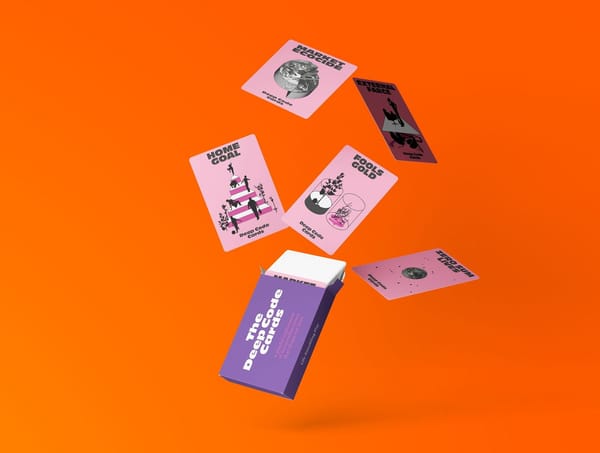
Howdy! Welcome to another roundup of ‘playful things to think with’ and things to think about. Let’s kick it off with… Deep Code Cards Ooh… Another project from Dark Matter Labs. The Deep Code Cards offer a “playful exploration of the invisible forces that shape our lives.” Nice. Maybe

By Stephen P. Anderson
№ 122 | A “Horseshoe” Diagram, Slow AI, the Data Communication Triangle, The Invisibles, A Simple Clustering Algorithm for Lists, Ordinary Abundance, and “Certainty, Variety, and Delight”

№ 122 | A “Horseshoe” Diagram, Slow AI, the Data Communication Triangle, The Invisibles, A Simple Clustering Algorithm for Lists, Ordinary Abundance, and “Certainty, Variety, and Delight”

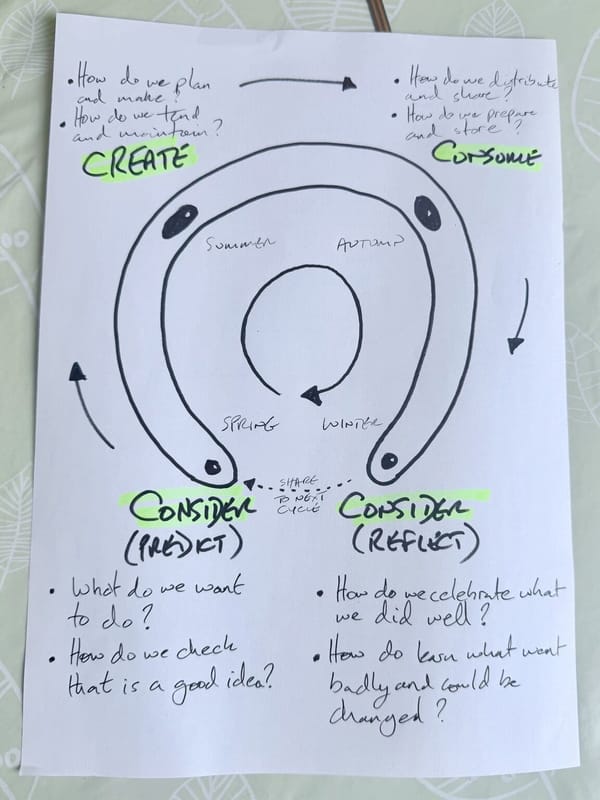
A ‘horseshoe’ diagram Ooh… A horseshoe diagram?! That’s a new-to-me pattern; I’m adding this to my collection of visual primitives. Pretty much a cycle, with emphasis on the starting and ending points (before the cycle begins again). That’s all. Oh, and as for the content

By Stephen P. Anderson
№ 121 | EVOLUTION: A Card System to Break Automatic Patterns, Visualizing a Billion, Systems Thinking Lessons from Monsters, Inc., The Committee Game, A 3x3 for Assessing Stakeholders, and 6 Ways Leaders Harness Stress

№ 121 | EVOLUTION: A Card System to Break Automatic Patterns, Visualizing a Billion, Systems Thinking Lessons from Monsters, Inc., The Committee Game, A 3x3 for Assessing Stakeholders, and 6 Ways Leaders Harness Stress

Welcome to another edition of Thinking Things, your (mostly) regular roundup of ‘playful things to think with’ and things to think about! EVOLUTION: A Card System to Break Automatic Patterns You might know I’m just a wee bit (ahem) analytical. I like to take “squishy” concepts—conflict resolution, collaboration,

By Stephen P. Anderson